38 Jaw-Dropping Holiday Light Ideas That Will Make Your Home Shine Bright This Season

You know that feeling when the whole street has gone full Griswold and your porch still looks like it forgot what month it is? Same. Holiday lights are the rare decor project where a $14 strand genuinely changes the mood of a whole house, which is why we spent a slow week combing Home Depot, Lowe’s, Target, and Terrain for the displays actually worth copying in 2026.
After filtering through hundreds of options, we narrowed it to 38 ideas — classic warm-white rooflines, rainbow-wrapped palms, jewel-toned garlands, and the indoor mantels that carry the glow inside. Prices run from about $12 for a single strand to $450 for a full lit cone tree setup, and budget versions sit right next to the luxury ones.
2026’s version of this trend is less about more lights and more about lit lines: tracing architecture, repeating one shape, choosing a color story on purpose. And stay until the end — we break down the most common mistakes that can ruin these looks.
📌 Save this to Pinterest for later — you’ll want to revisit these ideas.
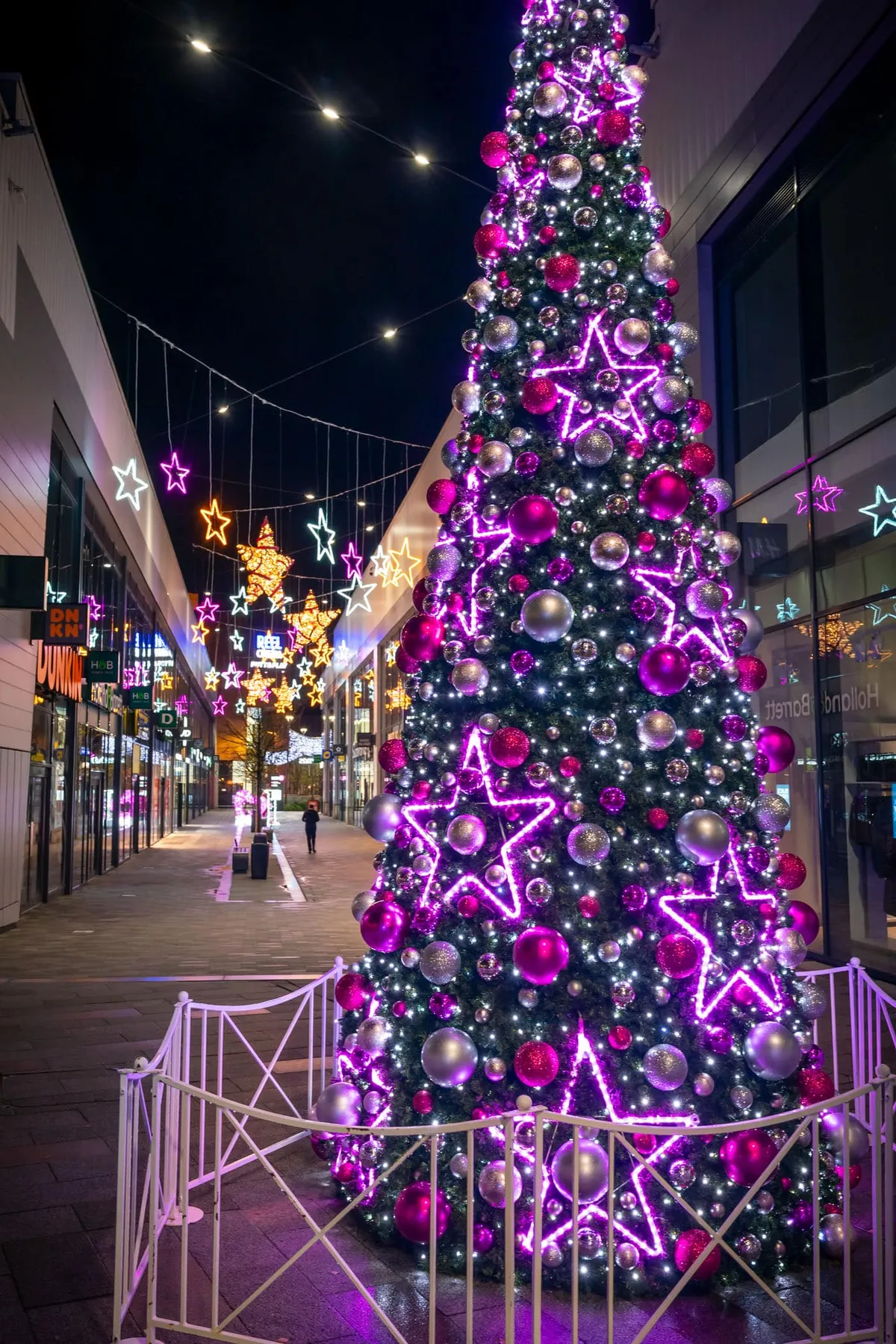
1. Pink Neon Stars Over a Paved Promenade
Spacing is what separates a light canopy from a mess. Hang overhead strands 8 to 9 feet up, then repeat the star shapes on roughly 4-foot centers so the rhythm still reads from halfway down the walkway. On the tree, let the fuchsia neon stars carry the color and keep the round ornaments silver — metallic bounces light instead of competing with it.
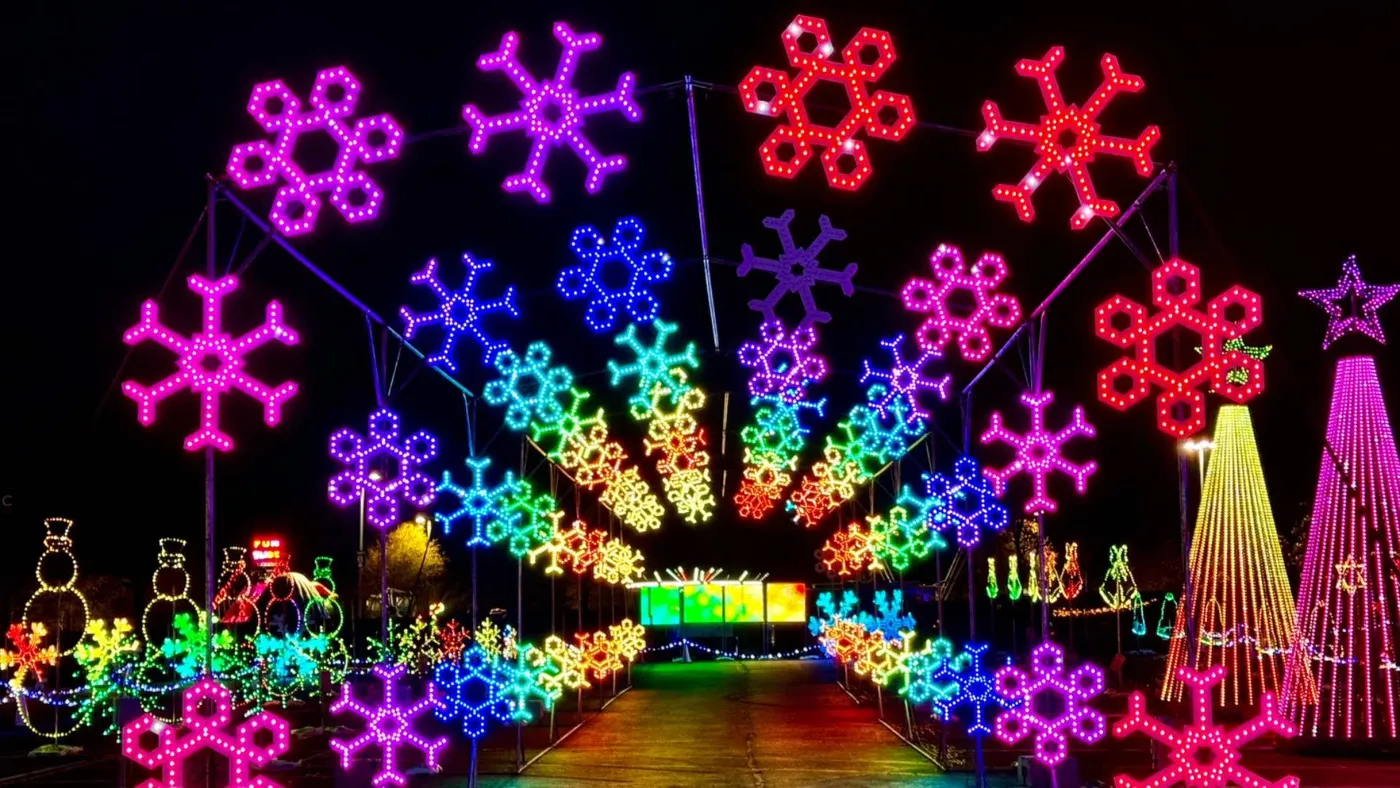
2. A Rainbow Snowflake Tunnel You Walk Right Into
Three things are doing the work here: repetition (dozens of identical snowflakes), gradient (pink through purple into green, so the eye keeps moving), and forced perspective — an arch narrows the view and makes the pathway feel longer than it is. Swap snowflakes for stars or bells and the formula still holds.
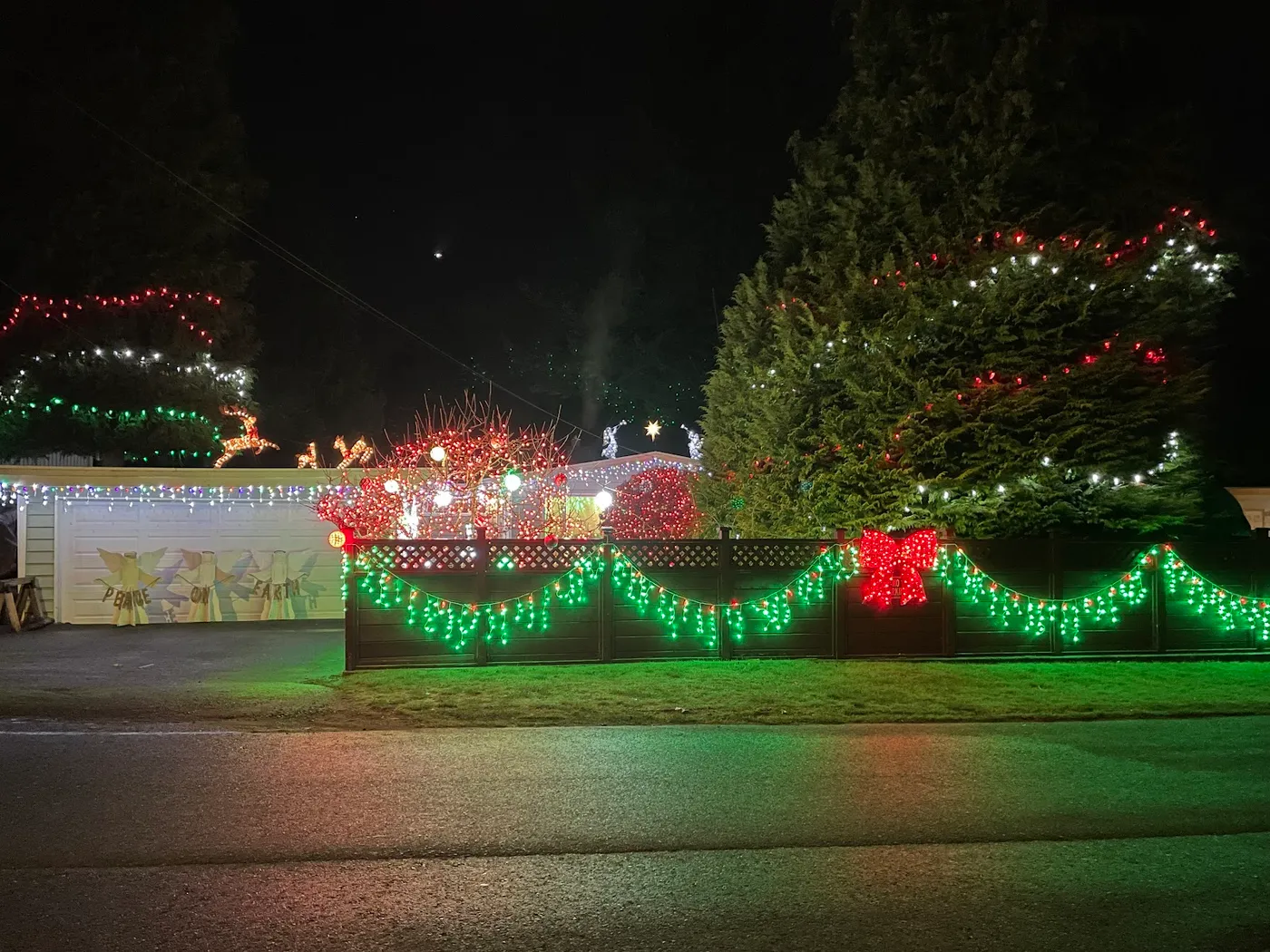
3. Green Swags, a Red Bow, and Peace on Earth
The ratio behind this display: roughly 60 percent green and white light as the base, 30 percent red accents — the bow, the candy canes, the lit figures — and 10 percent bright star focal points. Change the red to gold and the same fence-and-lattice framework reads elegant instead of playful.
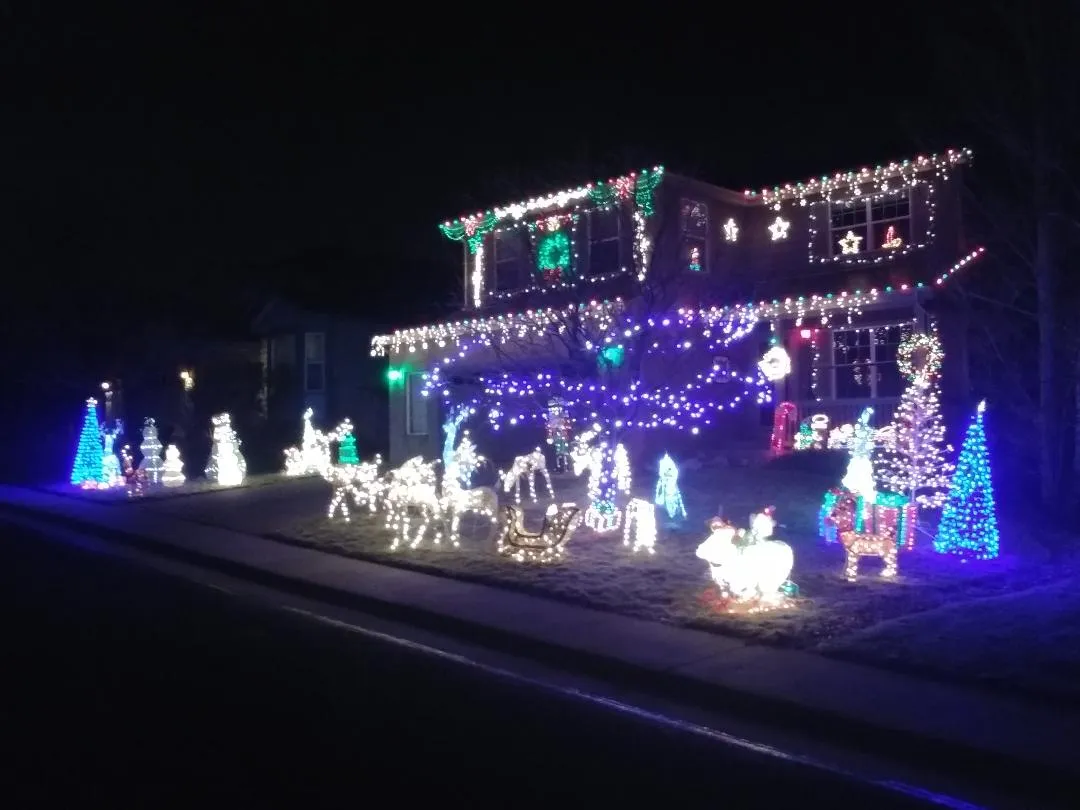
4. A Two-Story Facade Traced in Multicolor
Full-facade displays are why light shows moved from lawn ornament to architectural outline: the roof, eaves, and window frames get traced first, and the reindeer and snowmen come second. If that feels like a lot of commitment, Idea #7 proves one color can carry the same house.
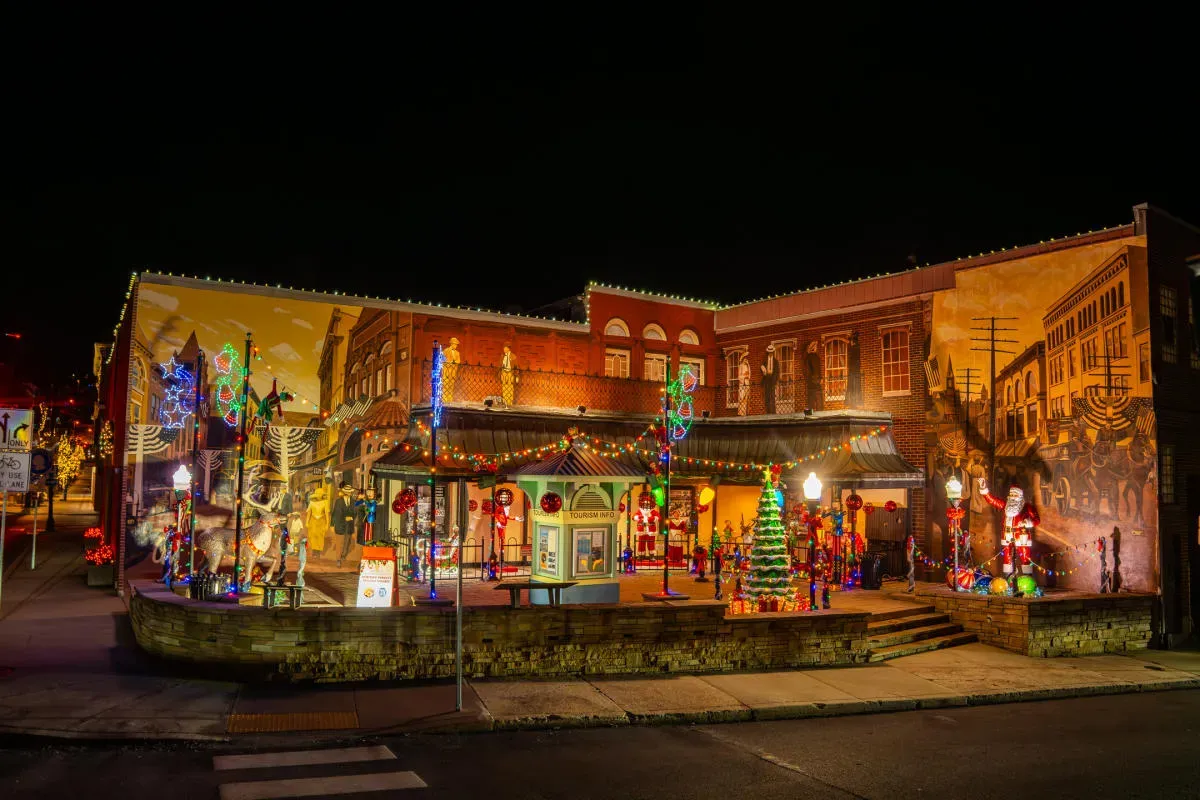
5. A Muraled Corner Turned Into a Street Scene
Notice how nothing floats in empty air — every strand follows an existing line: a roofline, an awning edge, the trim on a kiosk. Walk your own facade at dusk and photograph those lines first. Then light the lines, not the gaps between them, and the whole display reads intentional from the street.
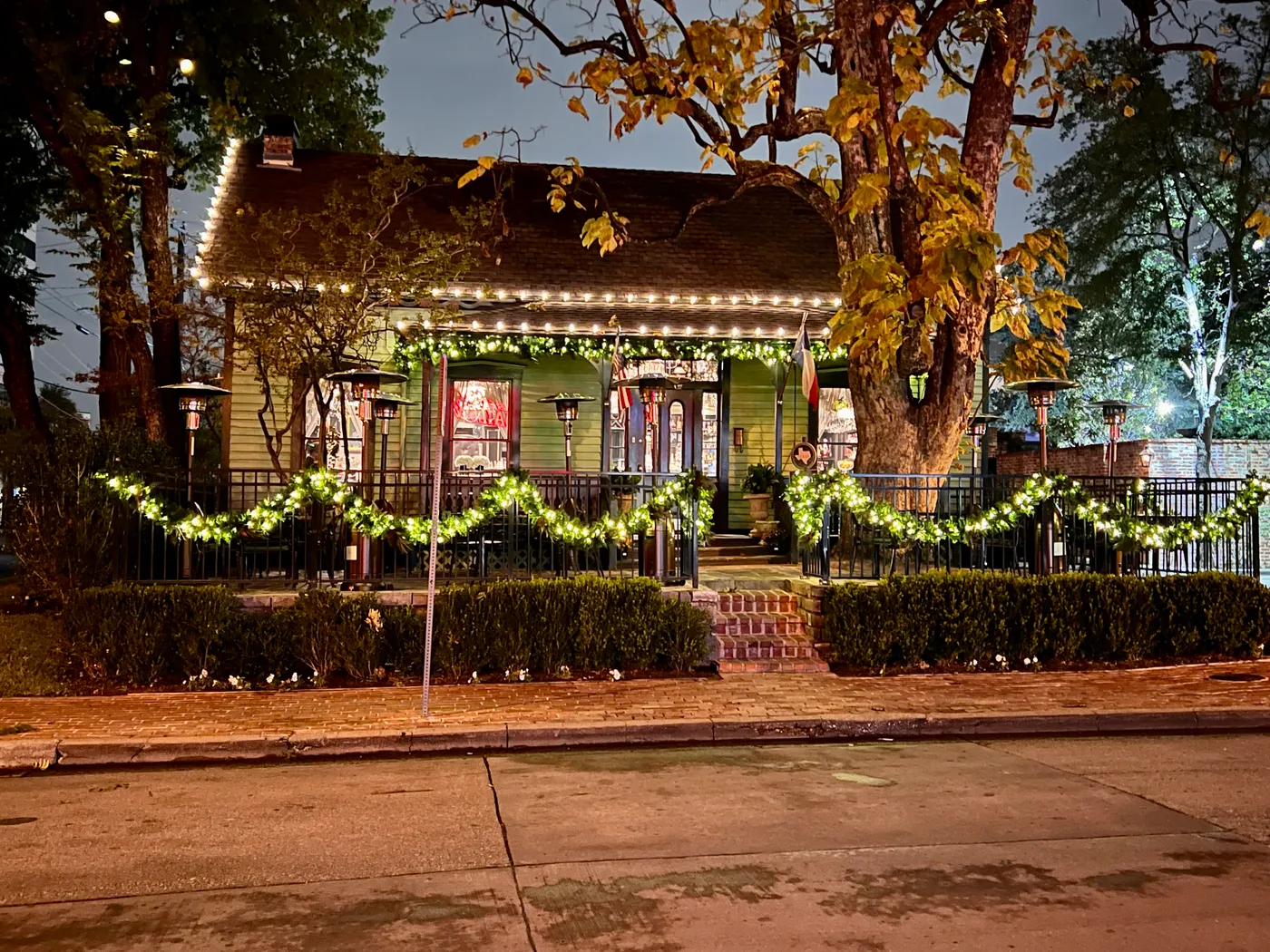
6. Warm Garland on a Sage-Green Porch
Warm white on pale siding is gorgeous and completely unforgiving — every staple hole and dangling cord shows in daylight. Run cords along the back of the gutter or the inside of the fence rail, and clip rather than staple on painted surfaces. It’s an extra hour now versus a spring of touch-up paint.
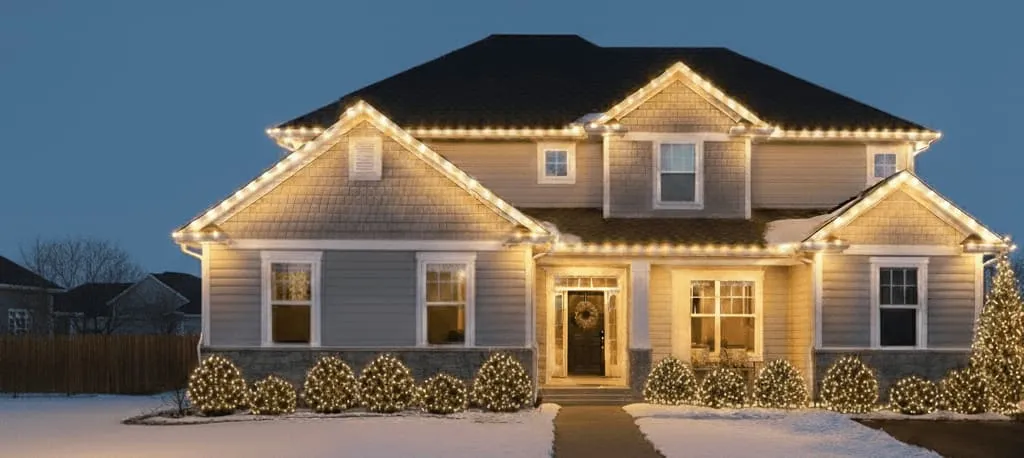
7. The One-Color Outline That Still Feels Grand
Outlining a whole house sounds expensive and mostly isn’t: 250 feet of warm-white LED mini lights runs about $60–$90, clips are $12, a heavy-duty timer $20. The real cost is ladder hours, not product. Skip wreaths on every window and you can pull off this facade for under $150.
8. Split-Rail Fence Garland on a Multi-Gabled House
Drape, don’t wind.
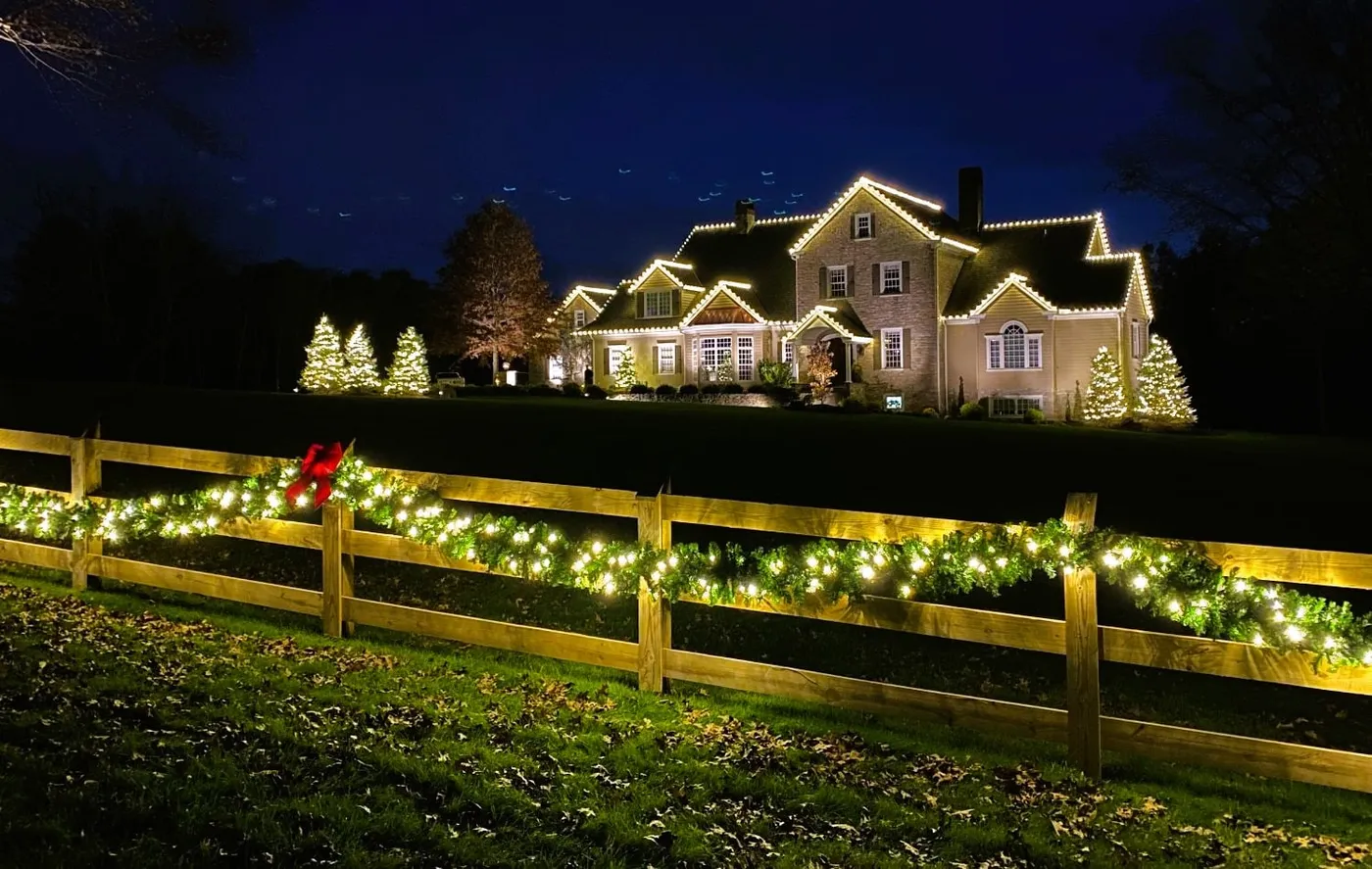
- Measure the fence rail and buy garland at 1.5× that length.
- Zip-tie a hidden support cord along the top rail.
- Attach the garland every 18 inches so the swags hang evenly.
- Weave warm white strands in last, from the back.
- Wire one red bow at the center point.
About two hours and $40–$70.
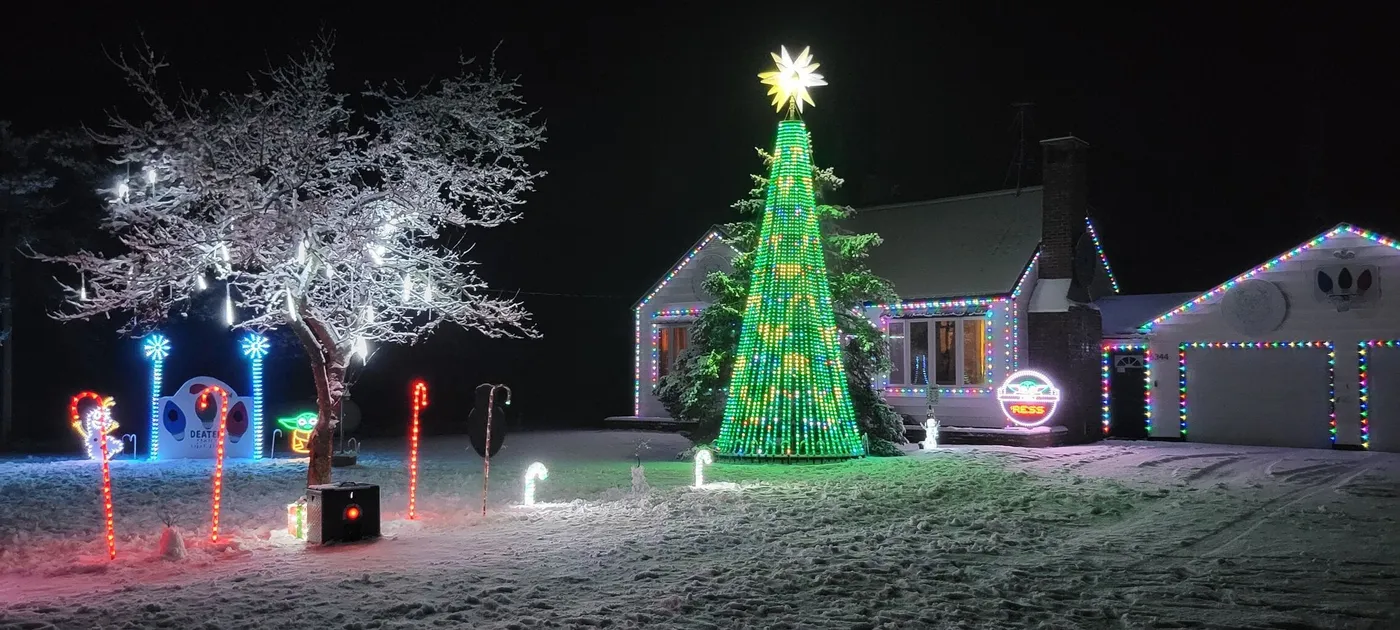
9. Candy Canes, Icicles, and One Big LED Cone
Two light temperatures, on purpose: dense multicolor on the hard architectural lines, crisp white icicles on the snow-dusted tree, so the house reads busy while the yard reads calm. The tall LED cone acts as a landmark — one shape the eye can land on after all those small candy canes and figures.
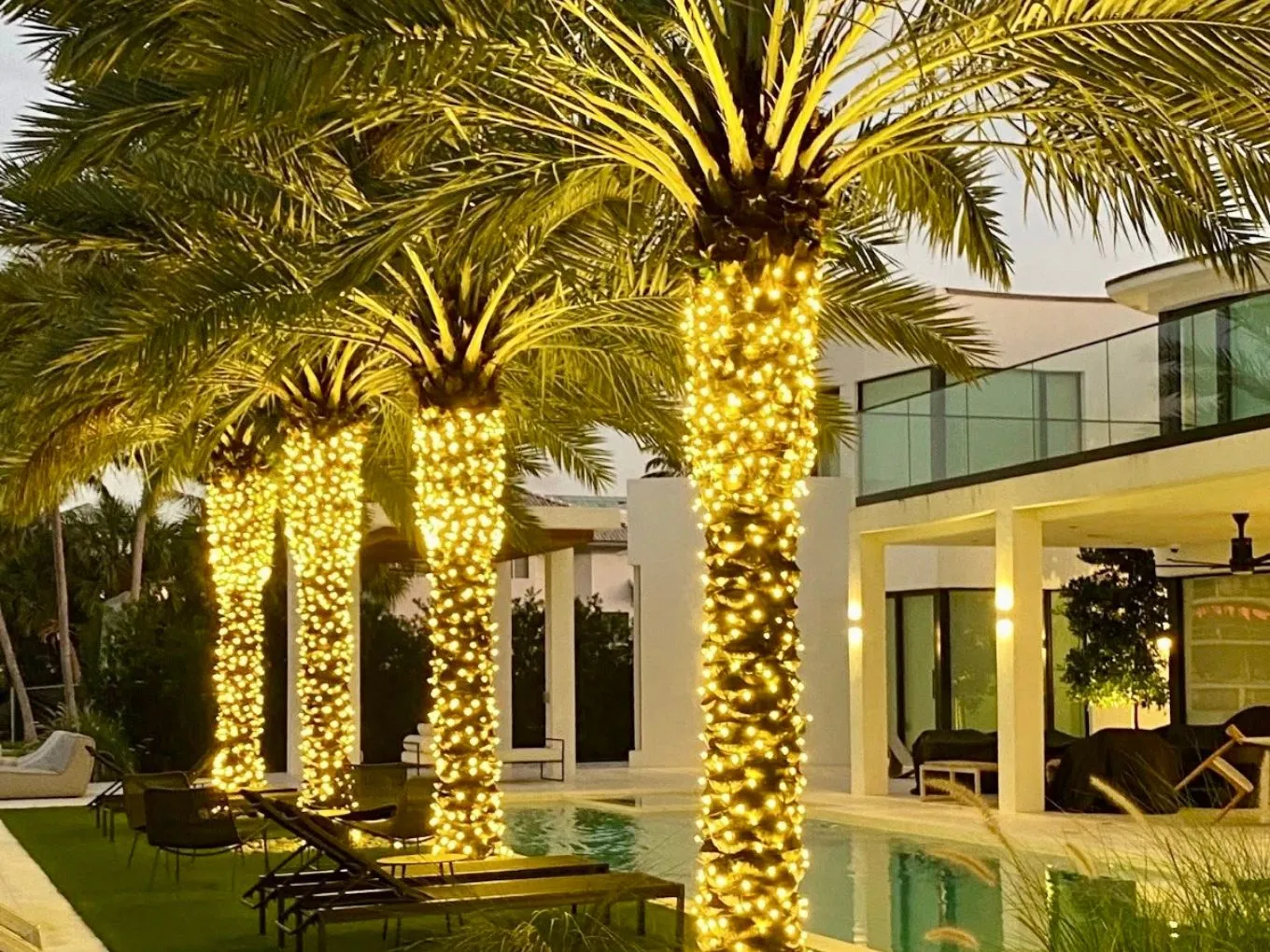
10. Palm Trunks Wrapped in Warm Yellow by the Pool
The trunks are the whole trick. Wrapping only the trunks instead of the fronds keeps the glow low and warm, so the pool area reads as a lit room rather than a lawn display. Half the strands, no ladder work, twice the atmosphere.
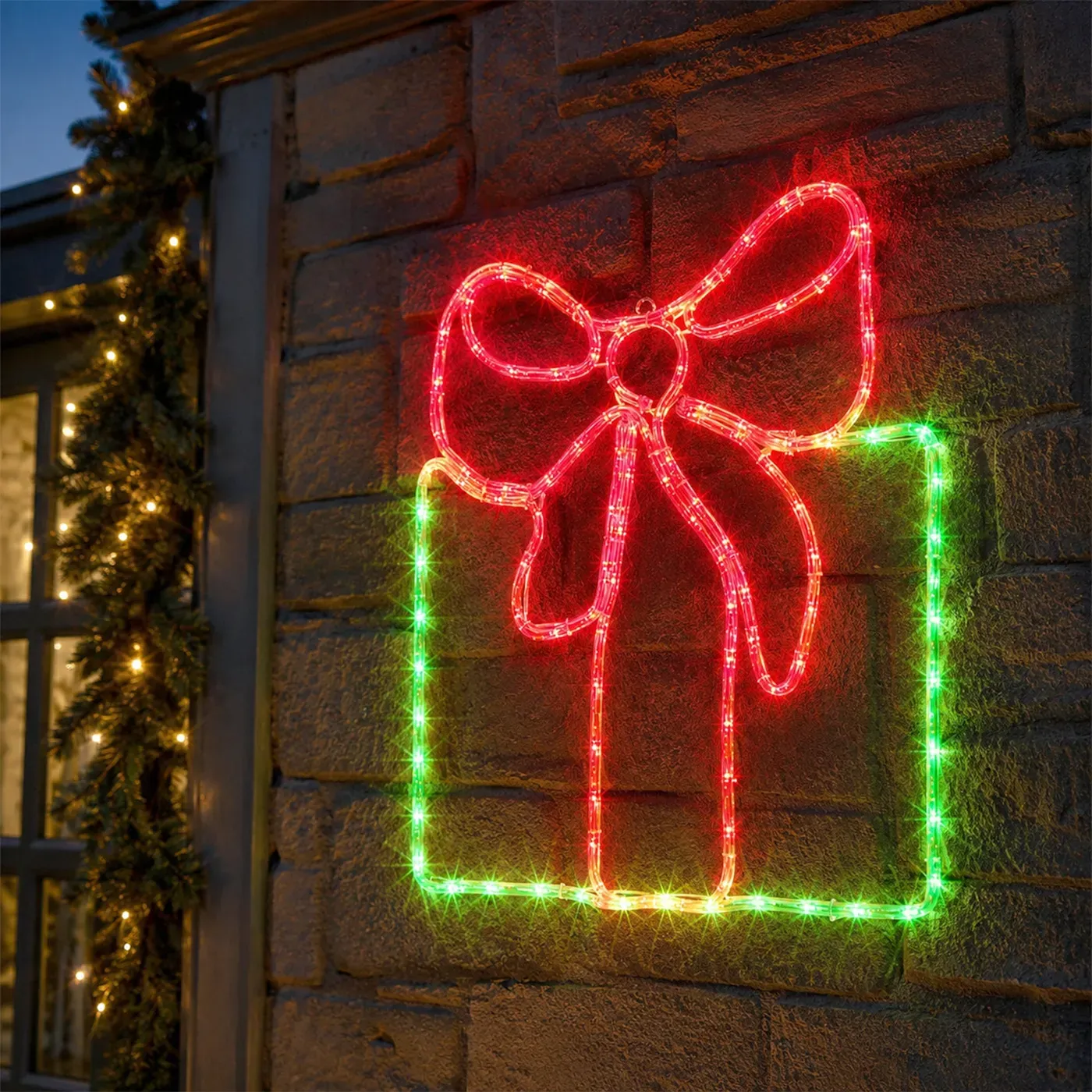
11. A Rope-Light Gift Box Against a Block Wall
Rope light is the only product that makes a clean graphic shape on a wall — it holds its line where string lights sag. Outline first, then fill: green rope for the box, red for the bow, and keep the evergreen garland beside it in warm white so the two brightness levels don’t fight each other.
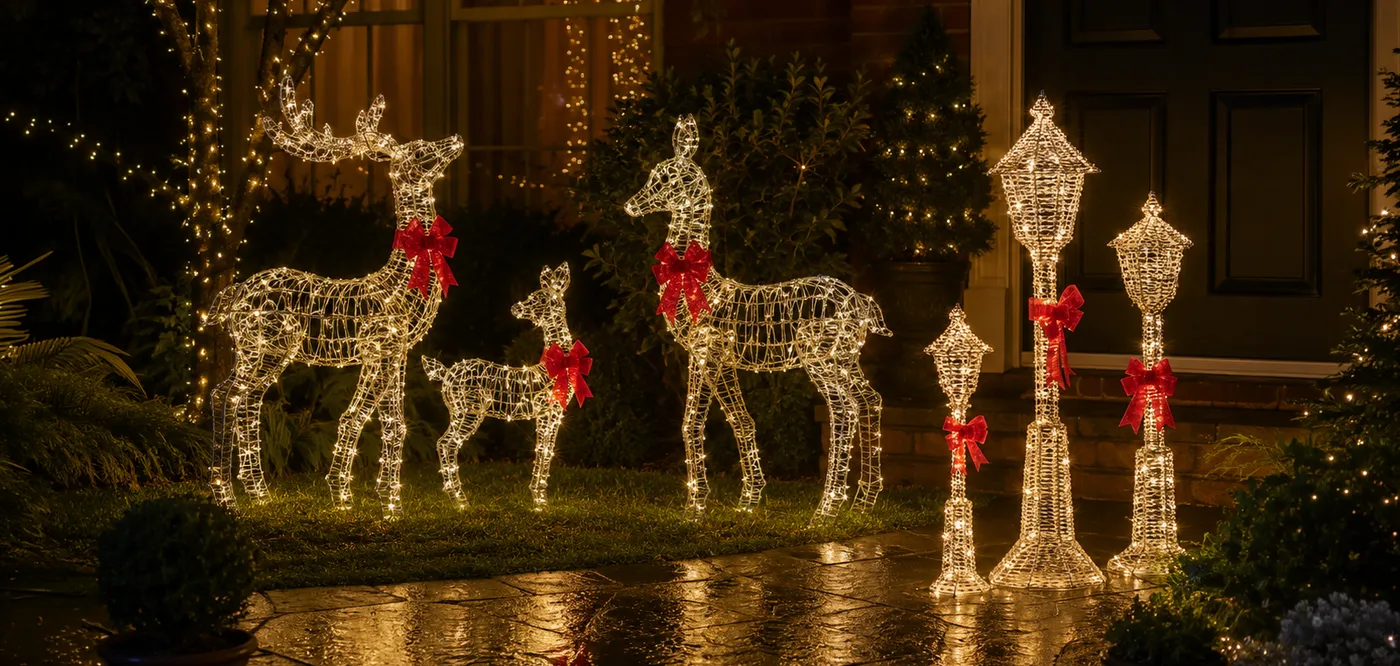
12. Three Wireframe Deer, Three Little Lampposts
Here’s the formula: three deer, three lampposts, and one red repeated on every bow. Roughly 80 percent warm white glow, 15 percent dark green foliage, 5 percent red. Switch the red to plaid ribbon and it reads rustic; swap to gold and it turns formal without buying a single new figure.
13. Tree and Mantel: The Cozy Indoor Pairing
- Lit 7.5 ft tree: $90–$220
- Warm white strands, 6 boxes: $30–$60
- Mantel garland with red berries: $25–$55
- White ceramic houses and wrapped gifts: $20–$45
Total: about $165–$380. Budget version: a thrifted tree plus plug-in strands, closer to $80.
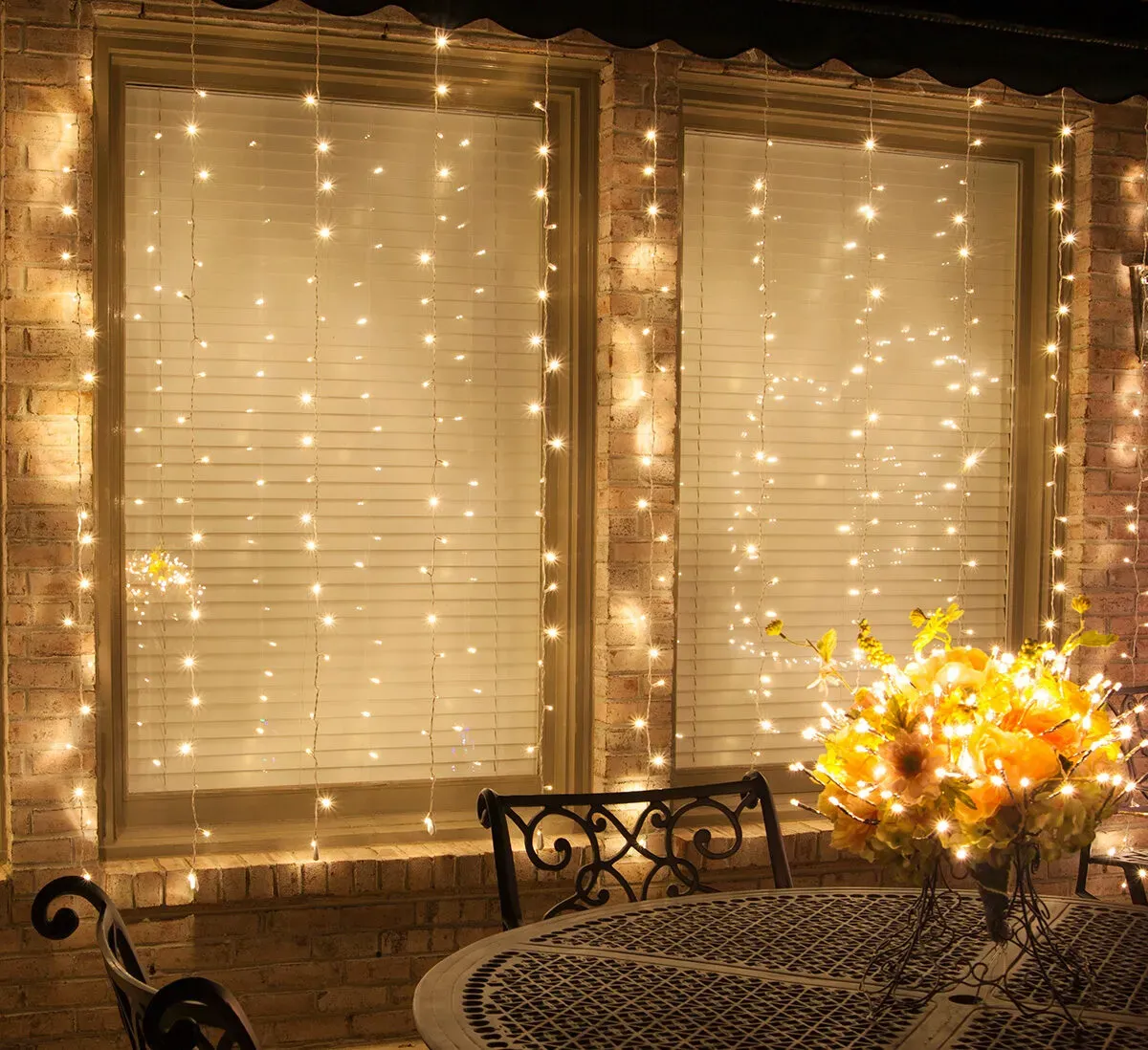
14. Icicle Strands Down Brick, Flowers on the Patio
Icicle lights are the highest-maintenance strand you can buy: the drops tangle, and one dead bulb darkens a whole section. Test every strand indoors in October, store them looped around a cardboard spool, and expect two to three seasons before the white plastic yellows. Curtain lights give a similar look with fewer failure points.
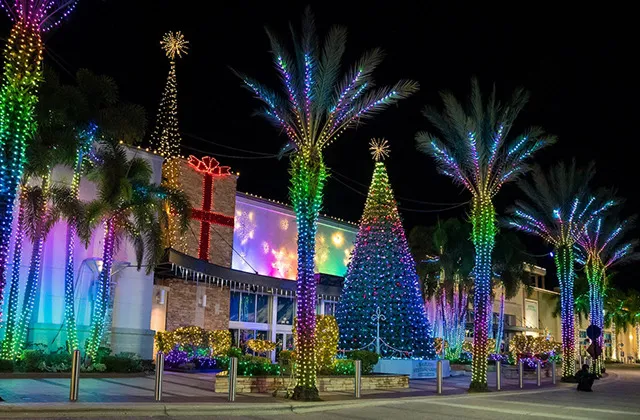
15. Rainbow Palms and a Giant Gift Box Facade
Gradient is what makes this readable from a block away: each palm gets its own sweep of color, so the row looks like one lit object instead of ten competing ones. The oversized bow and projected snowflakes work because they’re bigger and simpler than everything around them.
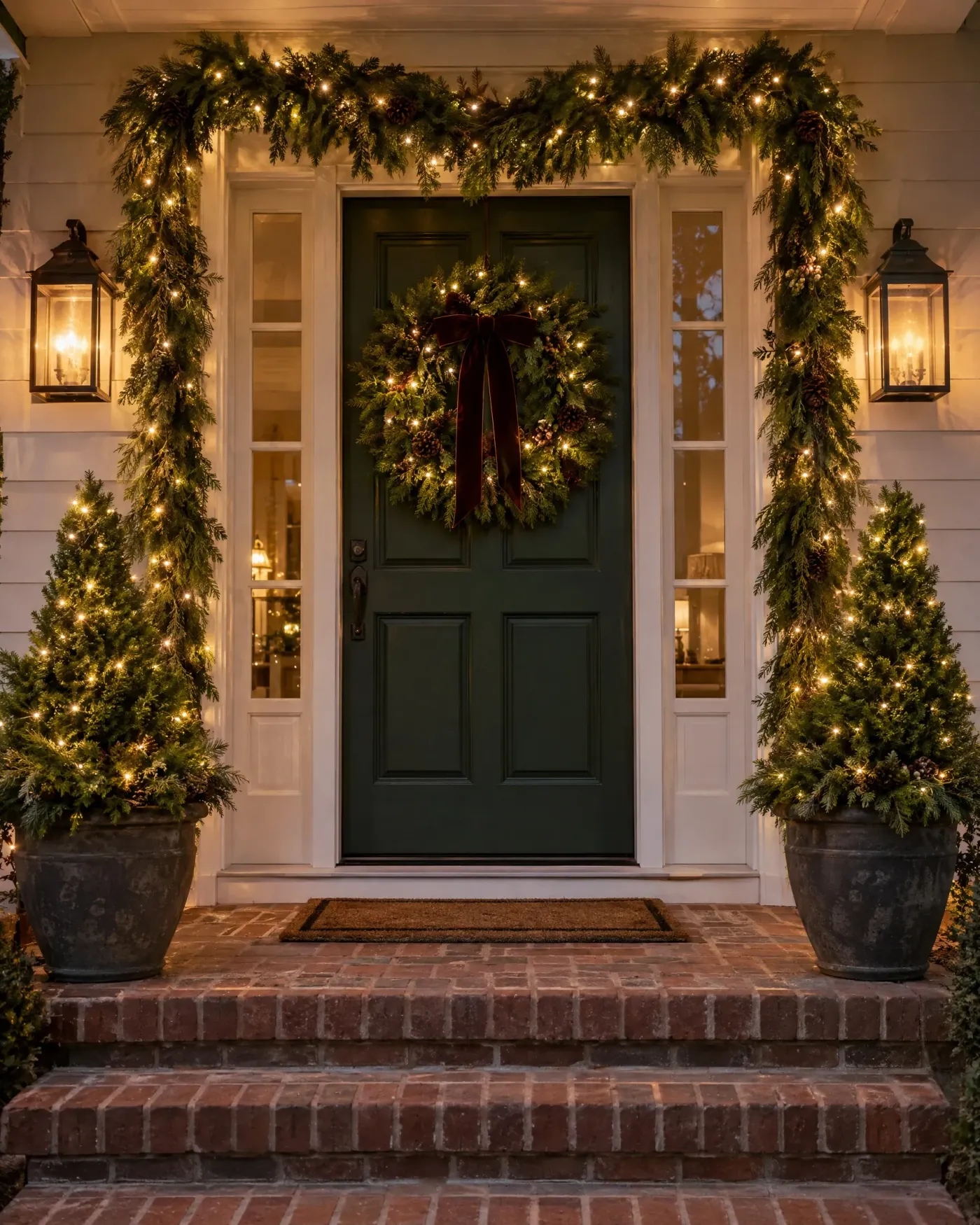
16. A Green Door With a Deep Red Velvet Bow
Hang the wreath so its bottom lands about a third of the way down the door, then run the garland until it just touches the wreath’s edges — that connection is what makes an entry read styled rather than decorated. Match the potted trees to handle height so they frame the door instead of competing with it.
17. White Double Doors Dressed in Ornament Garland
Go heavier than you think.
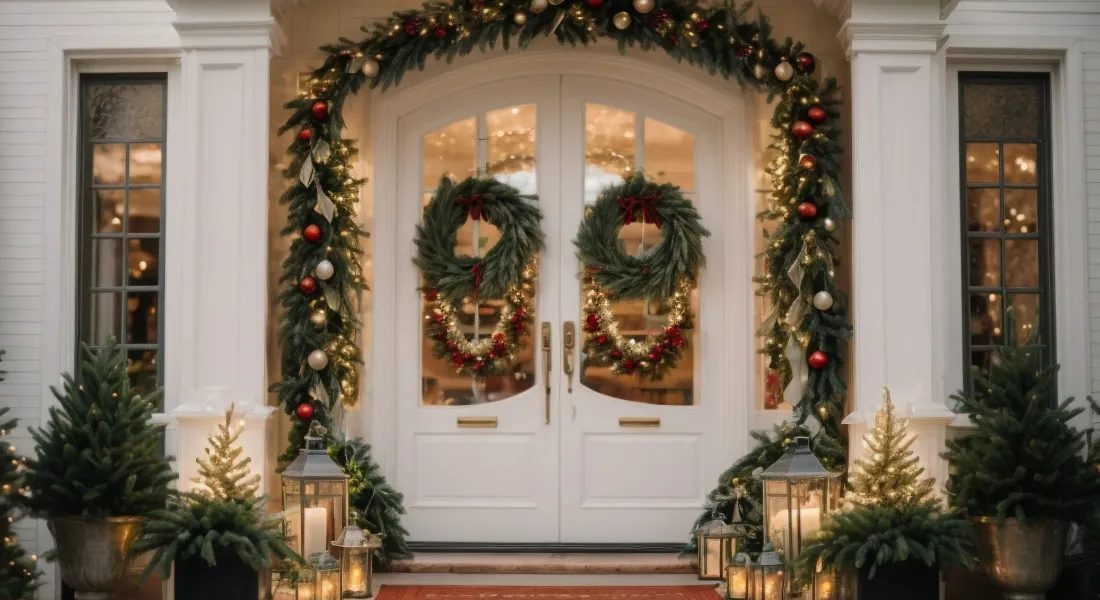
- Measure the archway span and buy garland at 1.5× the length.
- Set cup hooks at the corners and center, not on the door face.
- Wire ornaments in odd clusters of three, mixing 2-inch and 4-inch baubles.
- Thread ribbon through last so it sits on top of the greens.
Three hours, $90–$150.
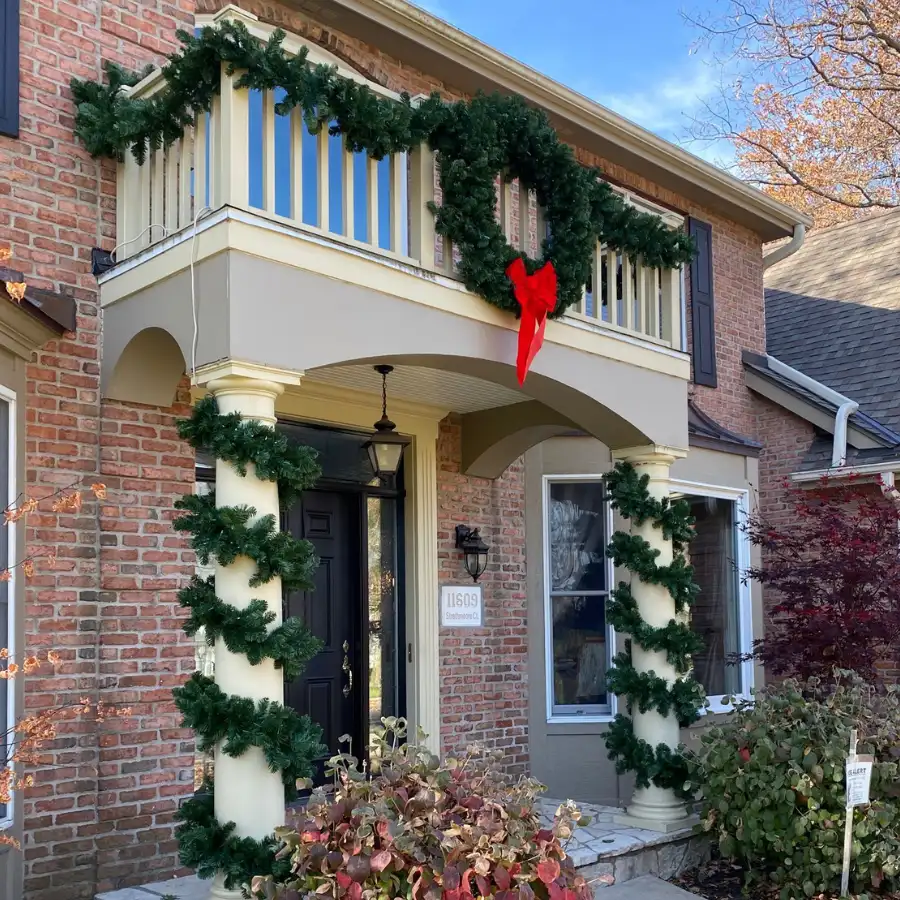
18. Balcony Garland Spiraled Around Cream Columns
Faux pine garland is where budgets quietly die. Buy plain green garland from a big-box store and add the interest yourself: one spool of ribbon, a bag of shatterproof ornaments, and one good wreath for the railing. Two seasons of reuse and the cheap version has already paid for itself.
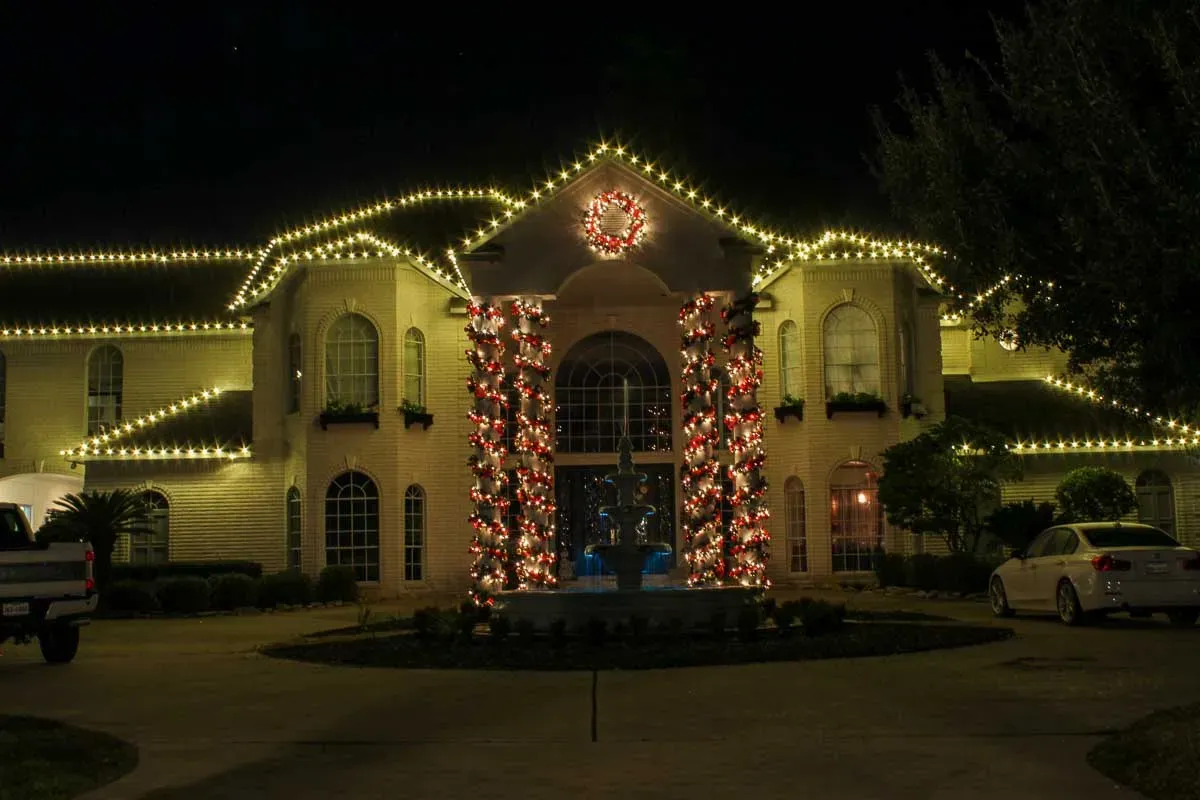
19. Red and White Column Garlands by a Fountain
Spiraling a column eats garland fast — a 9-foot column at 12-inch spacing takes roughly 20 feet of garland before you add a single ornament. Measure circumference times number of wraps before ordering, and zip-tie to a hidden cord rather than the paint. Compare with Idea #17, where the garland drapes instead of wrapping.
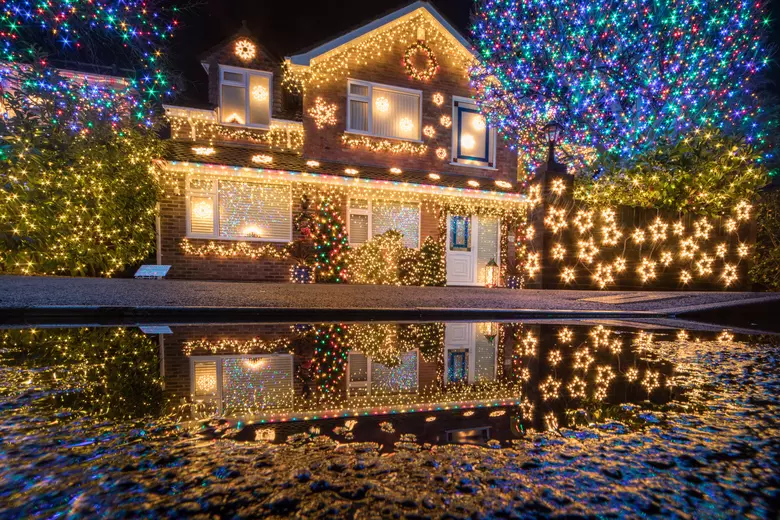
20. Architecture in White, Trees in Every Color
The star wall is the element I’d fight for. Everything else outlines the house in a predictable, tidy way; one dense cluster of white stars gives the eye somewhere to land and makes the whole property feel curated instead of merely thorough.
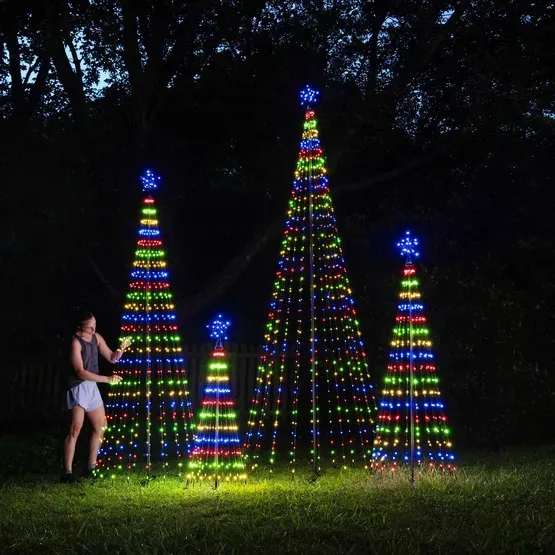
21. Four LED Cones Graduating Under Blue Stars
Graduated height does all the work. Four identical cones would look like a yard sale; staggering them tall to short creates a skyline, and the matching blue star toppers tie the group together across that variation. Buy one size up from what feels right — cones read smaller at night.
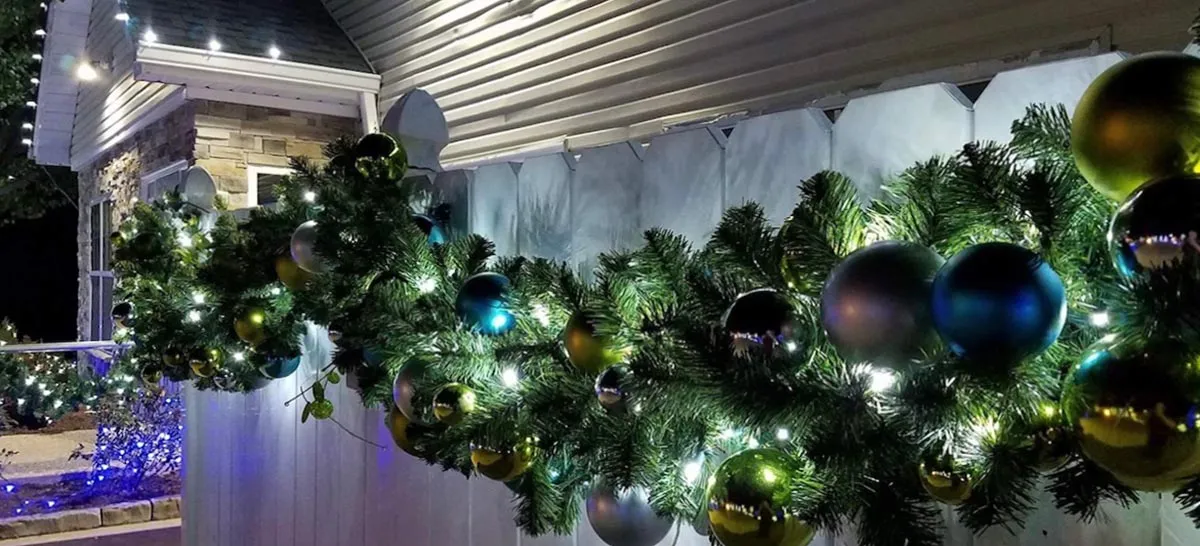
22. Jewel-Toned Baubles on a White Fence Garland
Odd numbers, three sizes: cluster a 6-inch, two 4-inch, and three 2-inch baubles, then leave a hand’s width of plain greenery before the next cluster. Cool white light makes deep blue and silver ornaments glow; warm white turns them muddy. Match the strand to the ornaments, not to the house.
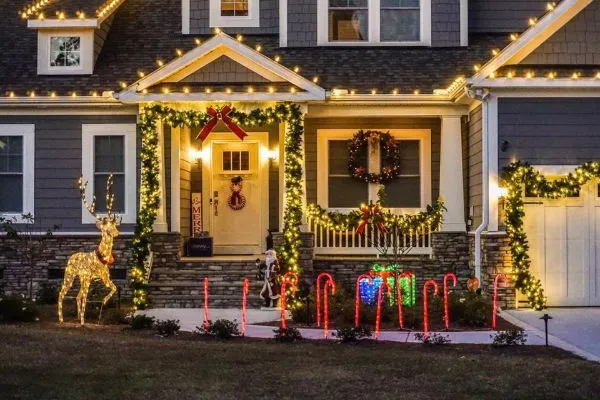
23. Porch Garland, Candy Canes, and a Lit Reindeer
Every cord you can’t see is a cord you’ll trip over in the dark or find full of water in January. Keep every connection off the ground, use outdoor-rated timers, and plug into a GFCI outlet. A $20 timer also means you’re not the person unplugging eleven strands in slippers at midnight.
24. Red and Green C9s Along Every Roofline
C9 bulbs are replaceable one at a time, which is why they outlast cheap mini strands — but you’ll still lose a few every season. Buy a spare box of the exact same color and note the brand. LED versions cost about $2 a year to run versus $20+ for incandescent.
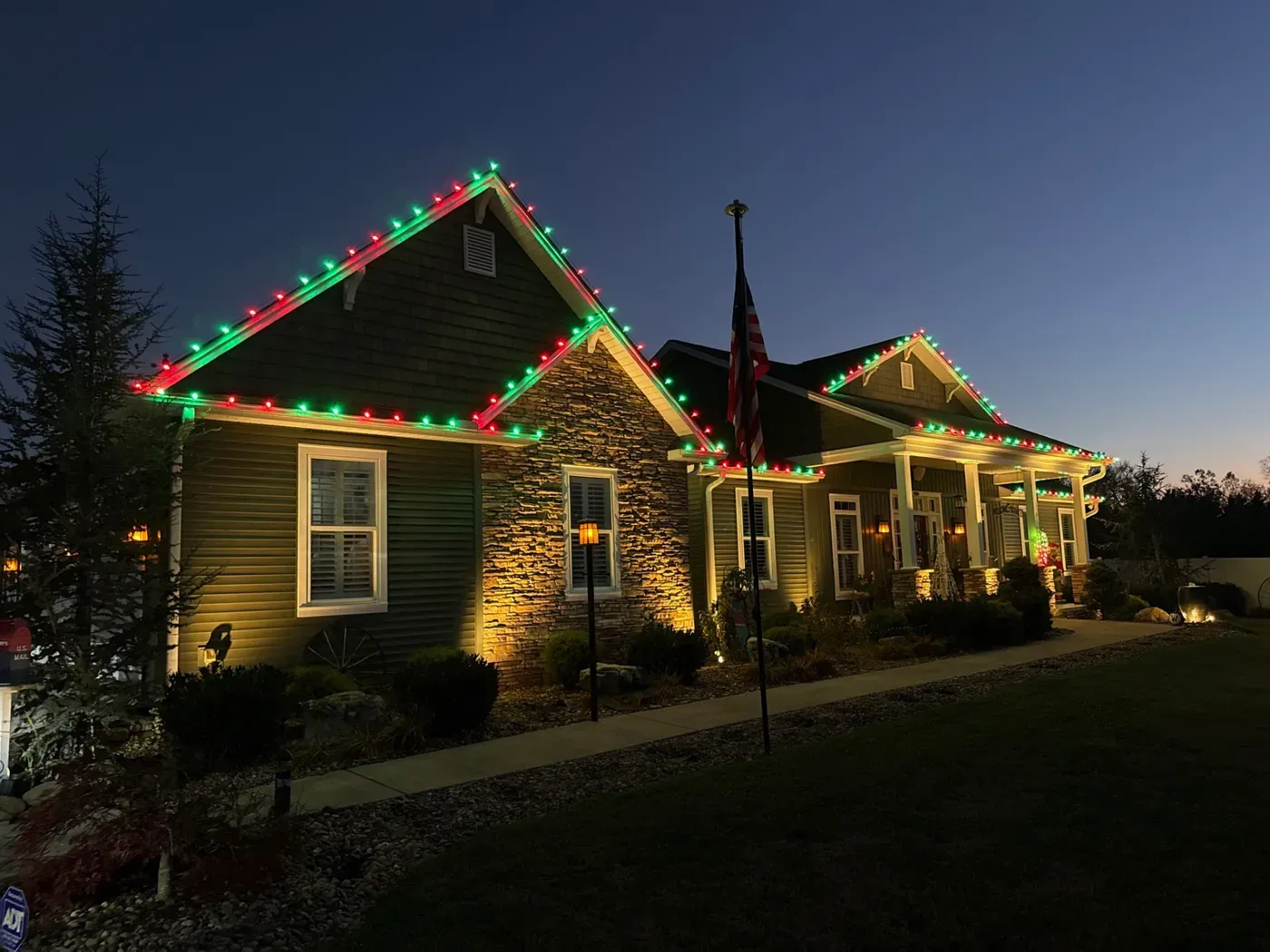
25. Windowsill Candles Under a String of Fairy Lights
Keep everything on the sill in one family: 2700K bulbs, amber or clear glass, one small plant. Drape the strand along the window frame rather than across the glass, so you get a soft halo from inside and a clean line from the street. Battery packs hide neatly behind the curtain hem.
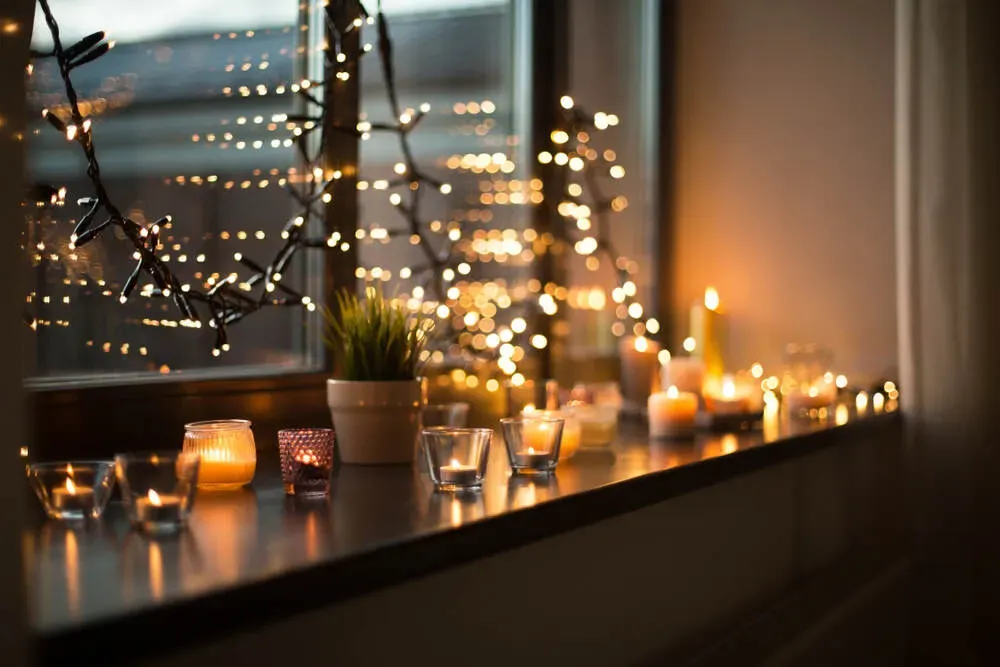
26. Garland on the Columns, Lights on the Gutter
The roofline first, always.
- Sketch the run you want to light and count the footage.
- Add 20 percent for sag and corners.
- Clip to the gutter lip with gutter clips, never staples.
- Plug everything into one outdoor timer.
One ladder session, about $70–$120.
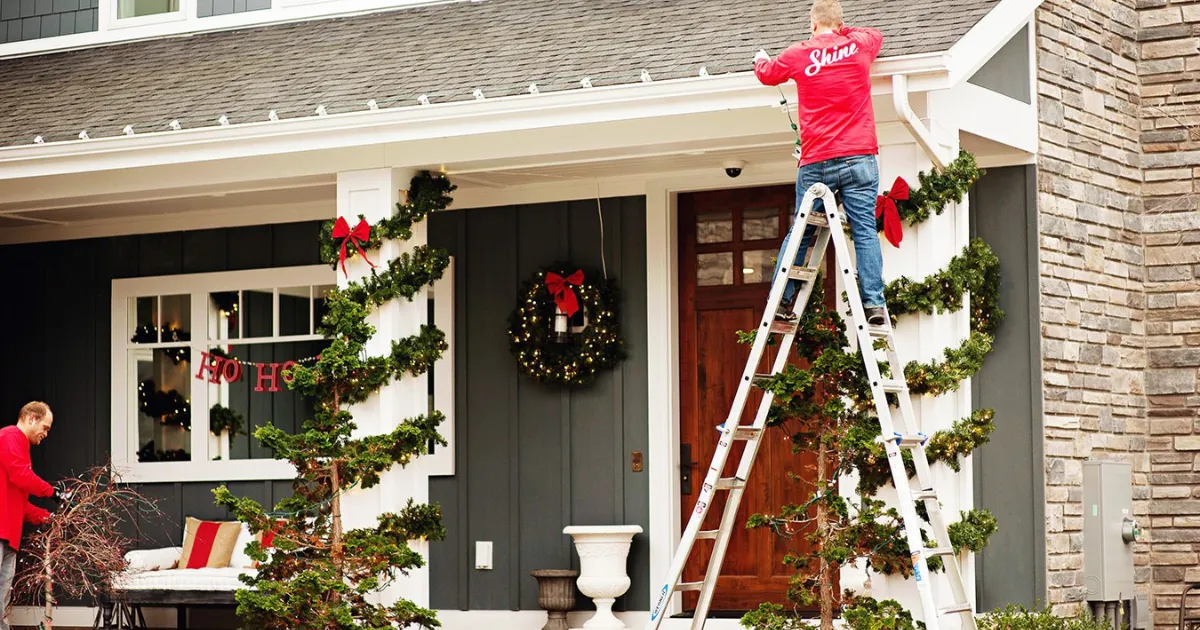
27. Potted Lit Trees Flanking a Golden Facade
You don’t need a commercial display budget. Two potted evergreens, one strand each, and a bag of oversized shatterproof baubles gets you 80 percent of this look for under $60. The scale of the ornaments sells it — not the price of the greenery, and not the building behind it.
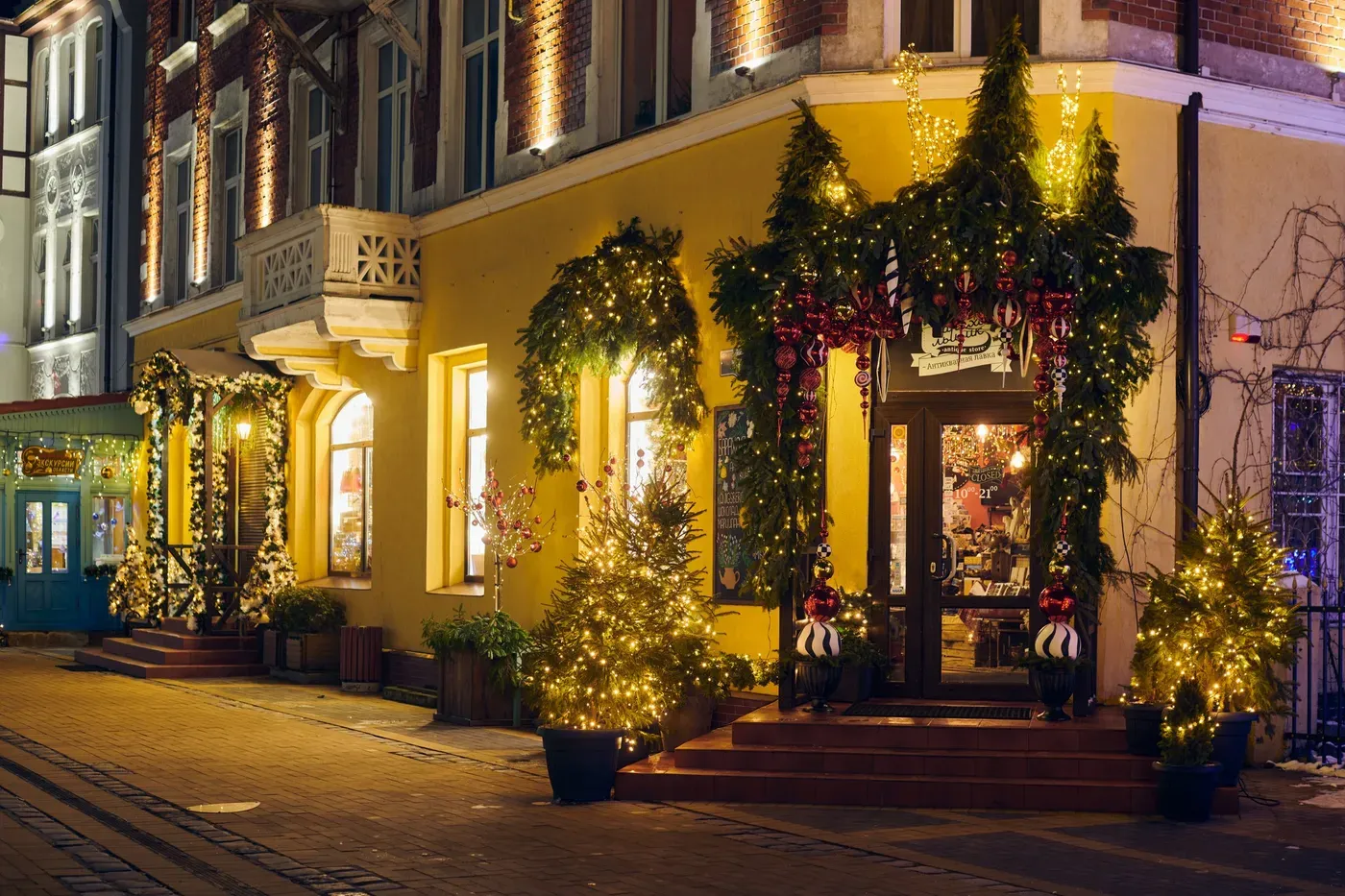
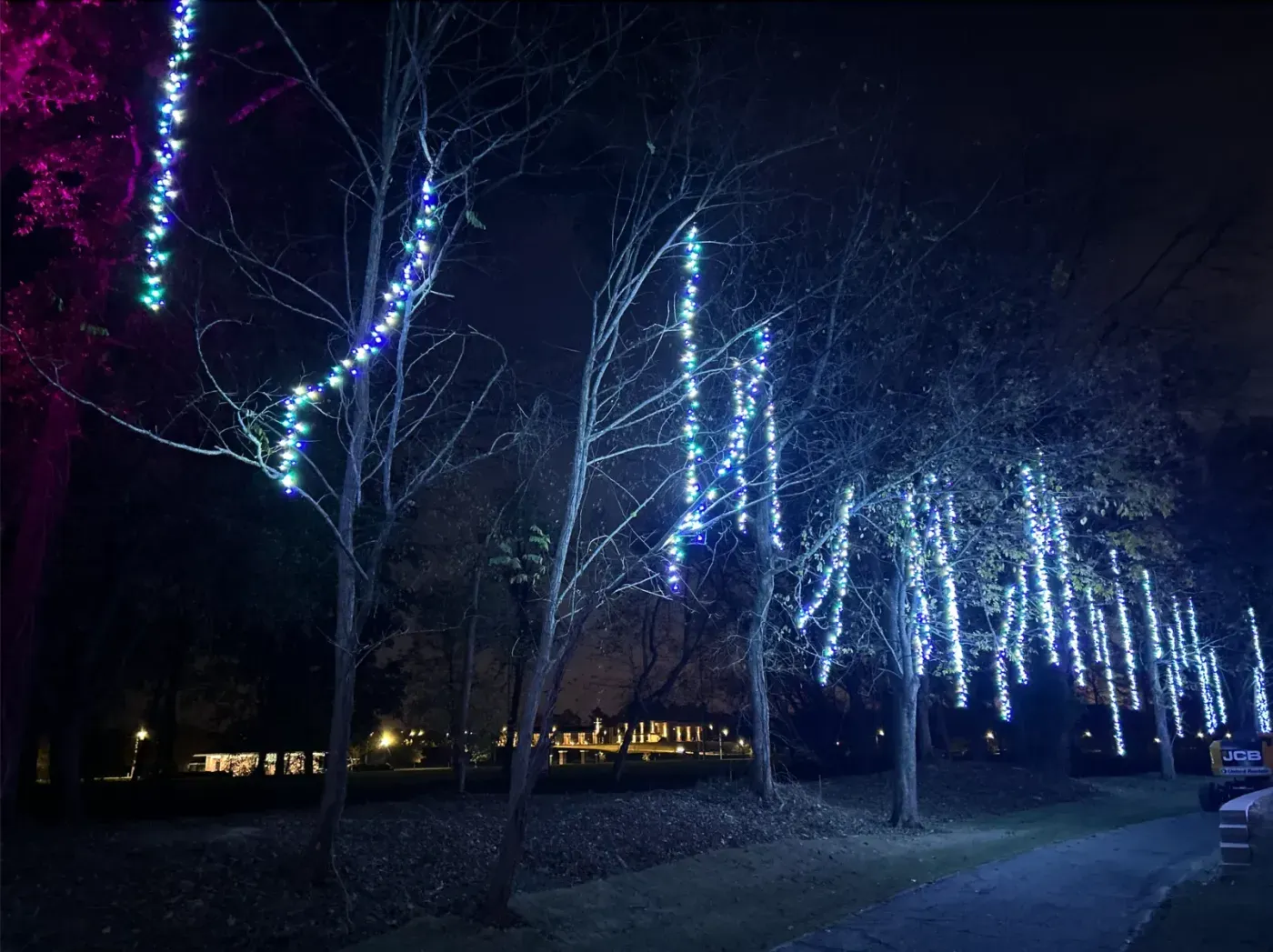
28. Cascading Blue and Green Drops on Bare Trees
Vertical drops on bare branches are the most underrated trick in this whole list. Because the strands hang free, the tree looks like it’s raining light instead of wearing it — and bare branches mean no foliage swallowing the glow. One color per tree keeps it from reading chaotic.
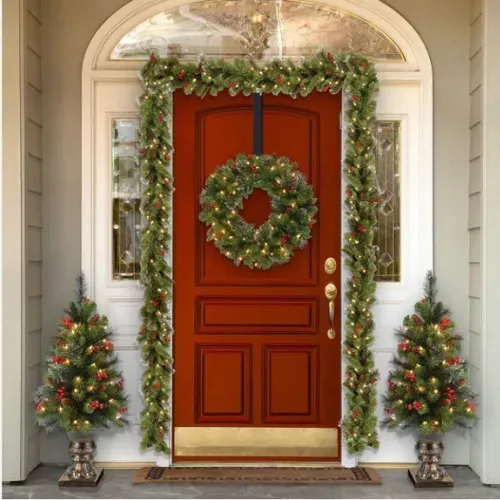
29. Frosted Garland and Mini Trees in Urns
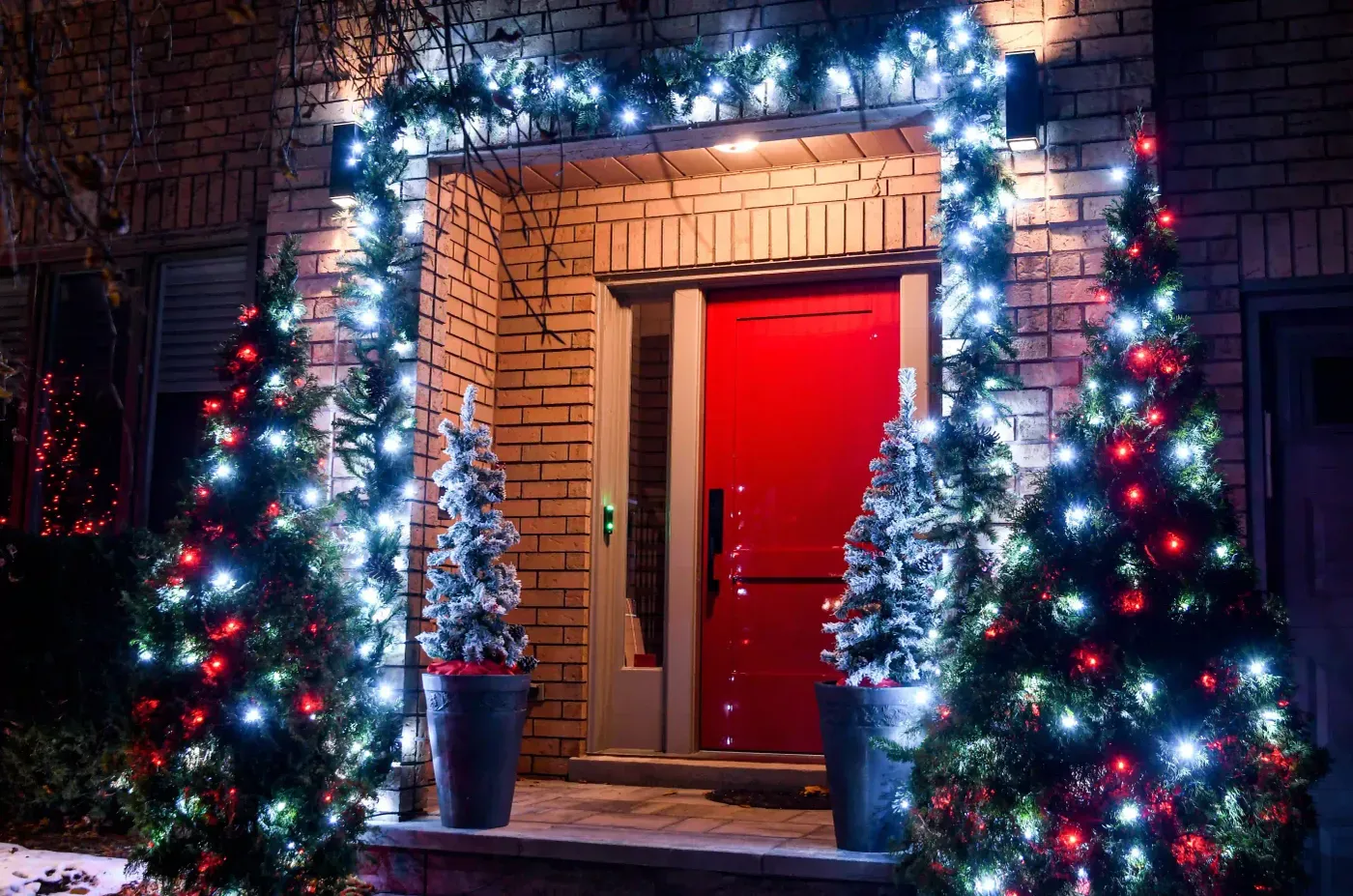
The frosted tips make this entry, and they’re easy to fake: spray the outer two inches of a plain garland with flocking spray, let it cure overnight, then wire in the red berries. Frost the wreath with the same can so the door, the wreath, and the urns read as one matched set.
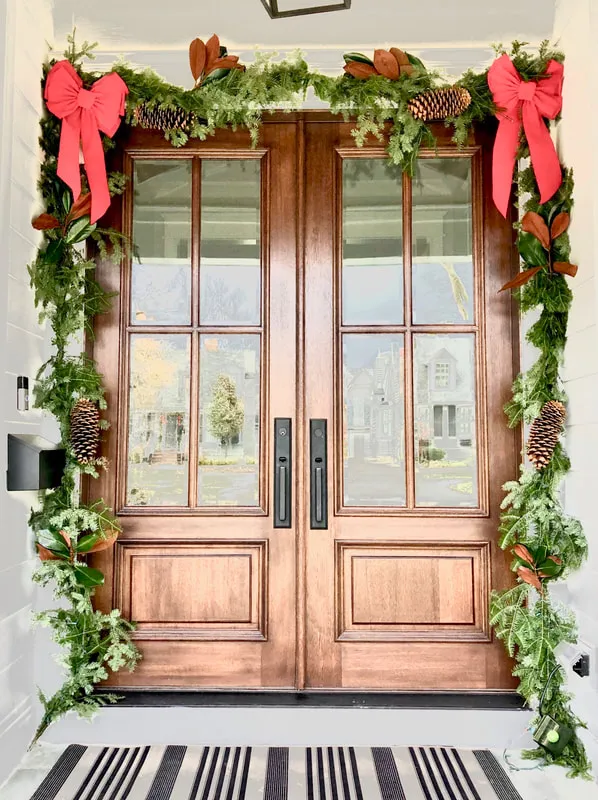
30. Pinecones and Magnolia on Wooden Double Doors
The formula: 70 percent greenery, 20 percent natural texture (pinecones, magnolia leaves), 10 percent red ribbon. Every bow should be the same size and the same distance apart — one every 18 inches on a double door looks right. Swap red for copper satin and the whole entry goes warm-modern.
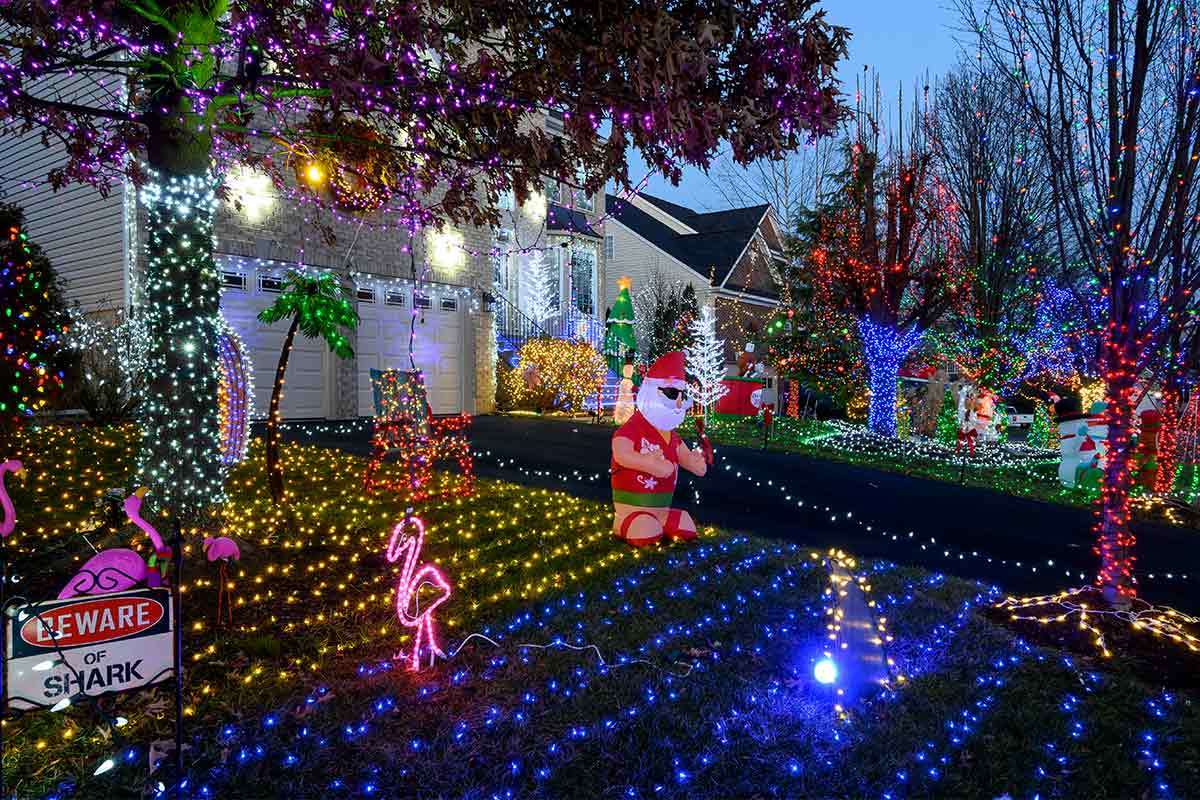
31. Flamingos, Santa, and a Fully Lit Lawn
Maximalist yards are back because the pendulum swung — after years of restrained warm-white rooflines, people want the pink flamingos and light nets again. It’s playful, it photographs better than it sounds, and it’s the fastest way to make kids on your street slow down. This one is a mood, not a resale decision.
32. A Glowing Balloon in a Curtain of Light
Cascading strands change how a tall space feels — they pull the ceiling down to human level and give a double-height room something to look at in the middle. The balloon works because it interrupts that curtain of light with one saturated, color-changing object instead of more sparkle.
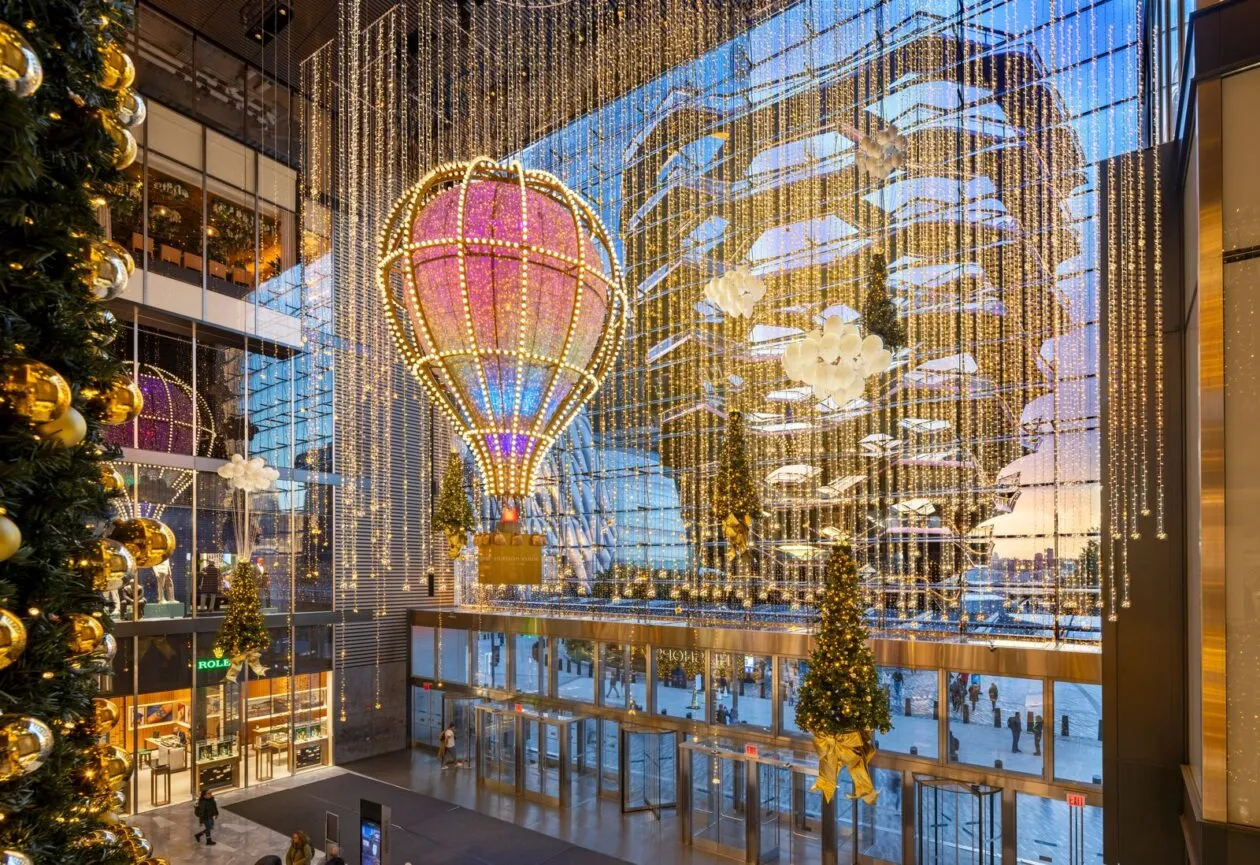
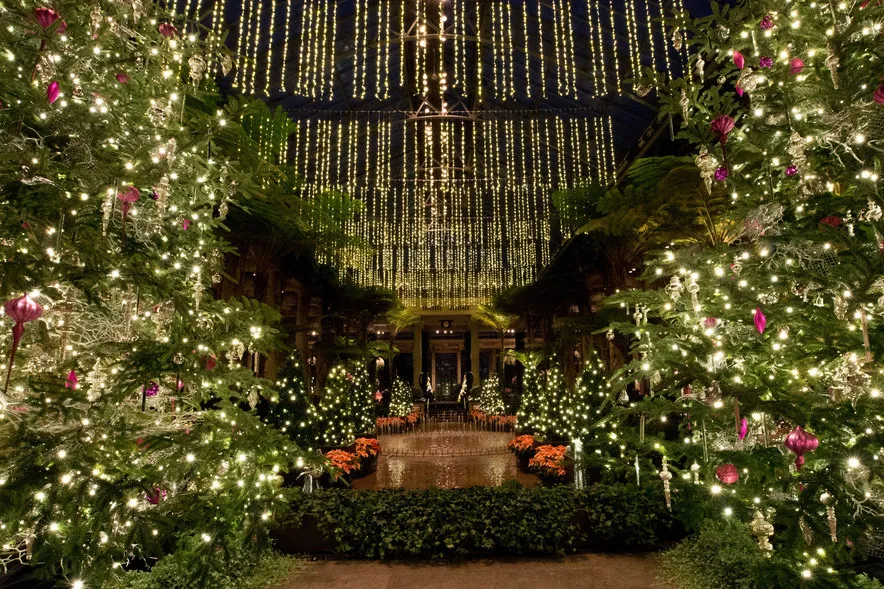
33. Cascading Strands in a Tall Conservatory
Curtain lights like these need height to look right: 12 feet minimum, 16 or better, with strands ending about 7 feet off the floor so people walk under them. In a standard 8-foot room, run the same trick on a single wall or down a stairwell opening instead.
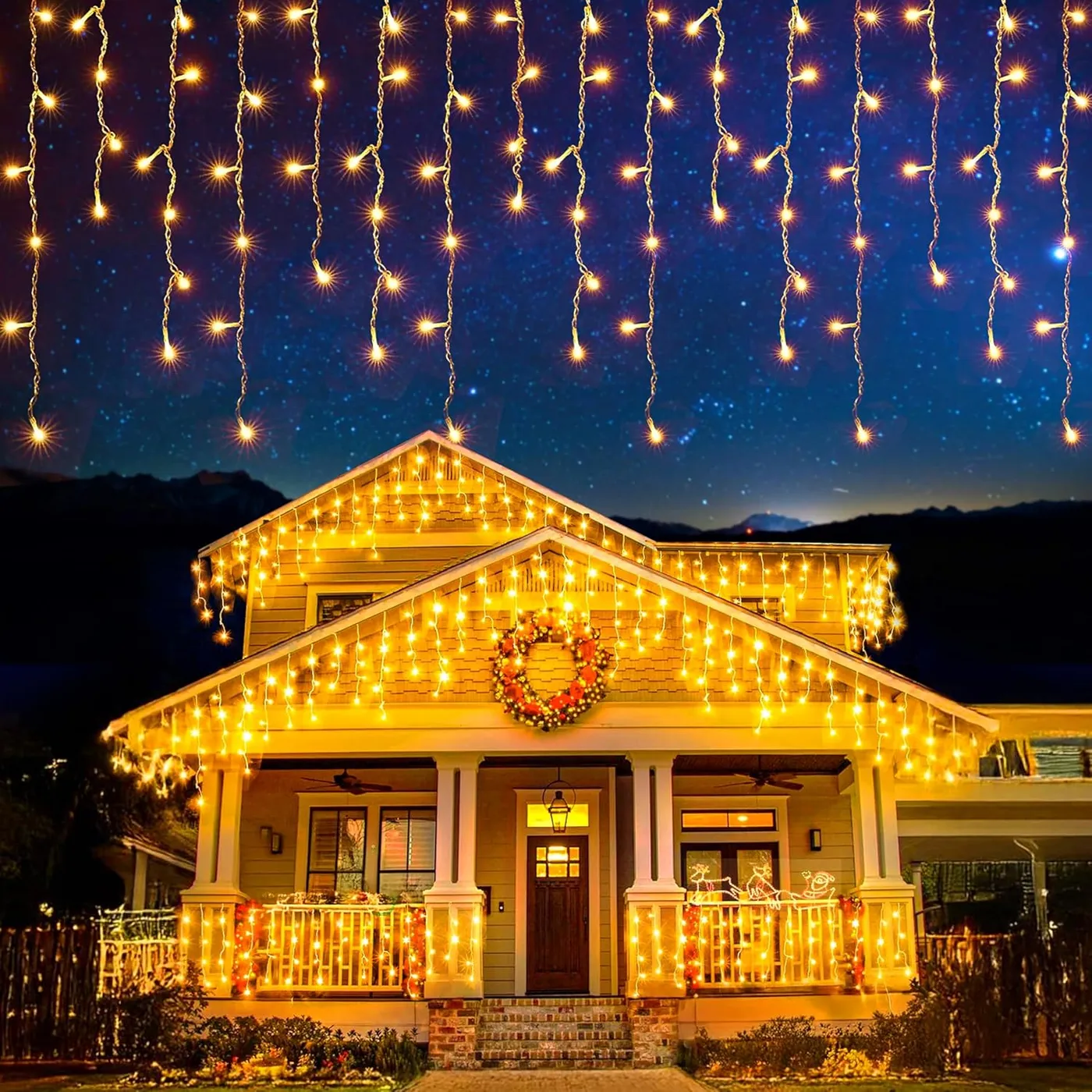
34. Icicles, a Porch Wreath, and a Starry Sky
The wreath at the porch peak is doing more than it looks. Icicle lights alone create a horizontal wash; one rounded shape at the highest point gives the house a face. If you buy one extra thing this year, buy that. Compare with Idea #24 for a bolder roofline.
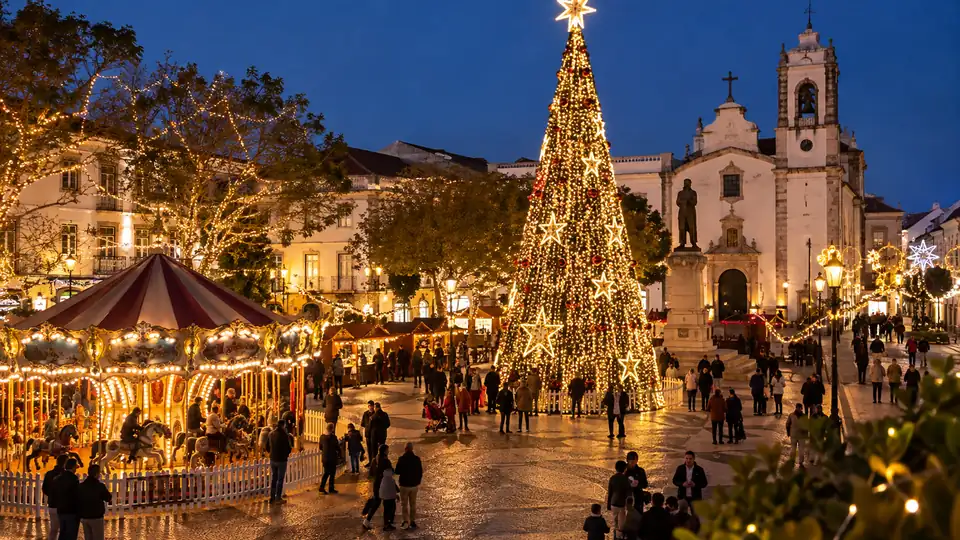
35. A Towering Tree Beside the Carousel
Scale and repetition: the tree is covered densely enough that individual bulbs disappear into one glowing mass, and the single star topper gives it a focal point. The carousel and the wrapped trees repeat that same warm light at smaller scales, so the whole square feels like one display instead of many.
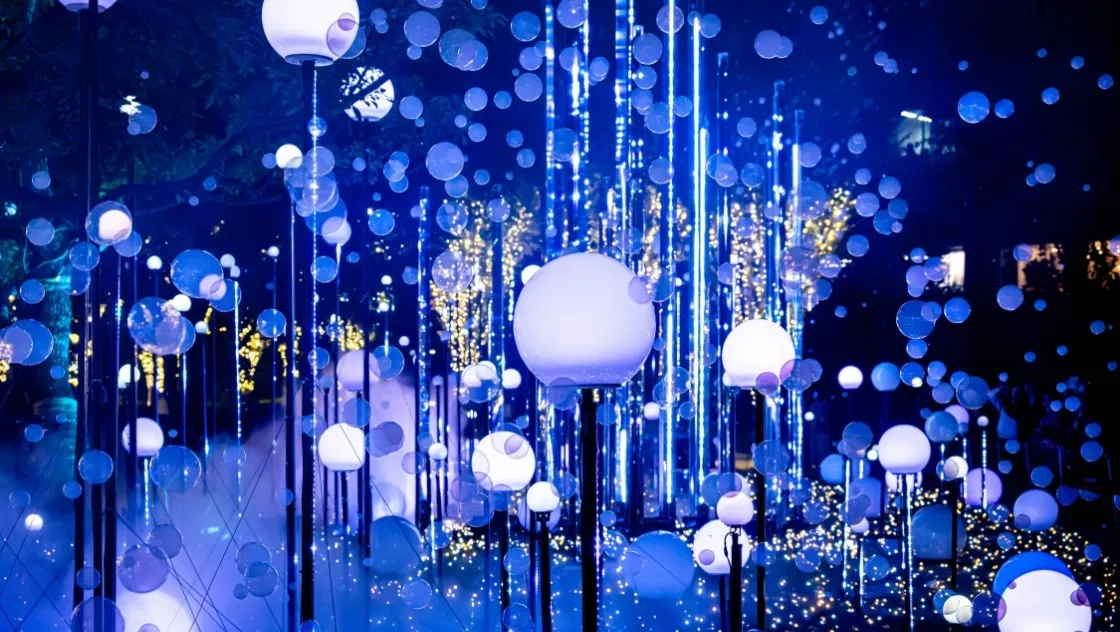
36. Blue Spheres and Vertical Light Tubes
Blue LED always photographs darker and moodier than it looks in person — what reads as a deep, cinematic blue on camera can feel dim across a room. Test a strand at night before committing to an all-blue scheme, and keep a few warm white points so the space doesn’t go cold.
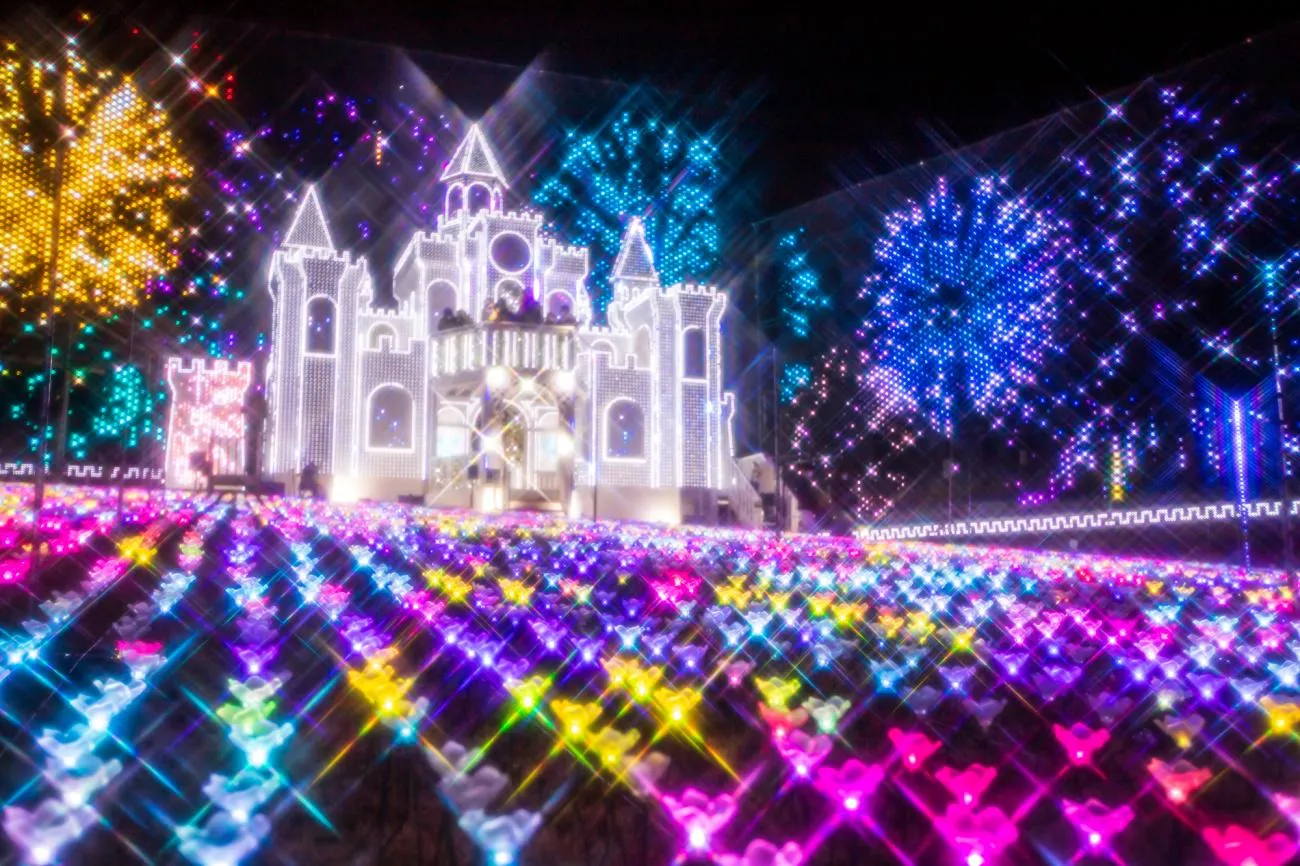
37. White Mantel, Green Garland, Red Berries
Fairy lights are the fussiest strands you’ll own: thin wire, tiny batteries, and a habit of dying mid-season. Buy a set with a remote and timer, keep spares in the same drawer as the garland, and fluff the greenery every few days — faux pine flattens right where the lights are wired in.
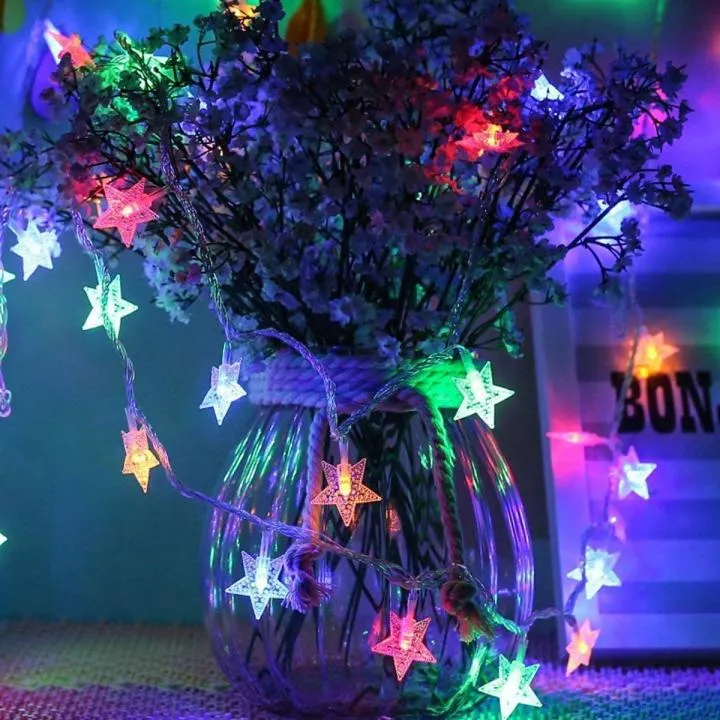
38. Star Lights Wrapped Around a Ribbed Vase
Total cost of this one: about $25. Wrap a short strand of star-shaped lights around any vase you already own, tuck in grocery-store flowers, and you have a centerpiece that photographs like it cost ten times that. One strand per vase — two starts to look like a craft project.
Go Light Up That Front Door
Start with one line — a roofline, a door frame, a windowsill — and let it do its job before you add a single reindeer. That’s how these displays actually come together, one strand at a time, and how they end up looking curated instead of collected.
📌 Pin your favorite idea now so it’s waiting for you on the first cold Saturday of the season.