
You know the feeling: you’ve saved 84 Christmas tree photos to Pinterest and somehow they’ve canceled each other out entirely. Here’s the thing — most of those trees aren’t wildly different. They’re the same four or five themes wearing different ornaments.
We spent serious time browsing Target, Etsy, and Pottery Barn to bring you only what’s worth your attention this year, across price points from about $9 to $399.
What’s inside: 29 curated tree and styling ideas, from rustic woodland and pastel confection to classic red-and-gold and quiet neutral minimalist. Budget and luxury versions sit side by side, and every idea is shoppable through direct product links.
2026’s biggest shift is restraint with one deliberate surprise — a committed palette plus a single odd element that makes the whole tree yours. And stay until the end — we break down the most common mistakes that can ruin these looks.
📌 Save this to Pinterest for later — you’ll want to revisit these ideas.
1. Cozy Classic Living Room Anchored by One Warm-Lit Tree
There’s nothing complicated happening in this living room, and that’s the point. The evergreen tree is the only saturated thing in the frame — everything else sits in muted beige and warm white, so your eye has somewhere to land. The string lights quietly do double duty as the room’s evening light source, which is why the wood floor picks up that soft amber reflection instead of a harsh overhead glare.
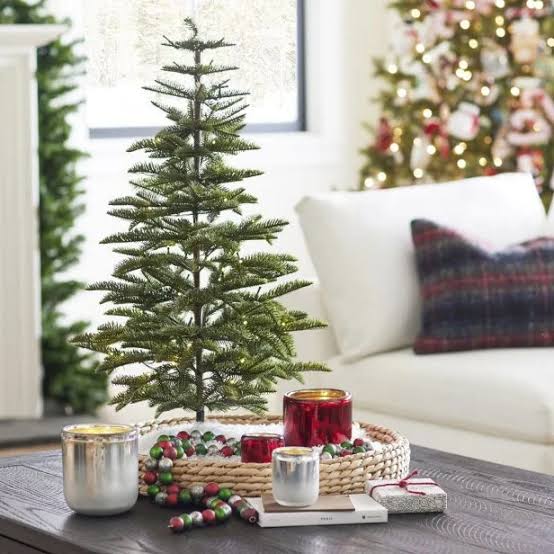
Pull the tree 18 to 24 inches away from the arm of the sofa. Closer and the room feels crowded; farther and it stops reading as part of the seating area. Then check your bulb temperature — 2700K to 3000K keeps beige textiles looking beige, while cool white bulbs will quietly turn your entire neutral palette gray by 8 p.m.
- Main furniture (sofa, coffee table): $900–$2,400
- Tree (7.5 ft, unlit or pre-lit): $180–$650
- Lighting (string lights, floor lamp): $45–$180
- Textiles (pillows, throw, tree skirt): $80–$260
- Ornaments and decor: $90–$300
Total: roughly $1,295–$3,790 if you’re starting from an empty room.
Budget alternative: keep the sofa you have, buy a $99 unlit 7 ft tree, and spend the savings on 300 warm-white lights and one textured throw. Same glow, about 45% less.
2. Rustic Console Styled With Brass Bells and a Dough Bowl
The formula here is roughly 50% warm wood, 25% evergreen, 15% brass gold, and 10% deep red. That balance is why the console reads calm instead of cluttered — the wood is the base note, the greenery is the season, and the brass is what makes it feel collected rather than bought all at once. Trade the red berries for icy blue thistles and the same formula goes winter-neutral instead of traditional.
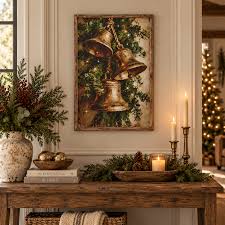
The framed bell artwork is doing the heaviest lifting, and it’s the piece most people would skip. Without it, this is a nice holiday vignette; with it, the console looks like a real corner of a real home. A framed seasonal print costs less than a second vase and gives you a focal point that works from October through January.
3. Sculptural Wooden Tabletop Trees on a Dark Coffee Table
Stacked wood cone trees look intentional when their heights follow a rough 1 : 1.5 : 2 ratio — think 6, 9, and 12 inches. Anything closer together reads like a mistake rather than a set. Keep the tallest piece under 14 inches on a coffee table so it never cuts your sightline across the room to the big tree.
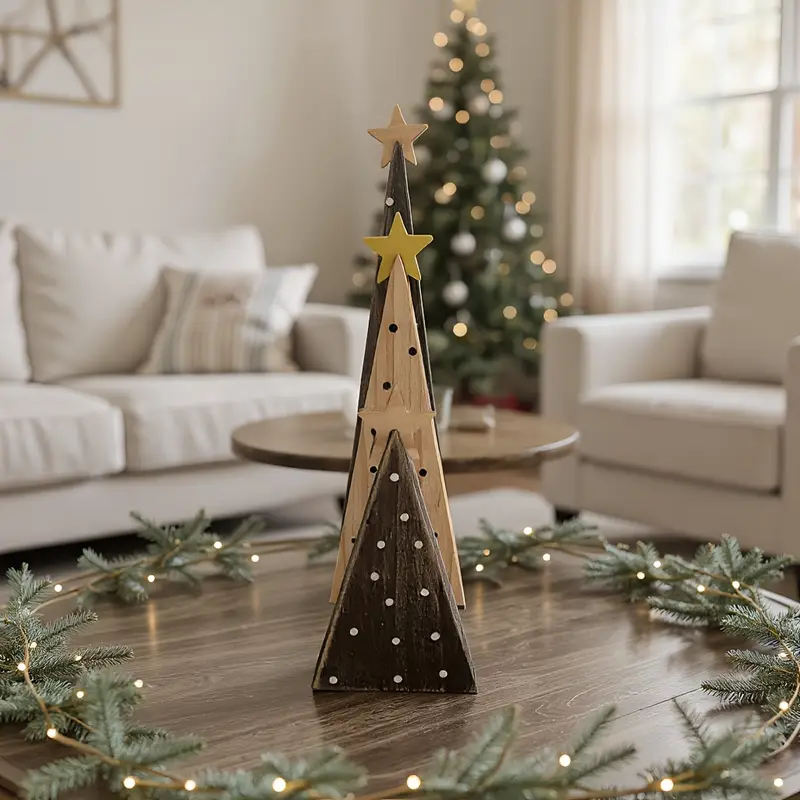
This setup needs about a 3 x 4 ft open tabletop and 30 inches of walking clearance on at least two sides. It’s built for rooms between 150 and 300 sq ft with standard 8 ft ceilings, and it’s the smaller-canvas version of Idea #1. If your coffee table is already crowded with books and remotes, clear it first — the garland ring needs negative space around it to glow.
4. Gingerbread Gnomes in Pastel Blue and Pink
Gingerbread decor has quietly split into two camps, and this is the sweeter one: brown cookie bodies in pastel blue and pink instead of the usual red-and-green. It tracks with the candy-core look all over Pinterest right now, where holiday styling borrows from bakery display cases. It’s playful enough to survive past December, which is more than most novelty decor can claim.

Skip the boutique price tags. Target’s holiday aisle and Five Below usually carry gingerbread-adjacent figurines for $5 to $15, and Etsy has handmade versions starting around $22. Better still, thrift stores in early November are full of resin figurines nobody wanted last year for $2 to $4 apiece. Two of them on a shelf with a few miniature gingerbread cookies gets you 90% of this look.
5. Red and Gold Baubles on Frosted Branches
The frosted branch finish is what makes this tree look expensive. It scatters light instead of reflecting it straight back, so the red glitter bauble and the glossy gold ones each read as separate sparkles rather than one blob of shine. Move those same ornaments onto a plain green tree and the whole thing flattens out considerably.

Flocked trees shed. Expect a fine white dust on your floor for the first week, and keep them away from wood heat and direct sun or the flocking yellows within a season. Also skip the flocked finish if you have a toddler or a cat who treats branches as a personal challenge — the coating is not edible and it does come off in handfuls.
6. Charcoal Brick Fireplace Dressed in Velvet Bows
The charcoal brick is a gift here, because forest green, mustard yellow, and burgundy all get louder against it. Notice the bows aren’t uniform — mixing velvet ribbons in one wreath keeps it from looking like a catalog photo. And the miniature houses on the mantel repeat the palette in tiny, low-stakes doses, which is why your eye keeps traveling along the shelf instead of stopping.
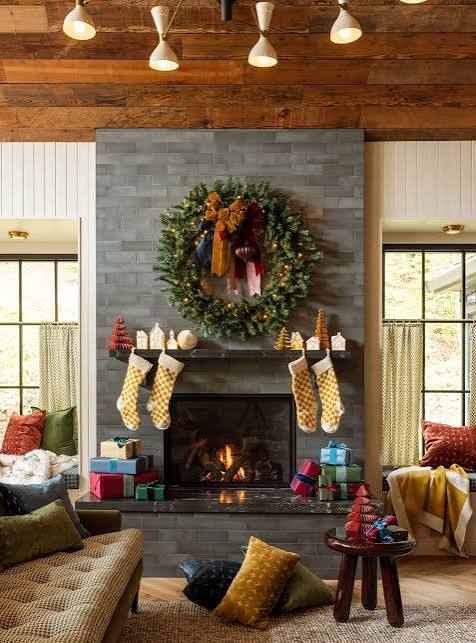
Hanging a heavy wreath on brick without drilling:
- Weigh the wreath first — anything over 5 lb needs more than adhesive.
- Clean the brick with rubbing alcohol and let it dry fully.
- Press a heavy-duty brick clip or a 5 lb adhesive hook for 30 seconds.
- Wait one hour so the adhesive cures before hanging anything.
- Loop fishing line from the wreath frame to the hook for insurance.
About 10 minutes and $8 to $14 in hardware.
Hang it so the bottom edge sits 6 to 8 inches above the mantel shelf. Lower and it competes with the houses and stockings; higher and it floats. With 9 ft ceilings, drape two extra feet of garland to one side to break up the vertical gap.
7. White Mantel Layered With Gold Stars and Snowflakes
The snowflake-printed runner is the element tying everything together, and it costs almost nothing. It visually connects the gold stars, the miniature cone trees, and the red gift boxes into one composition — exactly what a bare white mantel can’t do on its own. Swap it for a solid cream runner and the arrangement becomes separate objects sitting near each other.
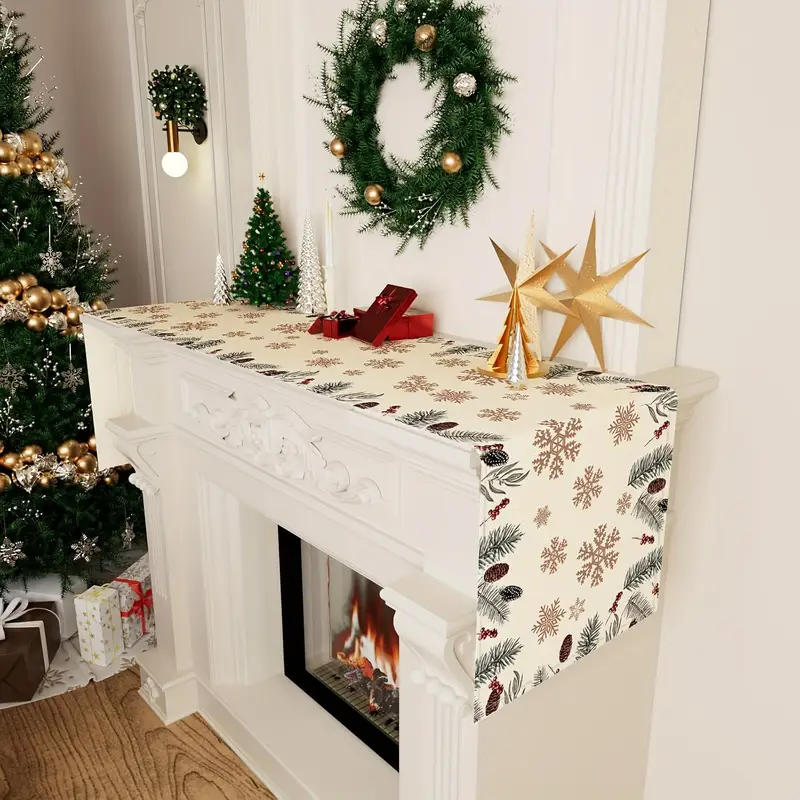
Patterned runners show dust and wax drips faster than plain linen, so plan on a cold-water hand wash mid-season and put a small plate under every candle. Gold-paper stars are the other upkeep item — they dent if you stack them, so store them flat with tissue between each one. Paper ornaments usually last three to four seasons before the foil starts lifting at the creases.
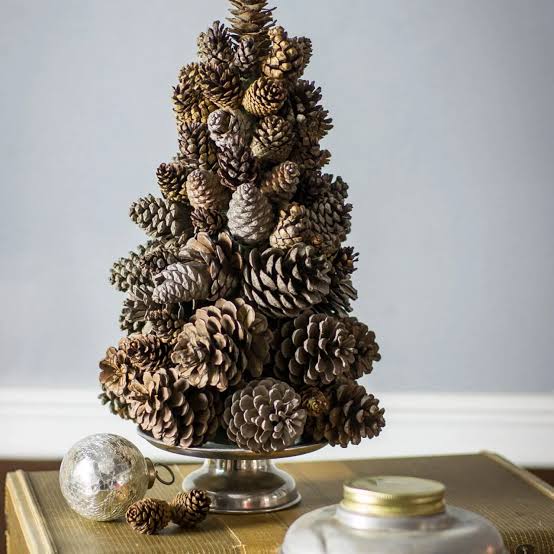
8. Woodland Tree in a Woven Basket Collar
- Tree (7.5 ft, 1,000+ branch tips): $250–$700
- Woven basket collar or seagrass basket: $45–$130
- Wooden and pinecone ornaments (set of 40–60): $60–$180
- Warm white string lights: $25–$60
- Kraft paper, twine, and gift wrap: $30–$75
Total: about $410–$1,145 for the whole corner.
Budget alternative: Facebook Marketplace in late November is flooded with realistic trees people are upgrading from, usually $40 to $90. Pair one with a $20 thrifted wicker basket and wood-slice ornaments from a craft store at 50% off, and you’re at roughly half.
A woven collar hides the stand and the cord without the pooling fabric of a skirt. Measure your stand’s widest point, then buy a collar two inches larger in diameter and tuck a few loose pinecones into the gap so it doesn’t look hollow. If it still doesn’t sit flush, a thin foam pad underneath fixes both the wobble and the floor scratches.
9. Flocked Tree With Pampas Grass Instead of Garland
This one runs about 70% frosted white, 20% warm brown from the pampas, and 10% glass or reflective accents. That high neutral percentage is what keeps a heavily flocked tree from looking like a craft-store explosion. If you want more color, add it in the pampas rather than the ornaments — one dusty-rose plume does more work than twenty pink baubles.
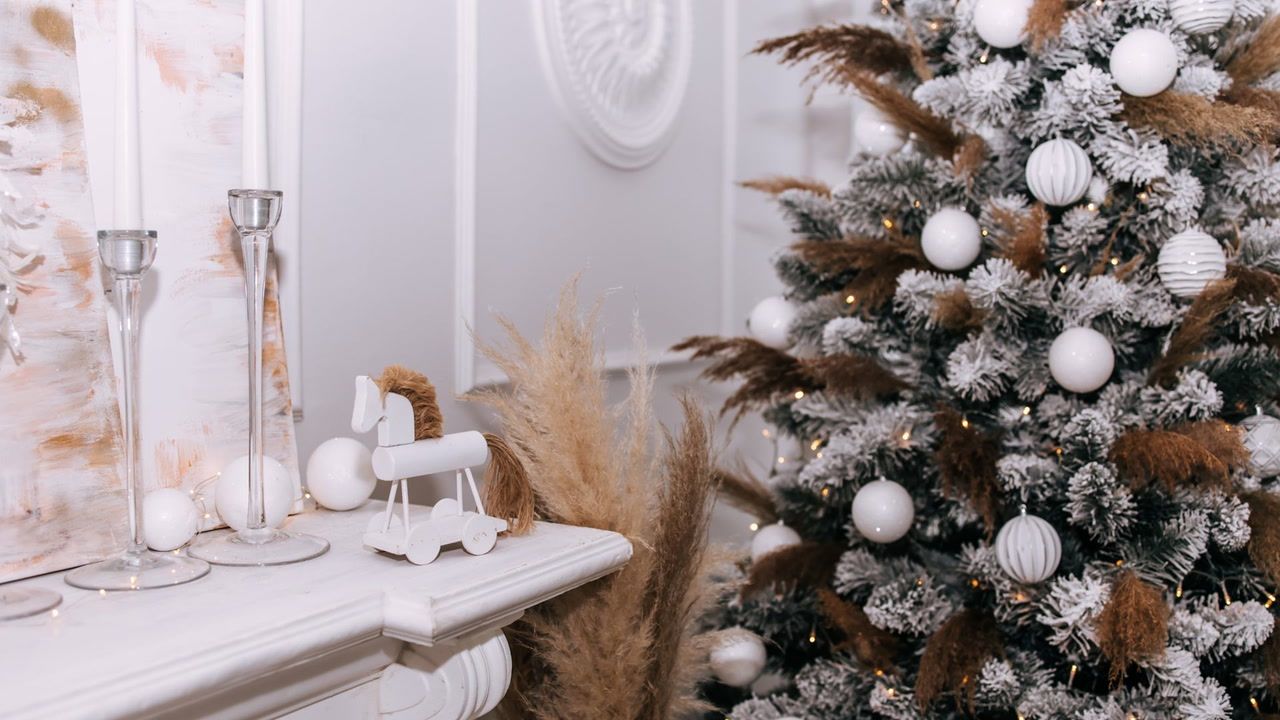
Pampas sheds almost as much as flocking does, and the two together mean daily vacuuming for the first two weeks. Give each plume a firm shake outside before it goes in. Flocked trees are also heavy — a 7.5 ft one can hit 60 lb, so if you store it in an attic or crawl space, recruit help and buy a wheeled storage bag.
This look wants breathing room. It works best in rooms at least 12 x 14 ft with 9 ft ceilings, where plumes can extend 8 to 10 inches past the branch tips without hitting a wall. Compare with Idea #22, which keeps the same restraint on a much smaller footprint.
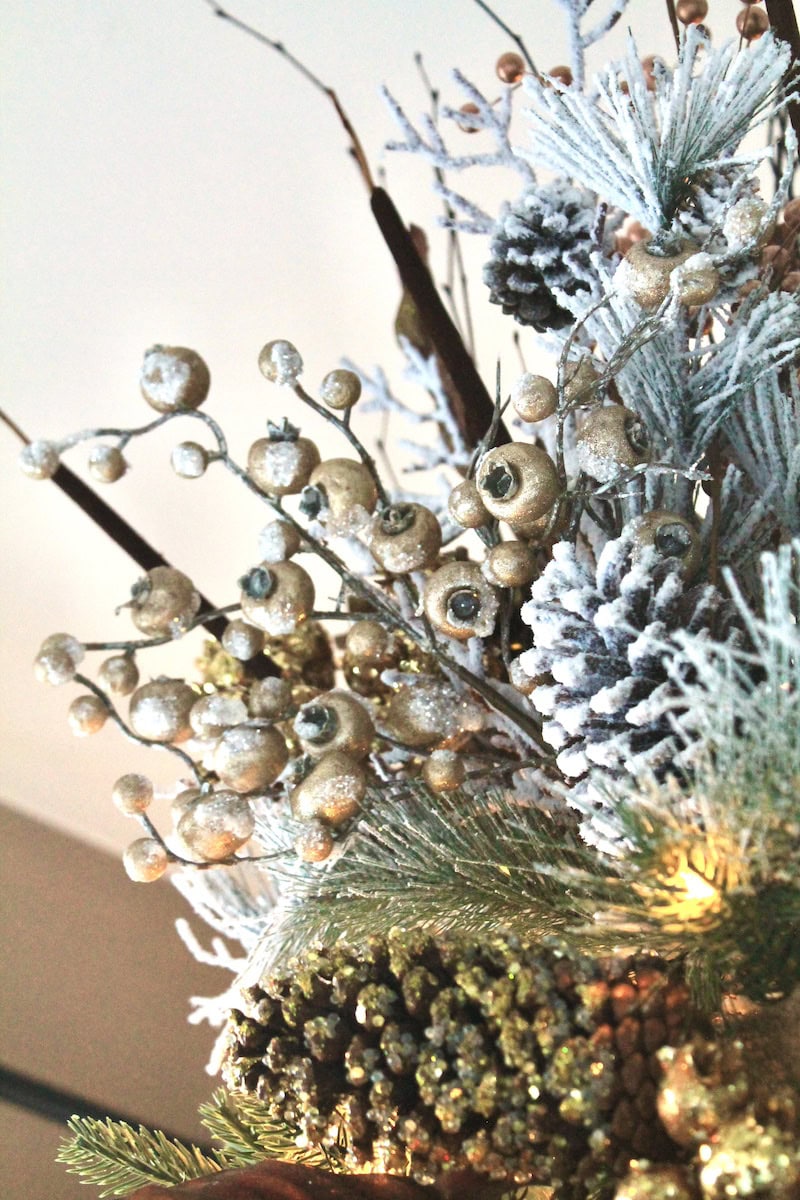
10. Frosted Pinecone and Gold Berry Arrangement
Building a frosted arrangement that actually glows:
- Start with a low bowl and a soaked half-brick of floral foam.
- Push in iced pine branches first, angling them wide for width.
- Cluster frosted pinecones in groups of three, never evenly spaced.
- Add metallic gold berries in the gaps, heaviest near the lights.
- Weave a 6 ft strand of warm fairy lights through the base, battery pack hidden behind the bowl.
About 25 minutes and $35 to $60 in materials.
Dollar Tree sells frosted pinecones in packs of six for $1.25, and Walmart’s floral aisle has gold berry sprays for $3 to $5. Real pinecones from your own yard, dusted with spray snow and hit lightly with gold craft paint, look nearly identical once the lights are on. Total for a centerpiece this size: about $18.
11. Pick Your Palette Before You Buy a Single Ornament
Choose three colors and one metal, then commit. A fast test: lay your picks on a sheet of white paper and squint. If one color jumps out as unrelated, it will jump out on the tree too. Buy 60% of your ornaments in the largest size, 30% mid-size, and 10% small filler picks — that ratio is what separates a styled tree from a decorated one.

The shift for 2026 is away from more-is-more and toward a defined theme with one deliberate surprise. Searches for single-color and two-tone tree schemes have climbed steadily, and the most-saved trees this season share a trait: restraint plus one odd element, like a chunky knit garland on a formal tree. Trends rotate, but a committed palette is the one thing that won’t look dated in your photos five years from now.
12. Handmade Plaid Ornaments With Wooden Buttons
The mix runs about 45% red, 25% buffalo check, 20% green, and 10% natural wood. The wood buttons are the neutralizer — without them, red-and-black plaid can tip into lumberjack territory fast. Swap the buffalo check for a softer tartan and the same tree goes cozy British cottage instead. Keep the felt bird as the single solid-color element so the eye has somewhere to rest.
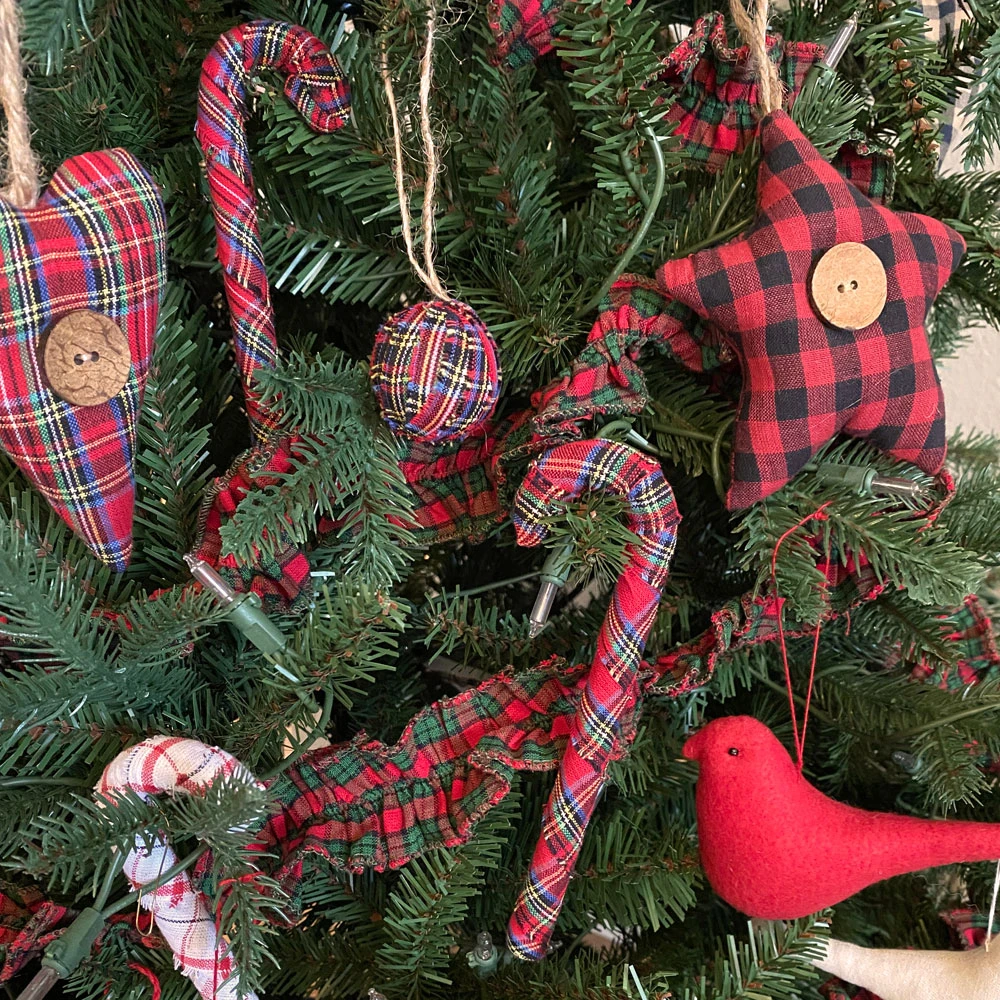
cutting fabric:
- Measure branch spacing — ornaments over 4 inches wide need 6+ inches of clearance.
- Buy 1/4 yard per 8 ornaments; that’s the honest ratio for plaid.
- Check ribbon width against branch depth; 2.5 inch ribbon reads best at eye level.
- Confirm your lights are warm white, since plaid goes muddy under cool bulbs.
- Set a $40 materials ceiling — fabric remnants and buttons rarely cost more.
13. Tabletop Tree Trio in Glass, Pinecone, and Distressed Wood
Group miniature trees by material, not by size, and always keep one translucent piece in the mix. A green glass tree catches window light and makes the whole cluster feel layered instead of solid. Three pieces is the sweet spot on a console or shelf — five or more starts to look like a collection somebody forgot to edit.
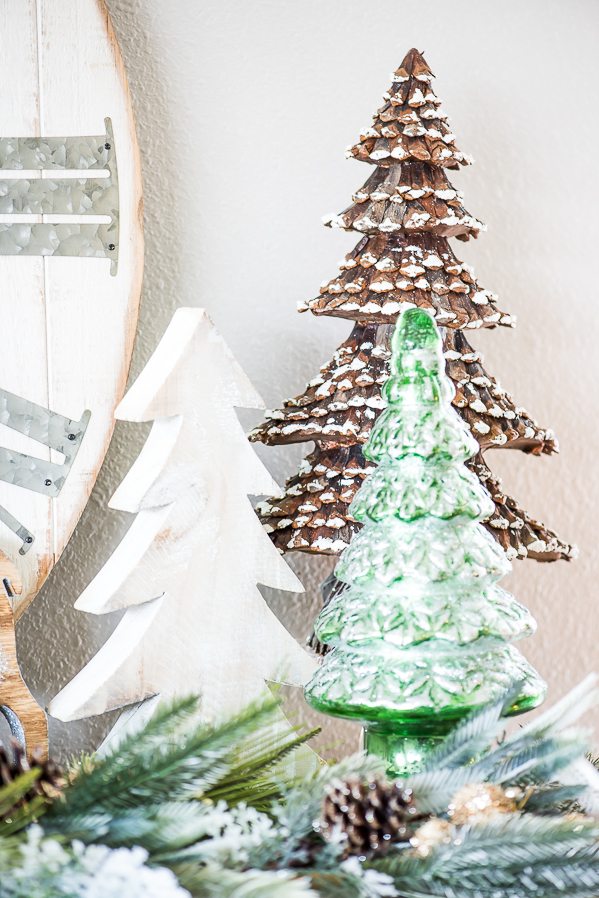
Distressed white wood shows fingerprints, and frosted pinecone trees shed bits for the first few days. A dry microfiber cloth once a week handles both. Glass trees are the fragile one: keep them off the floor and away from any surface edge, and wrap them in bubble wrap rather than newspaper at the end of the season, since newsprint ink transfers to glass over a humid summer.
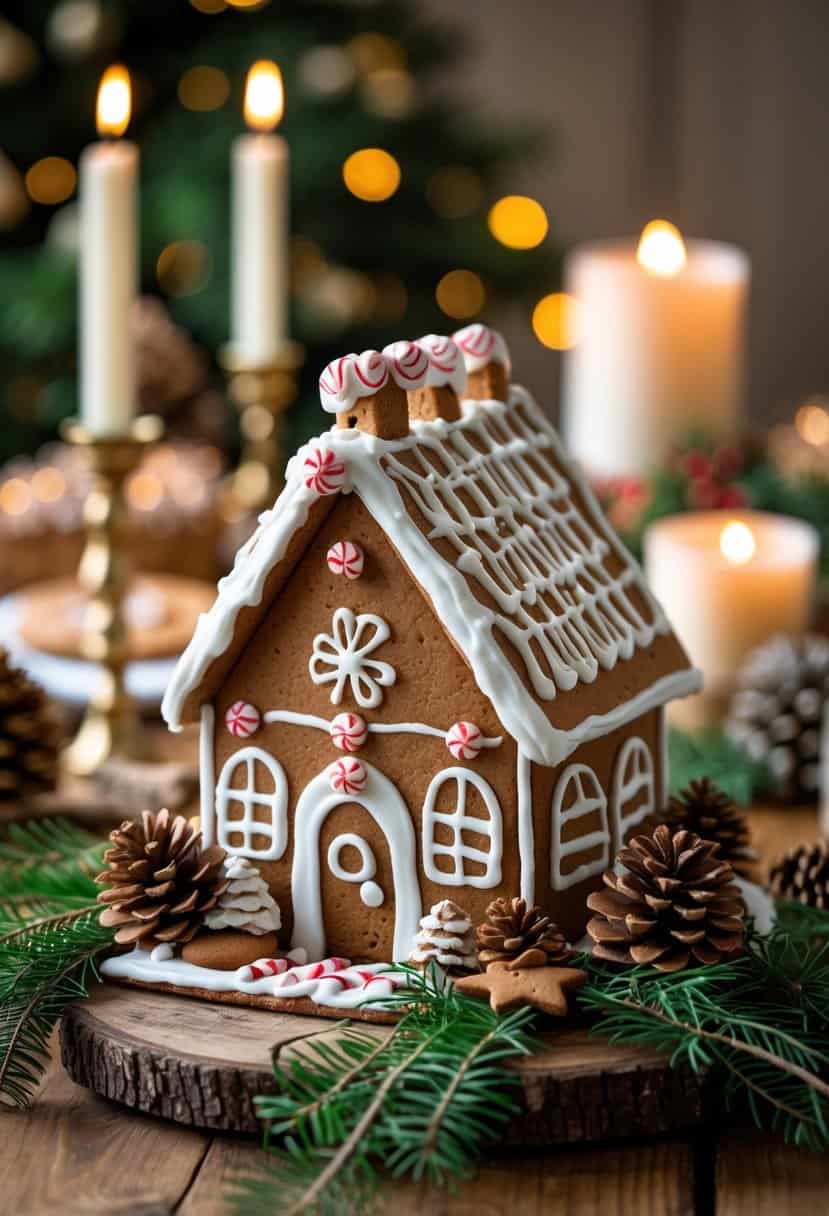
14. Gingerbread House Centerpiece on a Wood Slice
This centerpiece needs a table at least 36 inches wide and a wood slice 12 to 14 inches across, so the house, greenery, and candles all fit without crowding a plate. On a table shorter than 60 inches, use two candles instead of three and trim the evergreen sprigs back by a third. On a long table, repeat the whole vignette in three spots rather than building one enormous display.
- Gingerbread house (baked or boxed kit): $12–$35
- Wood slice base (12–14 in): $15–$40
- Evergreen branches and pinecones: $0–$25
- Brass candle holders (set of 3): $30–$90
- Pillar candles: $10–$20
Total: about $67–$210.
Budget alternative: bake the house from a $4 mix, ask your tree lot for free branch trimmings, and grab thrift-store brass for $3 to $6 each. That lands near $30 without losing any of the nostalgia.
Gingerbread houses moved from kids’ activity to grown-up centerpiece over the last few seasons, and the 2026 version is deliberately imperfect — slightly slumped roofs and visible icing are part of the charm. The real, not perfect look has taken over social feeds and made homemade more desirable than flawless.
15. Fabric Candy Ornaments With Gifts in Primary Colors
Making lollipop ornaments that hold their shape:
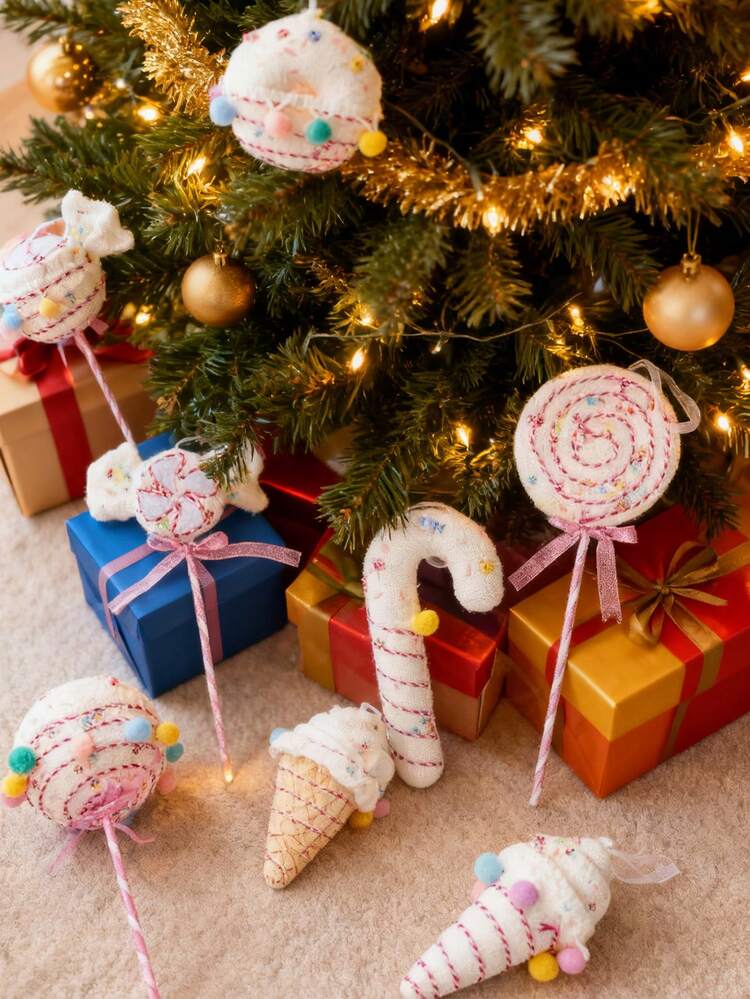
- Cut two 5 inch circles of cotton fabric, right sides together.
- Sew around the edge, leaving a 2 inch opening.
- Turn it, stuff lightly with poly-fill, then hand-stitch the opening closed.
- Hot-glue a wooden dowel or cinnamon stick into the base for the stick.
- Tie a ribbon loop at the top and hang from the ribbon, not the stick.
About 15 minutes per ornament, roughly $1.50 each in materials.
Fabric ornaments are light, which means one flick of a ceiling fan sends them swinging into the branches. Hang them deep on the branch, not out at the tip. And if you have toddlers, skip the dowel-stick version entirely — a stuffed fabric ornament on a wooden stick is basically a drumstick waiting to happen. Flat felt shapes survive children far better.
16. Pastel Cupcake Ornaments, Hung in a Row
Hanging four cupcake ornaments in a deliberate row instead of scattering them turns repetition into a design move. The pastel frosting reads as one soft block of color against the dark pine, and the gold detailing keeps it from tipping into nursery decor. Same principle as a gallery wall — a cluster always beats a scatter.

Boutique cupcake ornaments run $12 to $18 each. For a fraction of that, buy a pack of plain pastel bead or clay ornaments for $8 and add the gold with a fine paint pen: 20 minutes of work for four pieces. Compare with Idea #18, where the same pastel-sweets idea fills an entire miniature tree for under $40.
17. Kraft Paper Gifts With a Die-Cut Tree Tag
Skip the bow-and-ribbon default. A die-cut tag with mini ornaments glued inside costs about $1.50 per gift and photographs better than most wrapping paper. Use 2 inch ribbon or twine rather than 4 inch, and keep the tag under 5 inches tall so it doesn’t overpower a small box. One sprig of real evergreen tucked under the twine makes the entire stack read as styled.
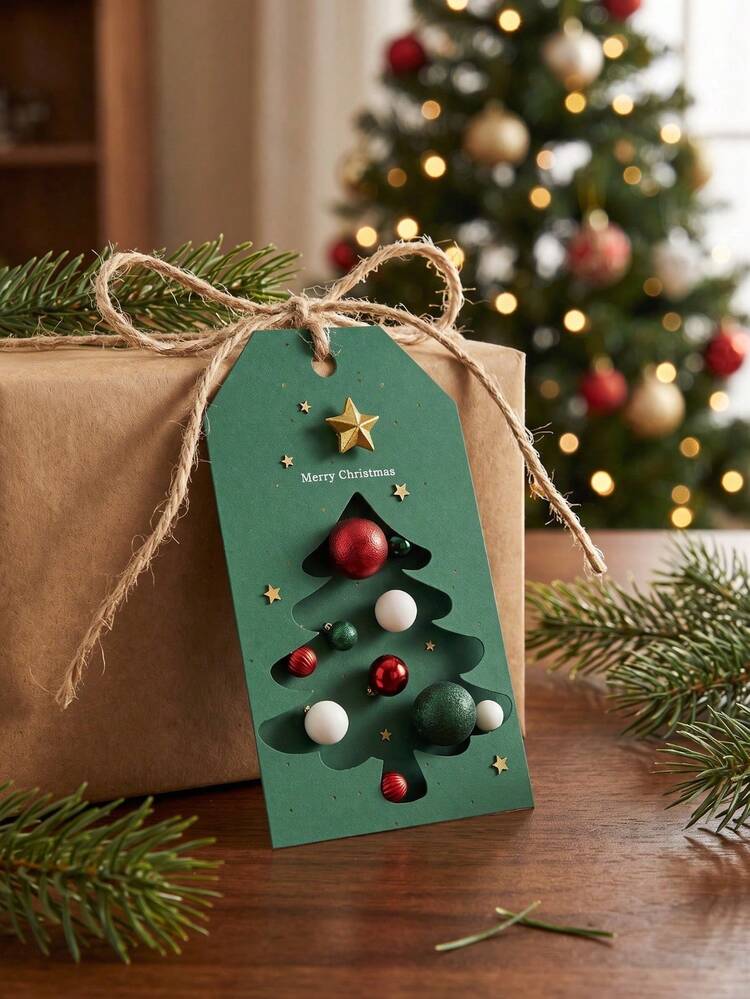
Brown kraft paper has been the quiet winner of the last few holiday seasons, and it isn’t just a budget move — it’s a reaction to years of glossy, single-use wrap. Reusable fabric wraps and paper tags have grown steadily, and the 2026 version is the mix: simple paper, one handmade detail, and zero plastic ribbon.
18. Tabletop Meringue Tree on a Stack of Books
The stack of books under the tree is the detail that makes this read like a room instead of a shelf. It adds height so the miniature tree sits at eye level on a side table, and it brings a warm, non-holiday texture into an otherwise sugary display. Remove the books and the tree just sits there looking small.
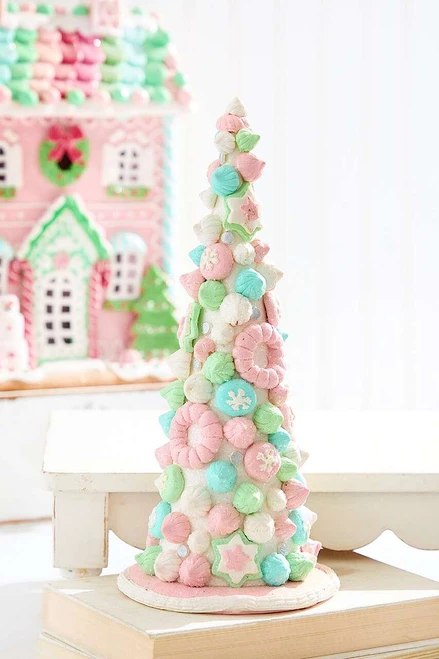
Real meringues work if you seal them with a coat of clear craft varnish, but a bag of pastel candy melts and a silicone mold gets you 40 ornaments for about $12. Fake candy ornaments at a craft store run $6 to $10 for a set of six. Total for a fully dressed miniature tree: under $40, plus a book stack you already own.
19. Slot-Together Wooden Trees in Two-Tone Color Blocks
The palette is roughly 50% natural light wood, 30% a warm mid-tone like orange or rust, and 20% a cool counterpoint like sage green. Because each tree splits those tones across its two sides, you get contrast without adding a fourth color. Change the mid-tone to mustard and the cool to slate blue and the same set reads mid-century instead of rustic.
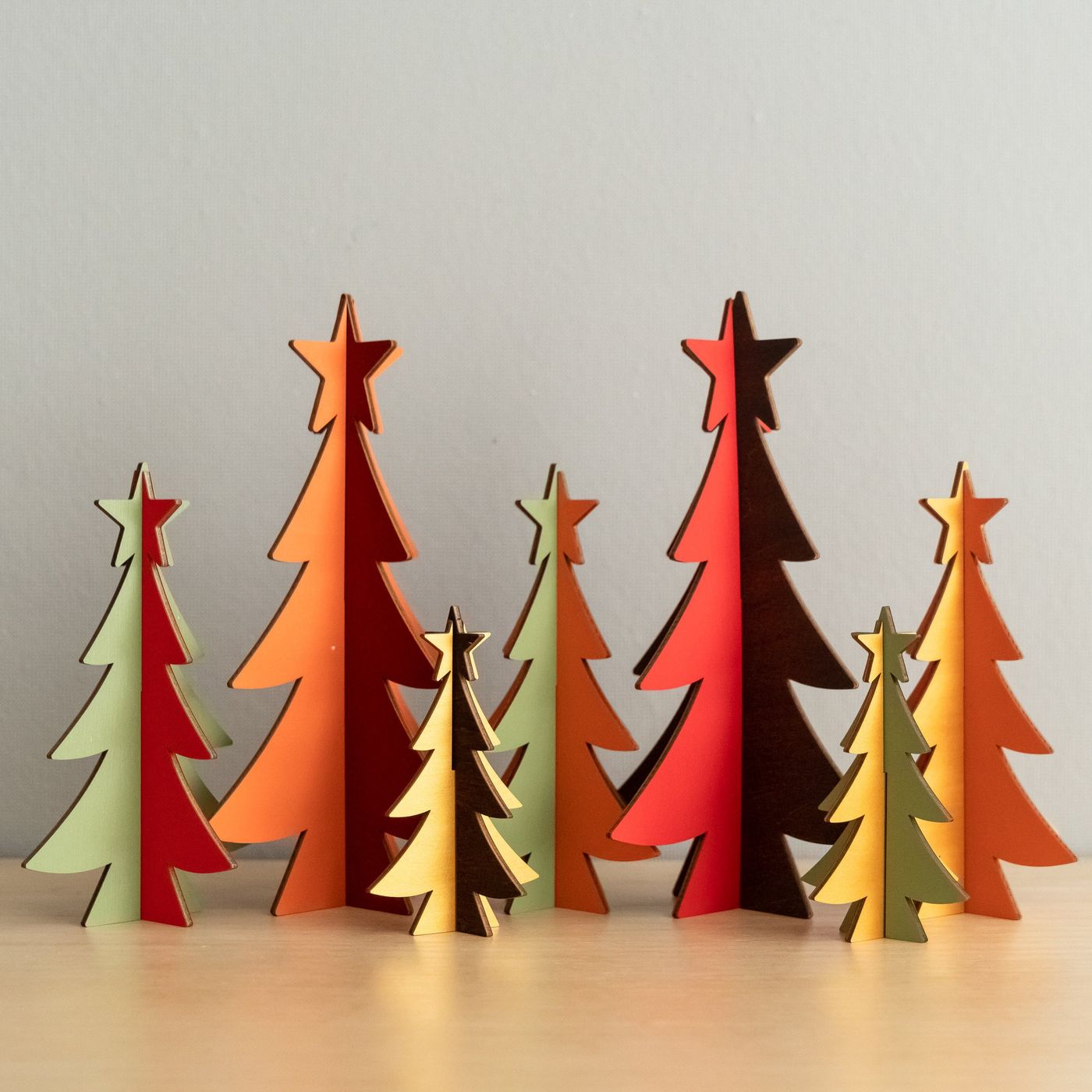
These flat trees need a narrow, uncluttered surface — a 6 to 10 inch deep shelf or a console works far better than a coffee table. Keep the shortest piece at about half the height of the tallest so the group reads as a set. Three on a narrow mantel; five is the limit before a shelf turns into a forest.
Laser-cut wooden trees work because the joinery is the decoration. That two-tone split makes each piece look like two objects in conversation, which is a far more interesting silhouette than a solid painted cone. It’s also why they photograph so well — there’s detail everywhere the light hits an edge.
20. Plaid-Coated Santa Figurines in a Rustic Table Display
Mix heights deliberately: one large Santa at 14 to 18 inches, two midsize pieces around 9 inches, and small signs or trees at 4 to 6 inches. Group them in a triangle with the tallest in the middle. If everything on your shelf is the same size, no amount of cute will save it — scale variation is what reads as styled.
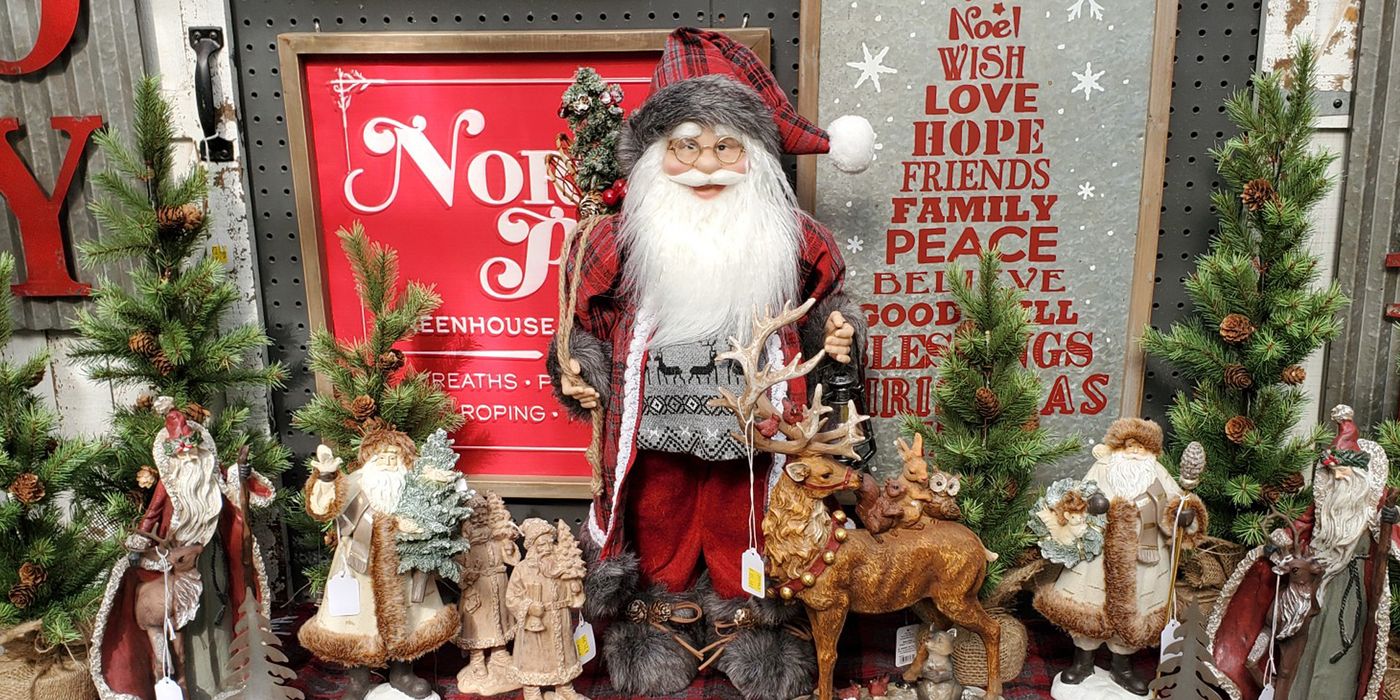
Figurine displays collect dust in every crevice, and painted resin chips the moment it knocks against anything hard. Plan on a soft brush once a week during the season, and pack them in individual bubble wrap or a divided box — not one big tote, where they’ll grind against each other all summer. Keep them out of direct sun too; red and plaid finishes fade noticeably within two seasons.
21. Eucalyptus Garland Runner Down a Trestle Table
Eucalyptus softens what would otherwise be a fairly masculine room — black chairs, a black cage pendant, a heavy wood table. The frosted pinecones tie it back to the holiday, and the votives add height without a tall centerpiece blocking conversation across the table. Good reminder that garland doesn’t have to be pine to say December.
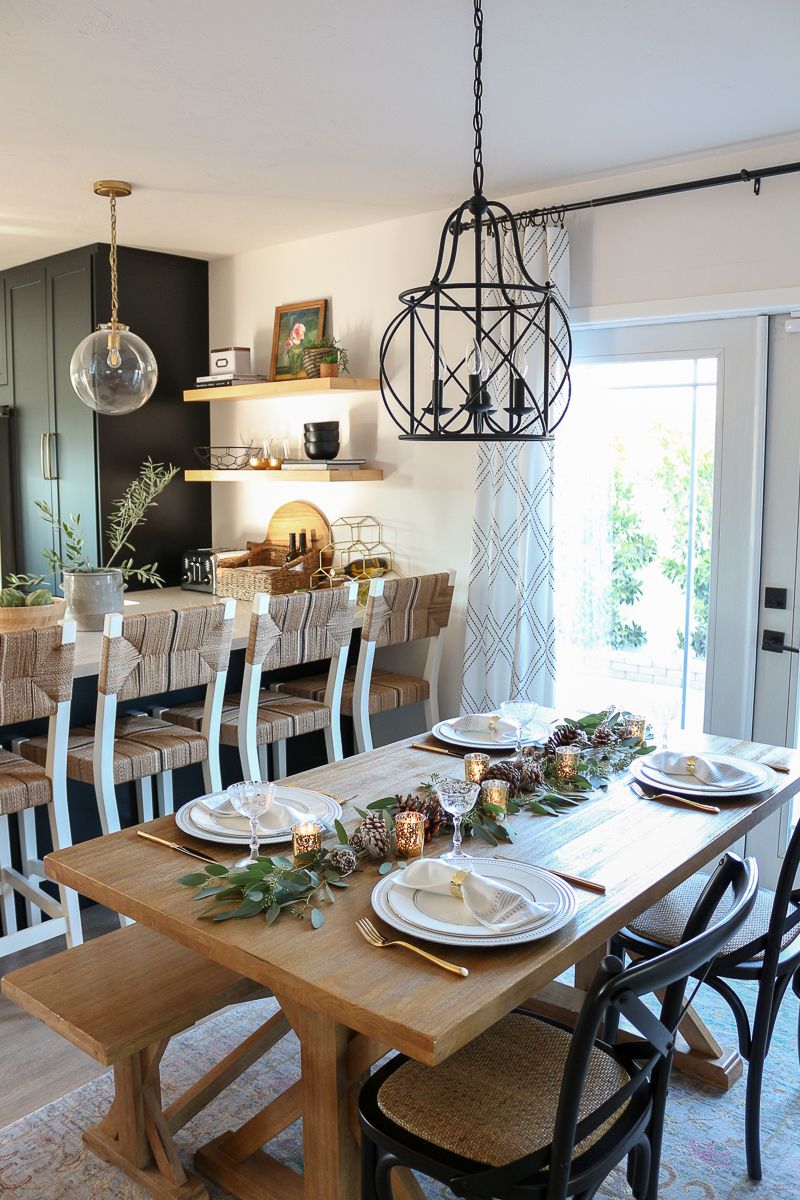
Fresh eucalyptus dries in place and looks good for about three weeks, then goes brittle and starts dropping leaves onto plates. If you want it to last a full season, buy preserved stems — roughly double the price but they hold up for years out of direct sun. Never leave the votives unattended, and always use glass or metal holders; greenery plus open flame is a genuinely bad combination.
22. A Quiet Evergreen Tree With Bare Branches Showing
This is the one theme that works in almost any footprint, from a 120 sq ft apartment corner to a 400 sq ft open living room. A 6 ft sparse tree reads as deliberate in a small room; in a large one, go 7.5 ft and keep the ornament count under 60. With 8 ft ceilings, never go taller than 7.5 ft — the tree needs at least 6 inches of air above it.
On a sparse tree, placement matters more than the ornaments themselves. Hang pieces in clusters of two or three on the same branch, then leave the next two branches completely empty. That push-and-pull is what makes a bare tree look designed rather than under-decorated.
- Tree (6–7.5 ft, natural-look): $90–$350
- Neutral ornaments and wood accents: $40–$120
- Warm string lights: $20–$45
- Textured pillow covers (set of 4): $30–$80
- Wooden coffee table (if replacing): $150–$600
Total: about $330–$1,195.
Budget alternative: a $59 unlit tree from Walmart plus 200 lights and the ornaments you already own lands under $120. Compare with Idea #9 if you’d rather go fully flocked — same restraint, opposite texture.
23. Bark-Texture Pots With Frosted Branches and Red Berries
The bark-textured pot is what sells this arrangement. Without it, you’re just looking at fake greenery in a cylinder. The texture echoes the pinecones and the faux-snow surface, so the whole vignette feels gathered from one forest. It’s essentially the budget version of Idea #10‘s centerpiece — same ingredients, different container, about a third of the price.
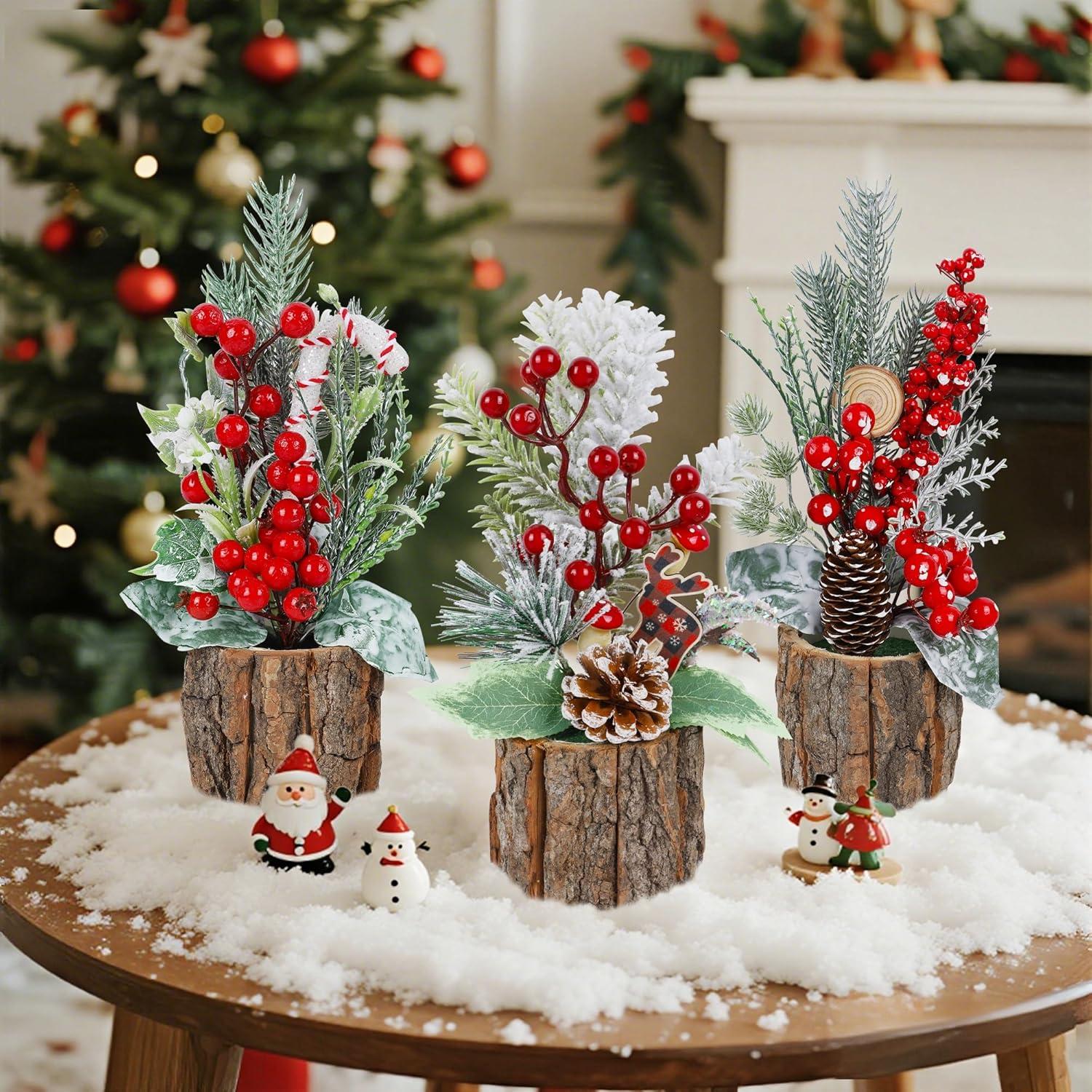
Tabletop arrangements in wood-look planters have been growing for a couple of seasons, partly because they’re apartment-friendly and partly because faux snow photographs beautifully. What’s newer is the mix of sizes in matching containers — three pots instead of one wide bowl. It reads as a collection, which is exactly why it gets saved.
24. Printed Pine and Pinecone Runner With Olive Napkins
Setting a holiday table that doesn’t look like a catalog page:
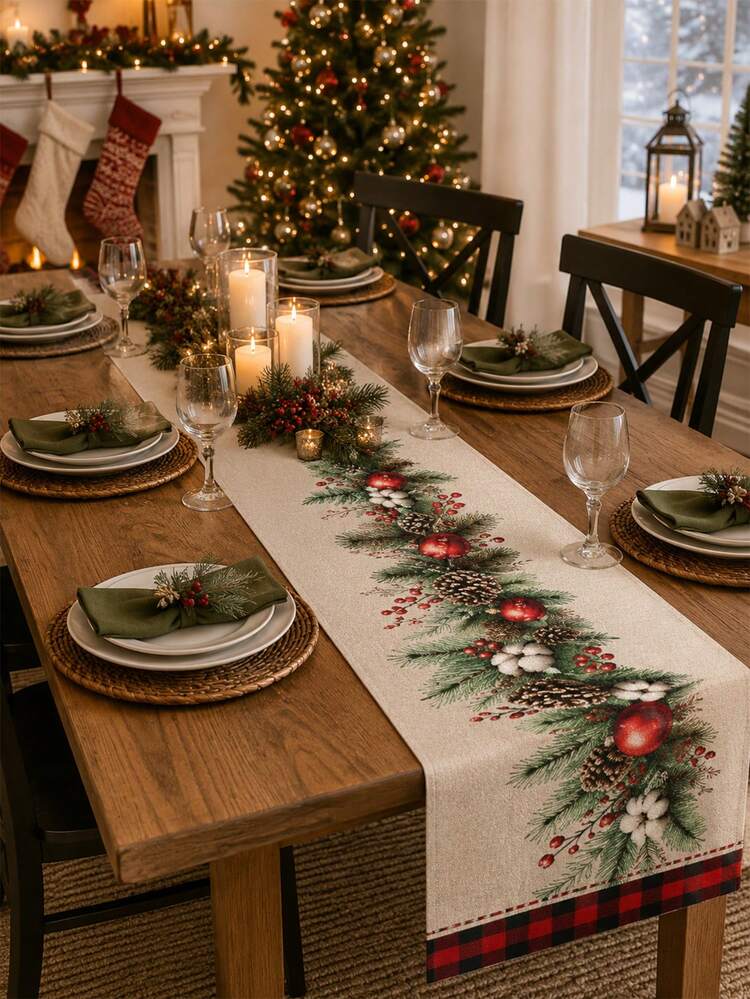
- Lay the printed runner first, letting 8 inches hang on each end.
- Place round woven mats at each setting, 15 inches from the table edge.
- Stack a white dinner plate over a smaller plate for quiet height.
- Fold olive cloth napkins in a loose third and lay them slightly off-center.
- Tuck pillar candles into clear glass cylinders between settings, never near napkins.
About 20 minutes and $60 to $140 for runner, mats, and napkins.
The runner does most of the visual work, so that’s where to spend. Target and HomeGoods run seasonal runners from $12 to $25, woven placemats are $2 to $4 each at Walmart, and thrifted white plates cost about $1 apiece and mix fine with your everyday set. You can set eight places for under $60 if you skip cloth napkins and fold kitchen towels in olive or black instead.
25. A Pastel-Painted Nutcracker Under a Red Velvet Bow
Roughly 55% evergreen green, 25% red, and 20% pastel across the nutcracker itself. Because the pastel sits on a small figure rather than on the tree, it reads as a wink instead of a whole theme. Push the pastel to 40% by swapping the red bow for a dusty rose one and you get a much softer, almost nursery-adjacent version of the same setup.
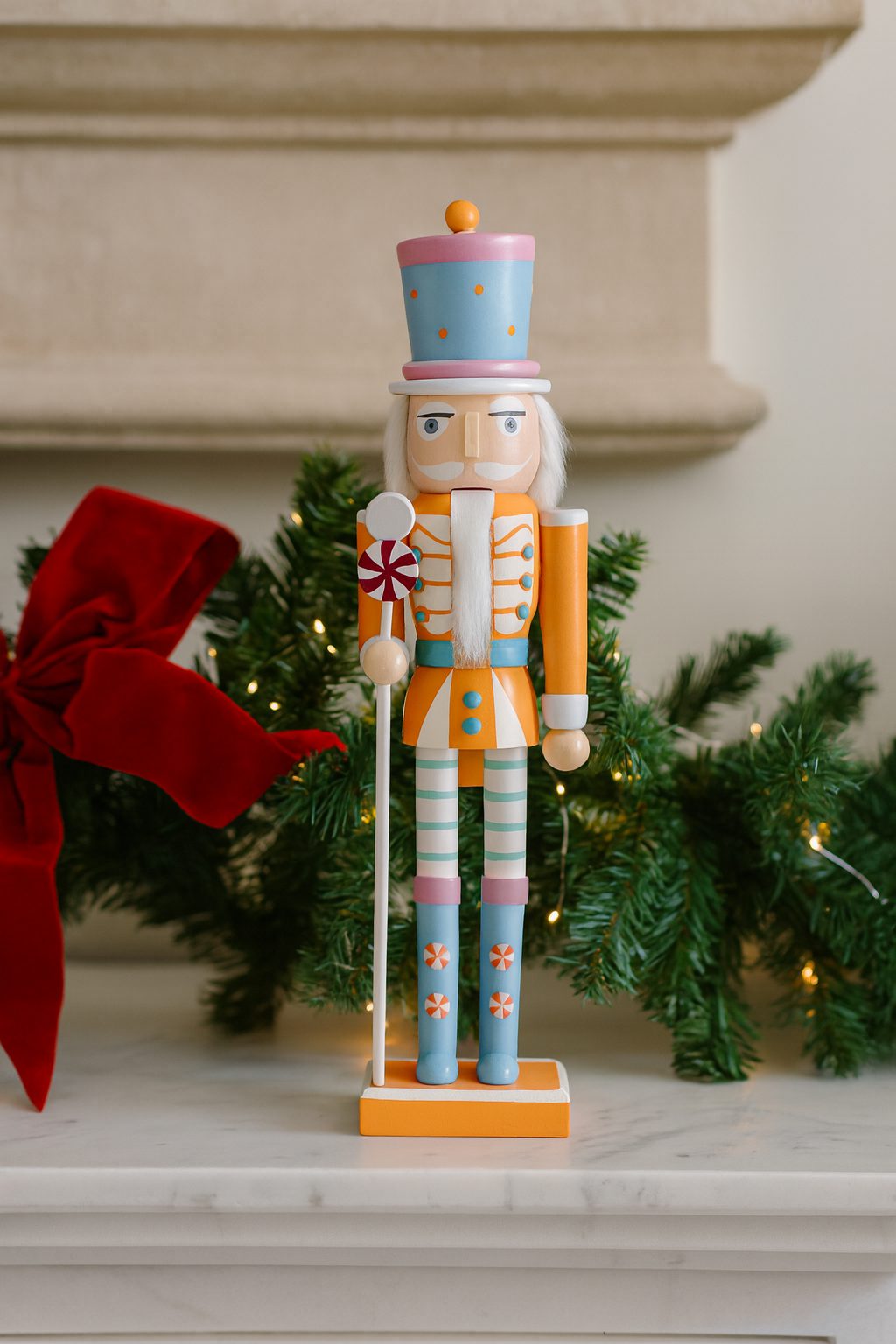
Nutcrackers are top-heavy. A 14 inch wooden figure on a narrow mantel tips with one bumped elbow, so put a square of museum putty under the base. Painted finishes chip at the corners, especially on the jaw and boots. And keep this one out of reach of kids who will absolutely try to crack an actual walnut with it.
Pastel holiday decor keeps expanding, and the painted nutcracker is a direct result of people wanting a Christmas that doesn’t look like the one in every store window. It also pairs naturally with candy-core styling, where December borrows more from a bakery case than a department store. Expect more of it in 2026 — and expect the classic red version to still be around in 2046.
26. Confection-Frosted Nutcracker Beside a Bulb-Lit Mirror
The bulb-lit vanity mirror is the only piece of non-holiday furniture in this setup, and it’s why the display feels like a room rather than a shelf. Those round bulbs throw a soft, even glow that makes the frosted nutcracker and the bottlebrush trees look lit from within. Lose the mirror and the same styling goes flat.
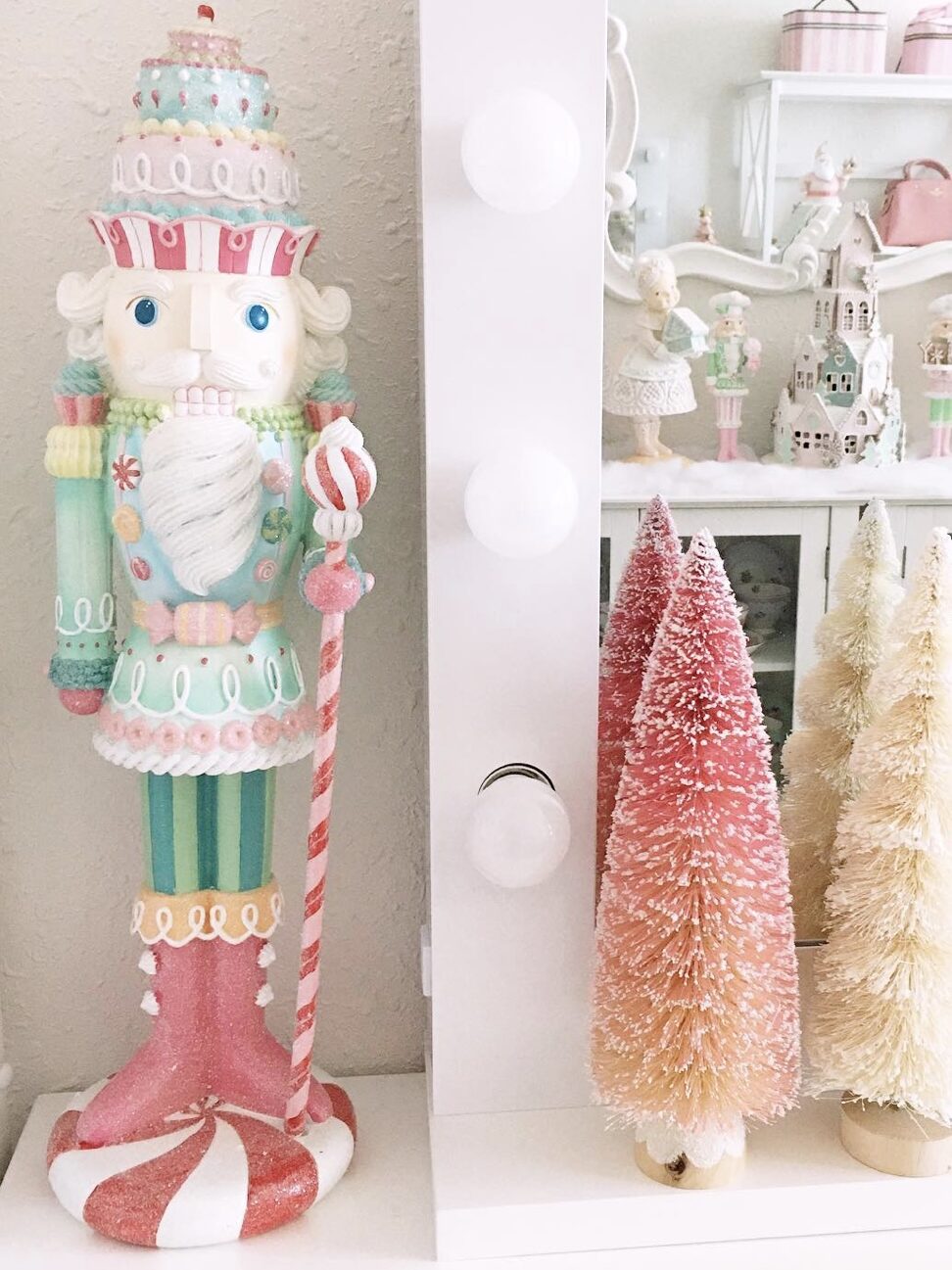
- Large decorative nutcracker (24–36 in): $60–$180
- Bulb-lit vanity mirror: $90–$320
- Miniature bottlebrush trees (set of 6–10): $15–$40
- Peppermint-swirl base or cake stand: $12–$35
- Miniature houses and figurines: $20–$60
Total: about $197–$635.
Budget alternative: dollar-store nutcrackers sprayed with two cans of paint cost under $20 total, and LED bulb mirrors start around $50 online. Buy bottlebrush trees after Christmas at 70% off and stash them for next year.
27. Pastel Santa Tucked Under a Heavily Flocked Tree
Pastel Santa figures are part of a broader shift where holiday characters get recolored rather than replaced — same nostalgia, new palette. It’s popular with people who love traditional Christmas but hate the red-and-green uniformity. These pieces also photograph beautifully, which matters more than it used to now that half of holiday decorating happens with a phone in hand.
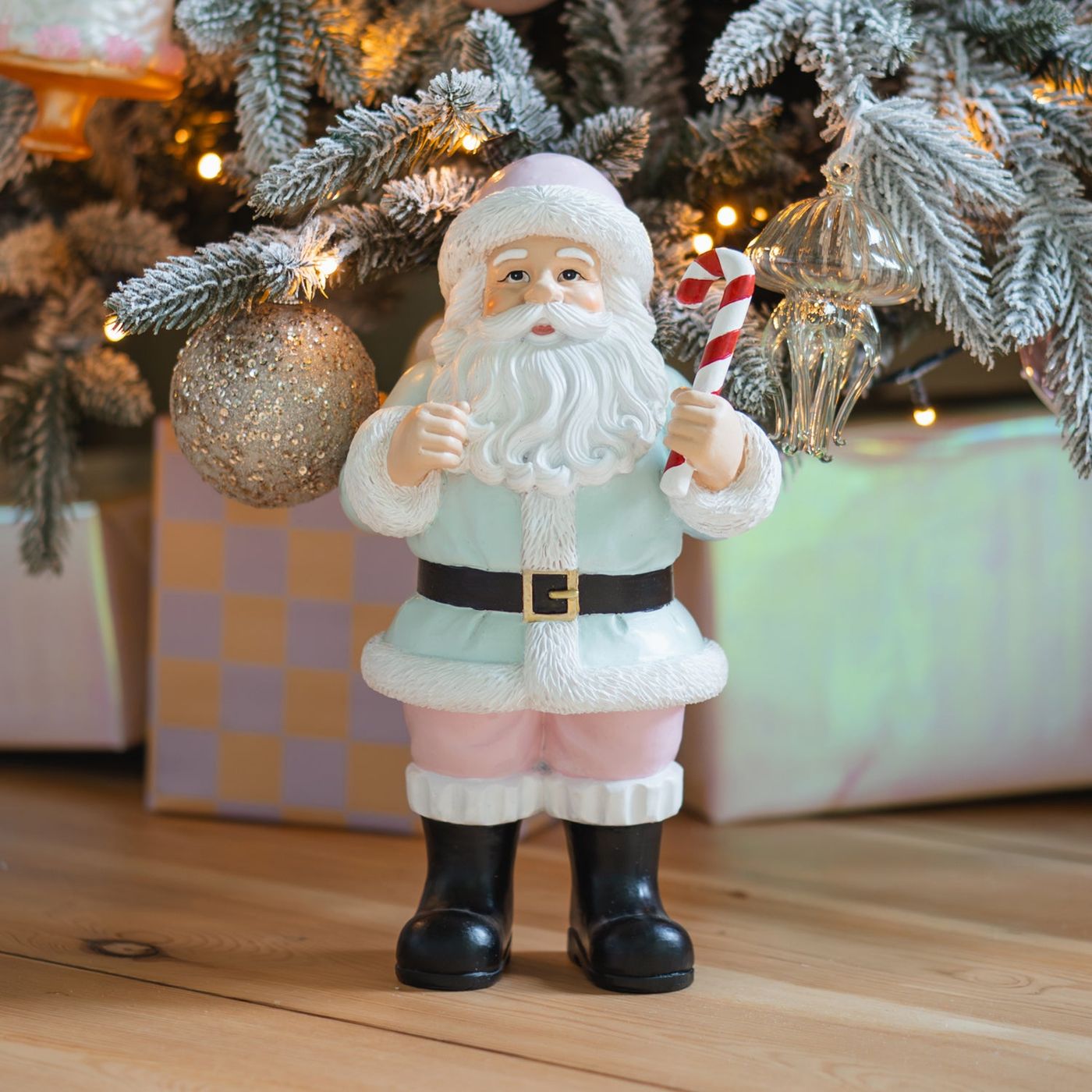
This composition is about 60% frosted white, 25% pastel, and 15% gold and glass. The pastel Santa gives you a bite of color against the flocking, while the textured gold sphere and the clear glass jellyfish ornament add shimmer without adding another hue. Trade the pastel for a classic red Santa and the same formula becomes traditional Christmas with almost no other changes.
28. Citrus-and-Pinecone Wreath on a Dark Wood Door
Dried citrus looks lovely for about three weeks and then starts curling at the edges — fine if you like the aged look, less fine if you don’t. Mist the greenery lightly every few days; a wreath on an indoor door near a heating vent can go brittle in a week. Store it flat in a box with tissue, not hung on a nail in the garage, or the shape will distort.
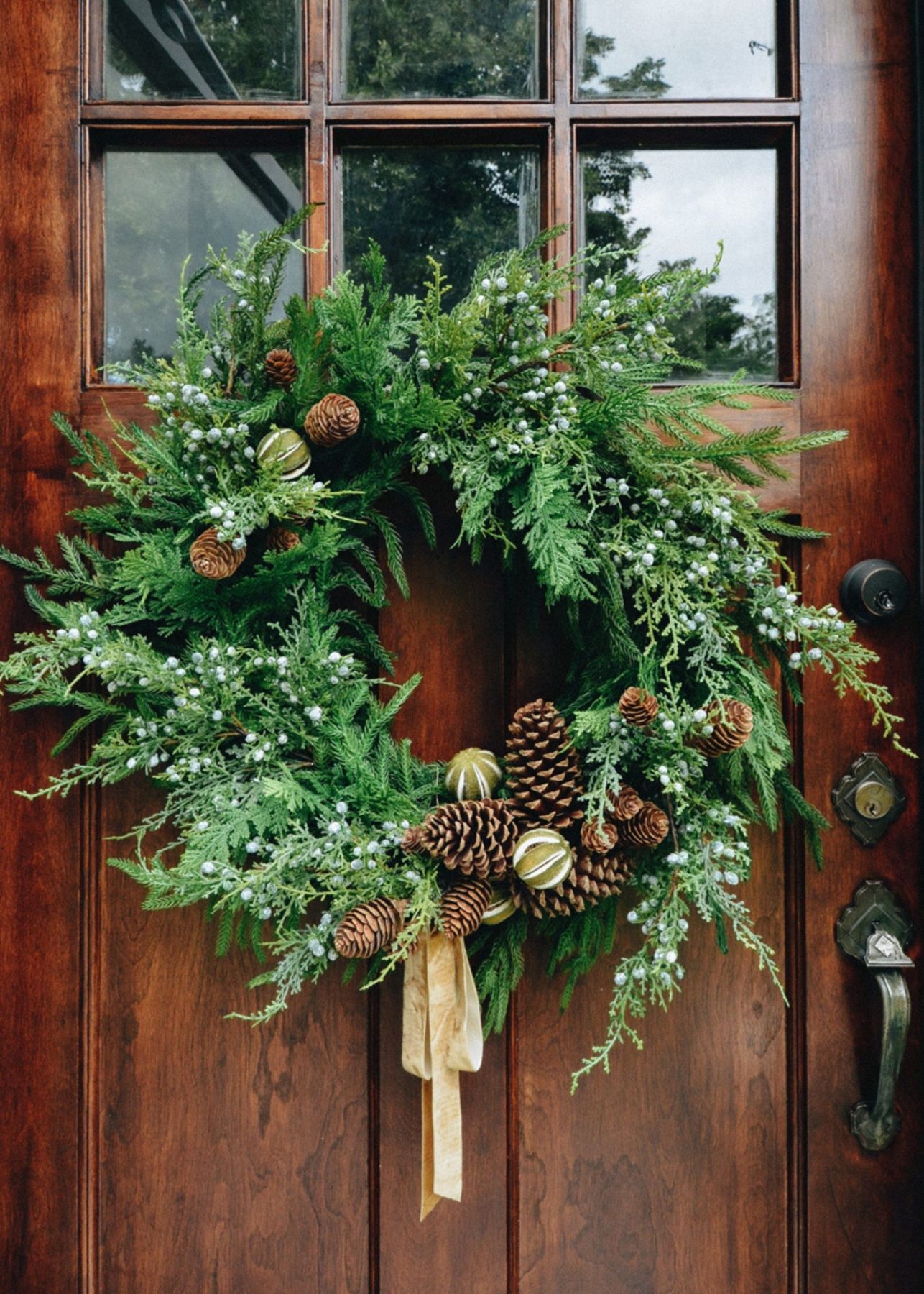
- Fresh mixed-green wreath (24–30 in): $45–$120
- Pinecones (bag of 12–20): $8–$20
- Faux white berry clusters: $10–$25
- Dried citrus slices: $12–$30, or free if you dry your own
- Muted gold ribbon (2.5–3 in wide): $8–$18
Total: about $83–$213 for something that looks florist-made.
Budget alternative: a $20 plain faux wreath from a craft store plus dried orange slices you bake at 200°F for three hours gets you the same look for around $45.
A wreath this full needs a door at least 32 inches wide — on a narrow door, a 24 inch wreath eats the frame. Hang it so the top sits 10 to 12 inches below the top edge, roughly at your eye level from the step. Compare with Idea #29, where the same greenery scale moves indoors to the table.
29. Four Candle Wreaths Down the Center of the Table
Check these before you commit:
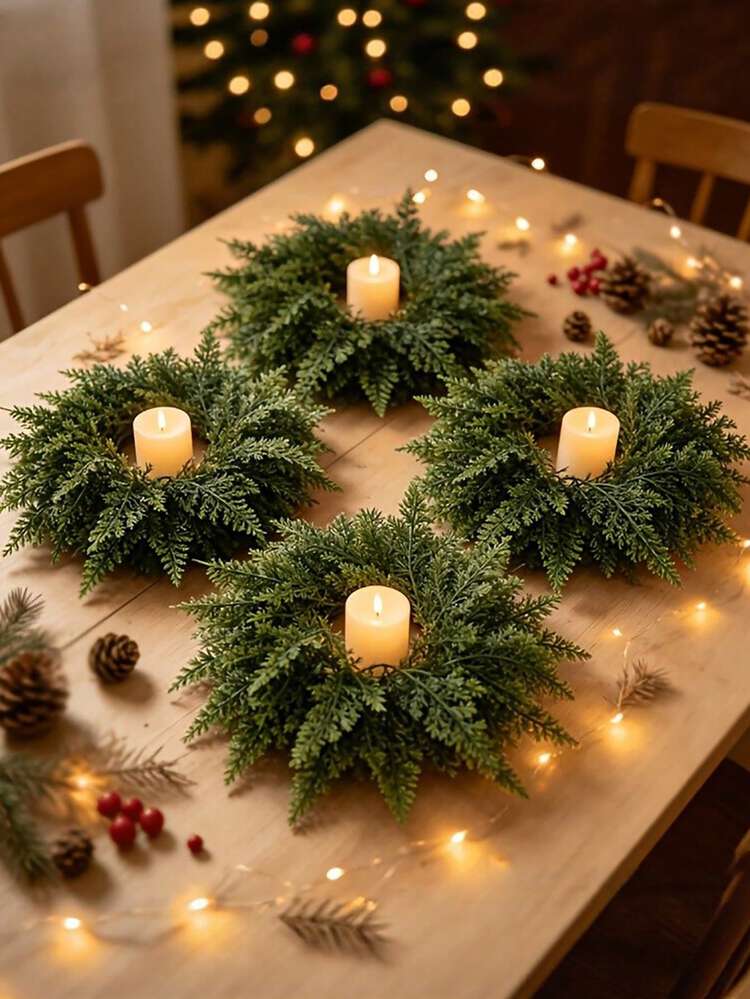
- Table width: you need at least 34 inches for wreaths plus place settings.
- Candle height: pillars over 6 inches block sightlines — stay at 4 to 5 inches.
- Fire safety: keep flames 12 inches from any napkin or runner.
- Greenery type: fresh holds three weeks, faux holds indefinitely.
- Lighting: use battery or USB string lights so no cord crosses the table.
Assembling one candle wreath:
- Buy or form a 10 to 12 inch green wreath with a 4 inch open center.
- Test-fit a glass candle cup inside — it should sit level without tilting.
- Wire the cup to the wreath’s inner ring so it can’t shift.
- Set a white pillar inside and trim the wick to 1/4 inch.
- Light it, then tuck pinecones and berries around the outer edge.
About 10 minutes each, roughly $18 to $35 per wreath.
One Tree, One Story — Now Go Make Yours
Twenty-nine themes, and the honest truth is you only need one that fits your room, your budget, and the way you actually live in December. Start with the palette, layer in the light, then let the small, slightly weird, personal details do the rest of the work.
If you try one of these, save the photo you’re working from and tag it — we genuinely love seeing how these land in real homes. 📌 Pin this guide now so it’s waiting for you next November, when you’ll be very glad you didn’t start from scratch.