
Still scrolling through Christmas light photos at midnight without knowing which house you actually want yours to look like? Same. So we did the scrolling — through The Home Depot, Walmart and Amazon — and pulled the 39 exterior lighting ideas worth copying in 2026, from quiet warm white rooflines to full multicolor spectacles. Prices here run from about $19 for a single strand to $399 for a coordinated display package, and budget and luxury versions sit side by side so you can see exactly what the extra money buys. Styles covered: classic warm white, multicolor family displays, elegant LED outlining, and playful inflatable yards. The big shift this year is single-temperature lighting — clean warm white saves have quietly overtaken the everything-at-once look on Pinterest. And stay until the end — we break down the most common mistakes that can ruin these looks. 📌 Save this to Pinterest for later — you’ll want to revisit these ideas.
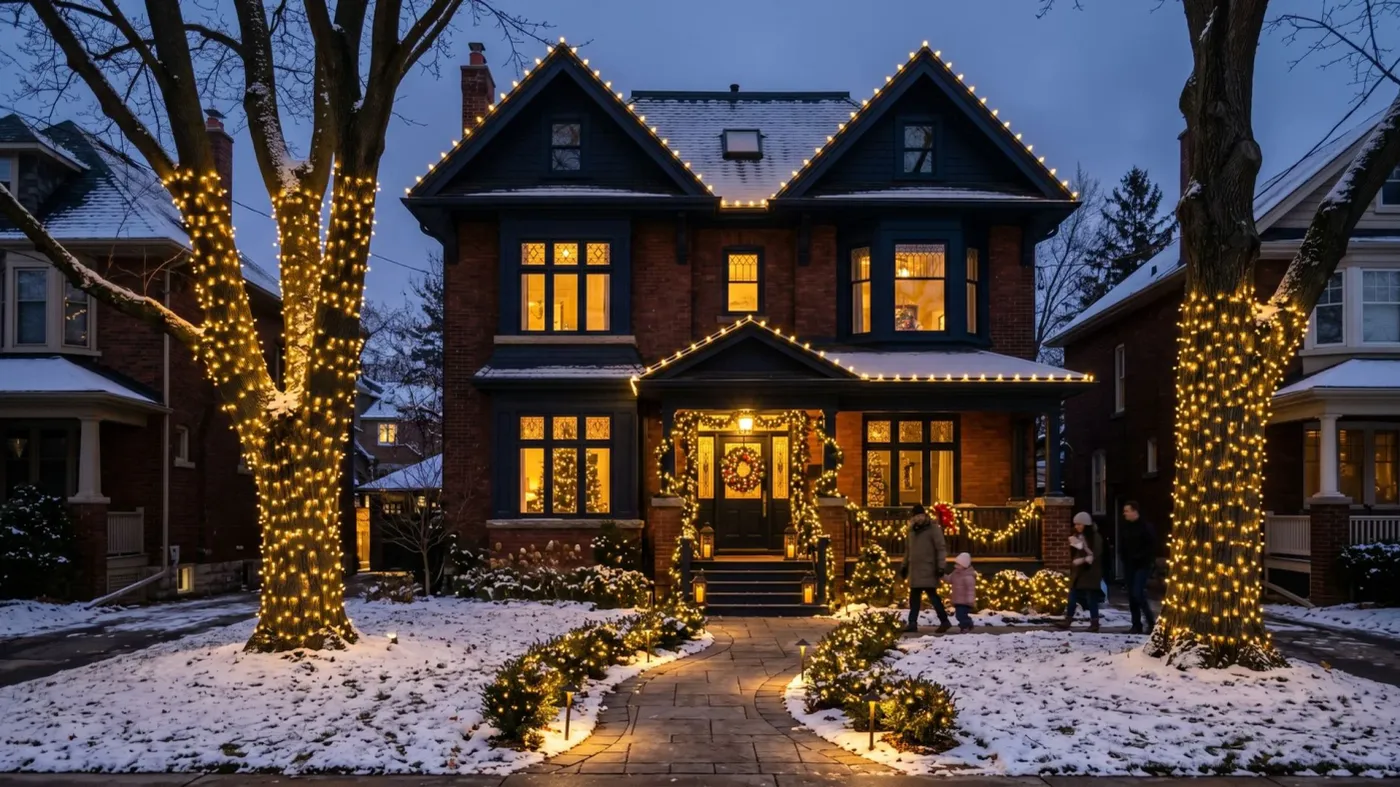
1. Brick and Navy Trim Under Warm White Lights
The dark blue trim is doing quiet heavy lifting. Warm white bulbs read richer against navy and brick than they ever will on white siding. Notice how only the two front trees get the full wrap while the path stays low — the house reads as one glowing object, not a scattered grid.
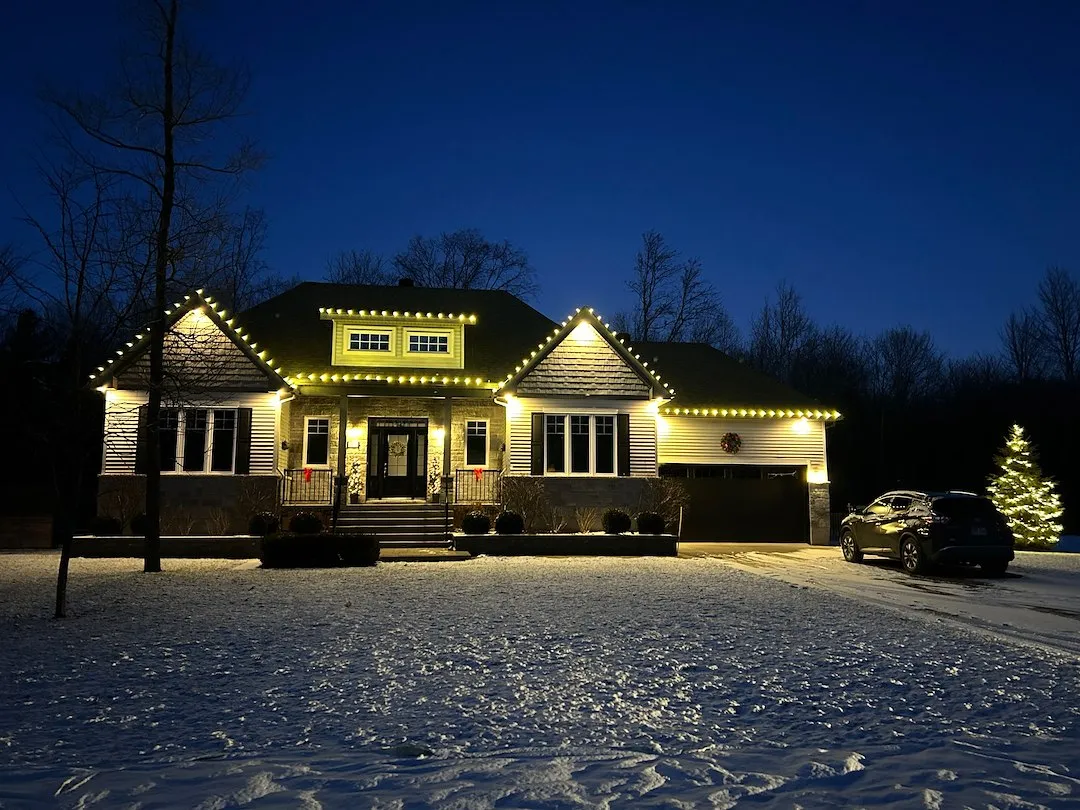
2. Light the Edges, Let the Snow Do the Rest
Don’t light the walls — light the edges. Outline the gables, roof edge and porch only, then leave the siding dark so the snow bounces that warm white back up and makes a small house look twice its size. Keep clips six to eight inches apart so the run stays crisp instead of saggy.
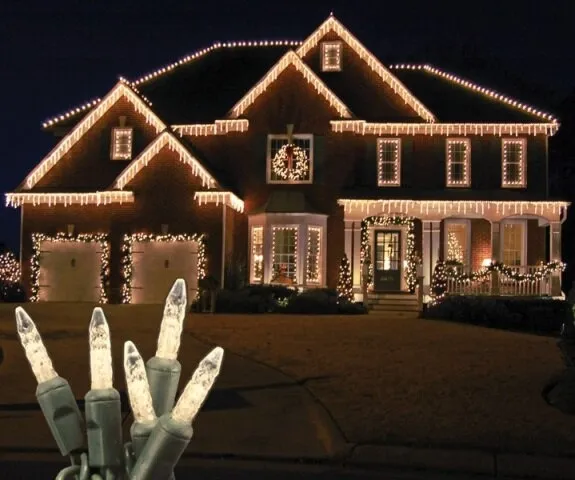
3. Icicles, Garland and the 60-30-10 Rule
The formula here is roughly 60% icicle lights along the eaves, 30% illuminated garland around the garage and entry, 10% small lit trees and window wreaths. Swap the icicles for C9 strands and it turns more traditional; drop the garland and it goes clean and modern. The proportions sell it.
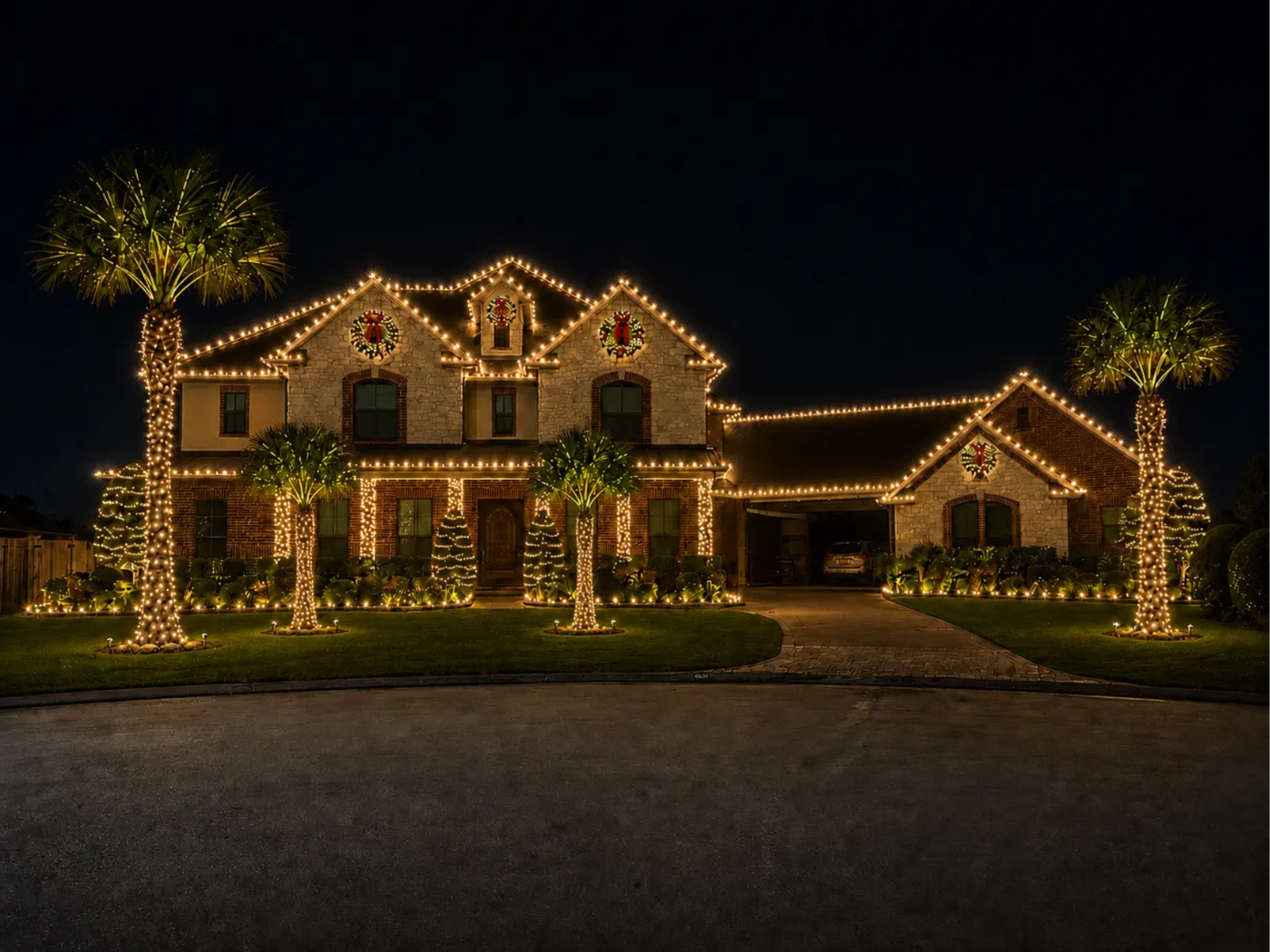
4. Palm Trunks Wrapped, Wreaths on the Gables
Wrapping trunks rather than branches is having a moment, and it’s easy to see why — it reads as architecture instead of decoration. The red and green wreaths on the gables give the eye two clear stopping points in an otherwise warm white field, which is why this look photographs so well.
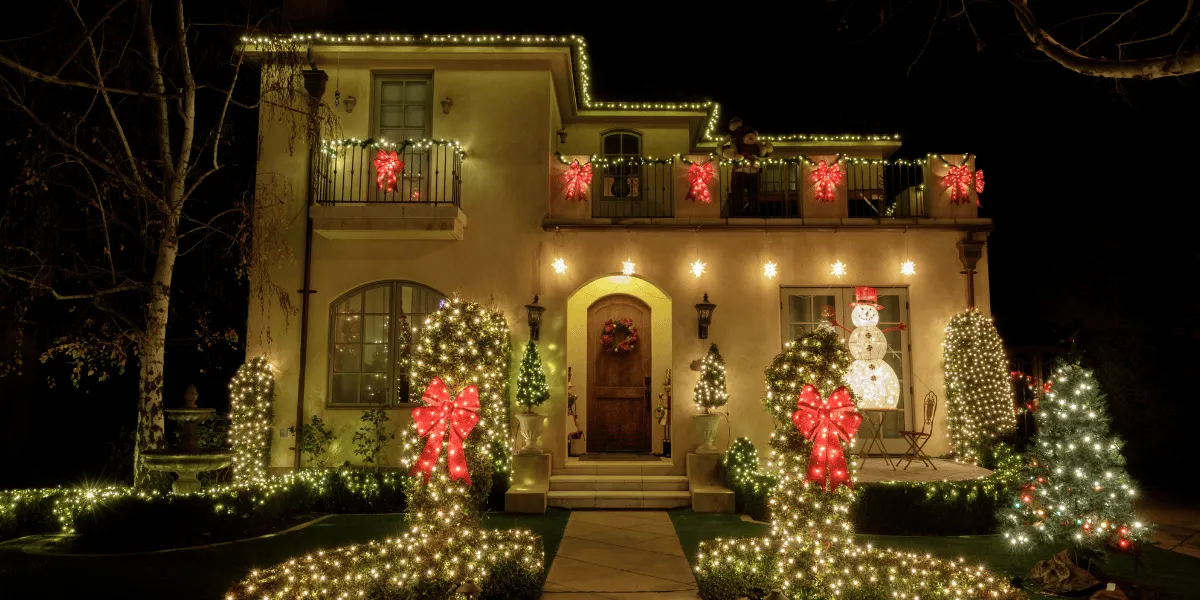
5. Red Bows That Give a Stucco Facade Rhythm
It’s the red bows on the balcony railings. Take them away and you have another warm white house; keep them and the facade suddenly has rhythm — light, bow, light, bow — with the arched entry and its wreath pulling your eye straight down the middle.
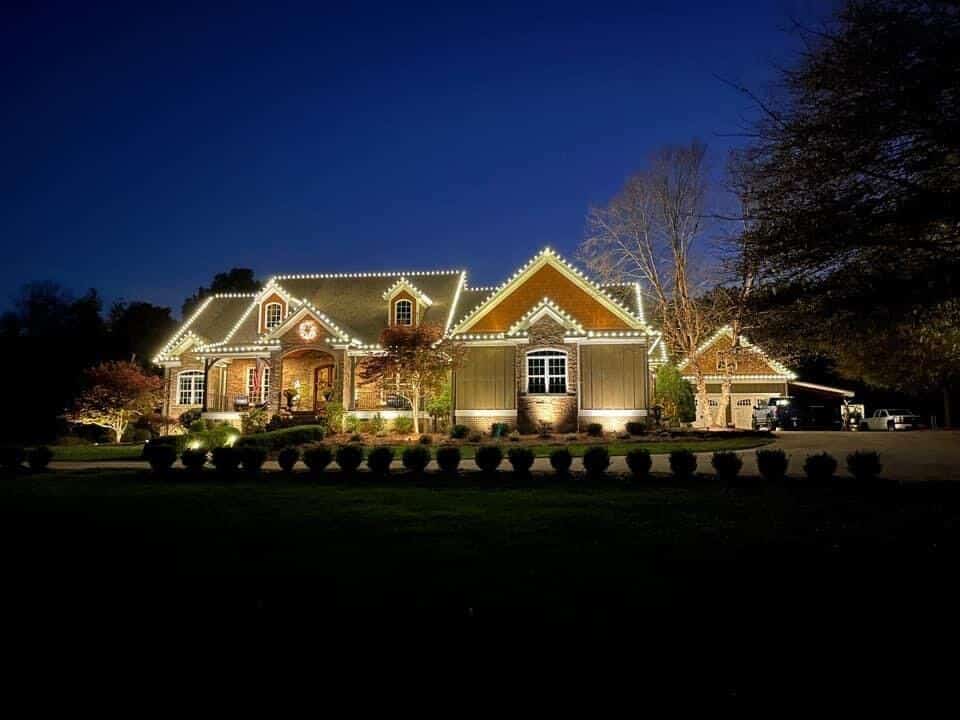
6. Outline Plus Uplight on a Multi-Gabled House
Two lighting jobs are running at once: line lighting along every gable and dormer, and soft uplighting washing the lower facade and shrubs. The outline tells you the shape of the house; the uplights give it weight. Skip the uplights and all those bright lines start to float.
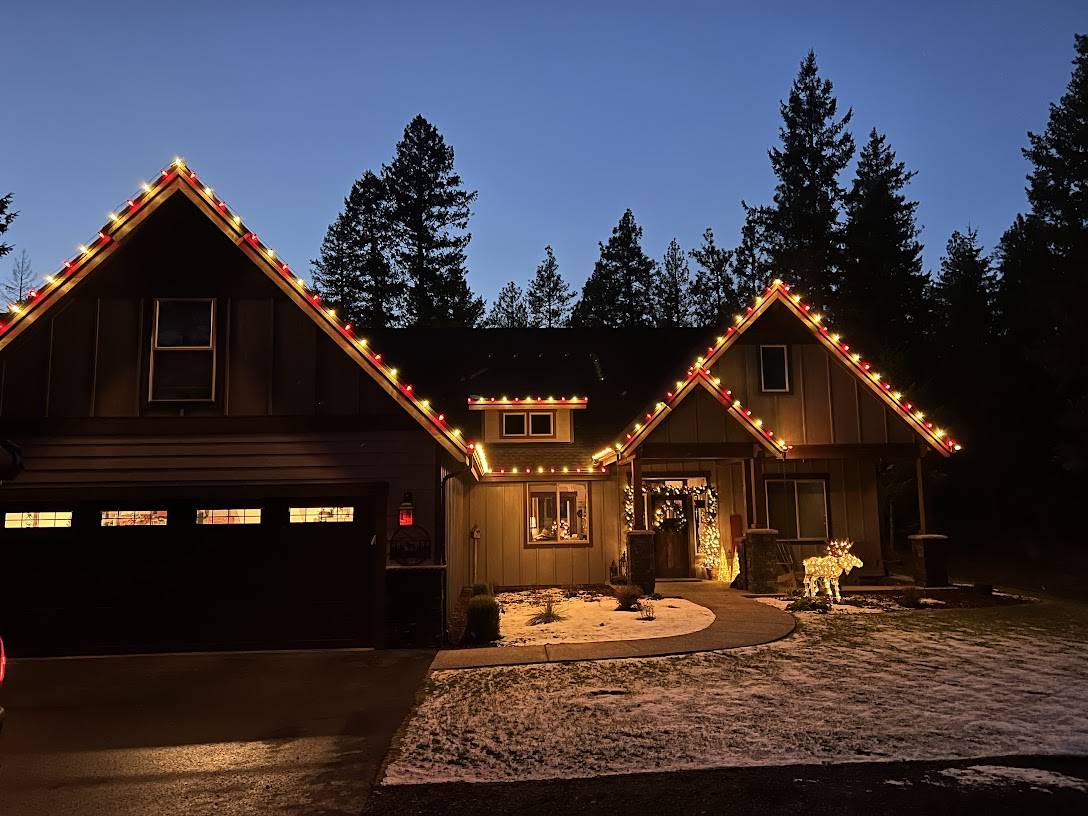
7. Red and Warm White on Dark Brown Siding
Red and warm white together is charming on dark brown siding, but red bulbs are the first to look pinkish as they age and the hardest to match when a strand dies. Buy two spare strands of that exact red now — hunting for a match in year three is genuinely miserable.
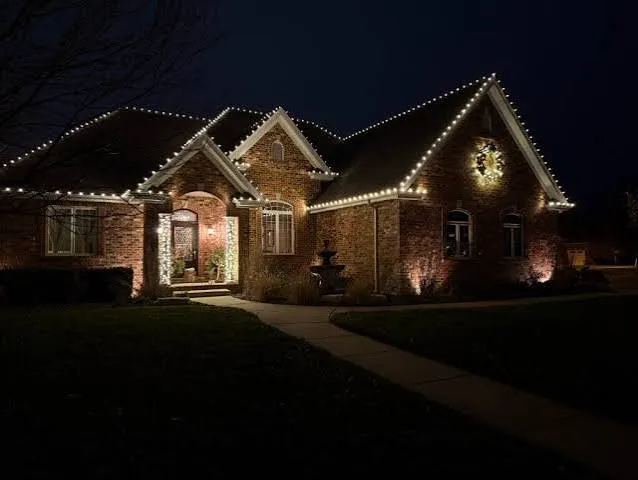
8. Windows Framed Like the Roofline Was
Framing windows with lights is the detail most people skip, and it’s the one that makes a plain white facade look custom. Run the strand tight to the casing on all four sides, keep the corner turns sharp, and stop the last bulb just short of the glass so the trim still reads by daylight.
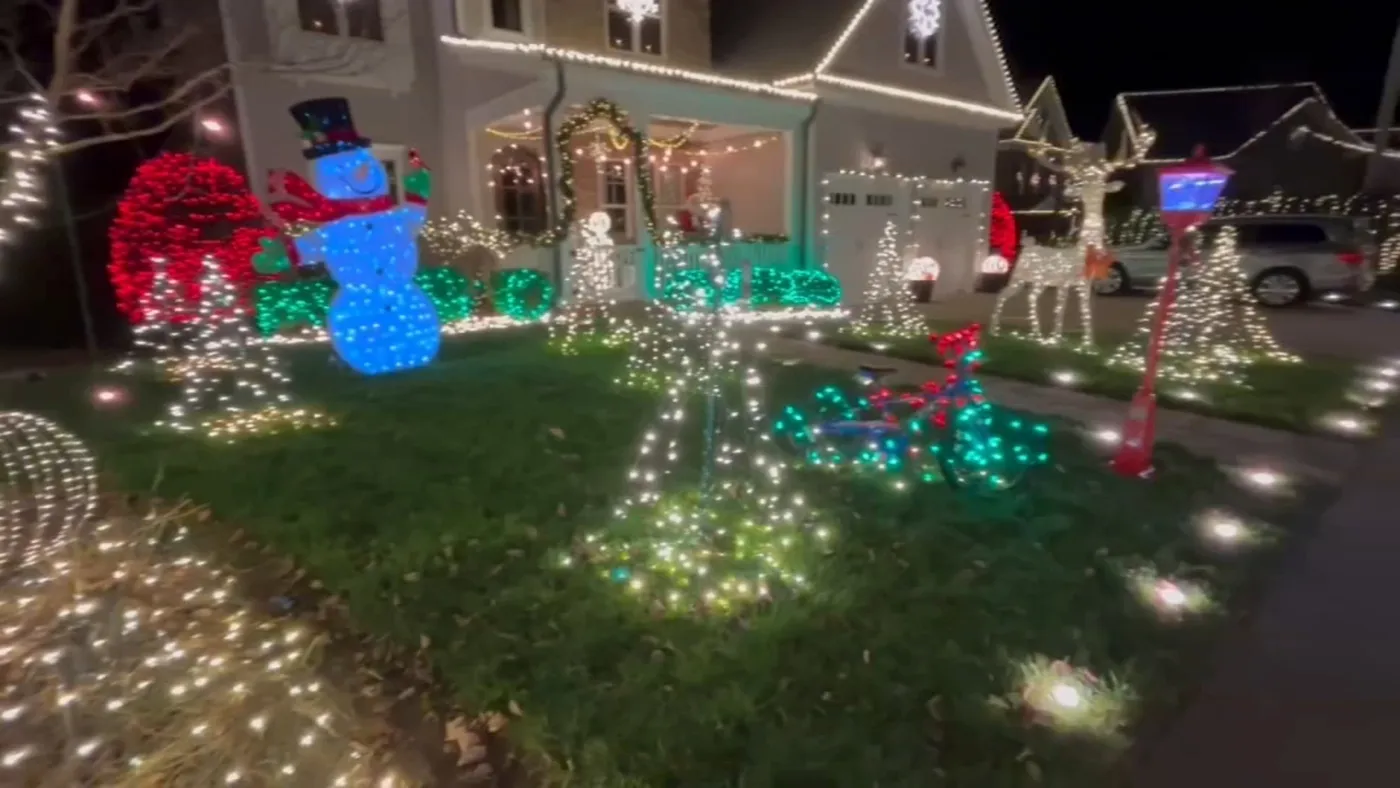
9. A Blue Snowman, a White Reindeer, One Budget
You don’t need a display crew for this. A wire-frame blue snowman and a white reindeer from a big-box store cost a fraction of custom figures, and the red and green lit bushes are just net lights thrown over shrubs you already have. Same energy as Idea #13, a fraction of the spend.
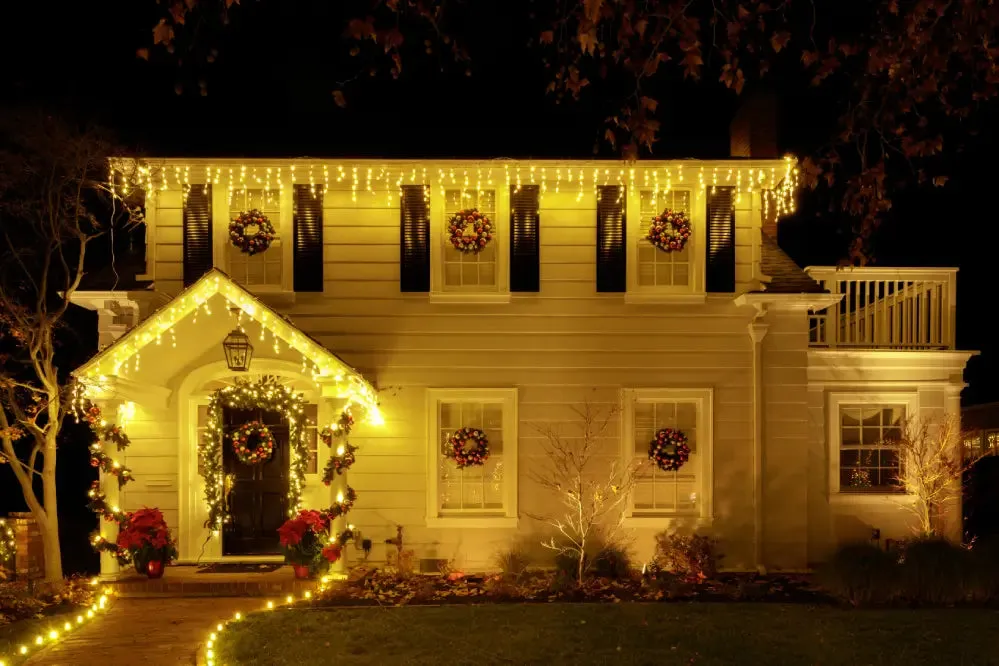
10. Poinsettias at the Entry Do the Color Work
The red poinsettias at the entry. Everything else here is warm white and green, so those few red plants do what a whole extra strand of lights can’t — they carry color all the way down to the pavement and stop the porch from reading as one flat wall of yellow.
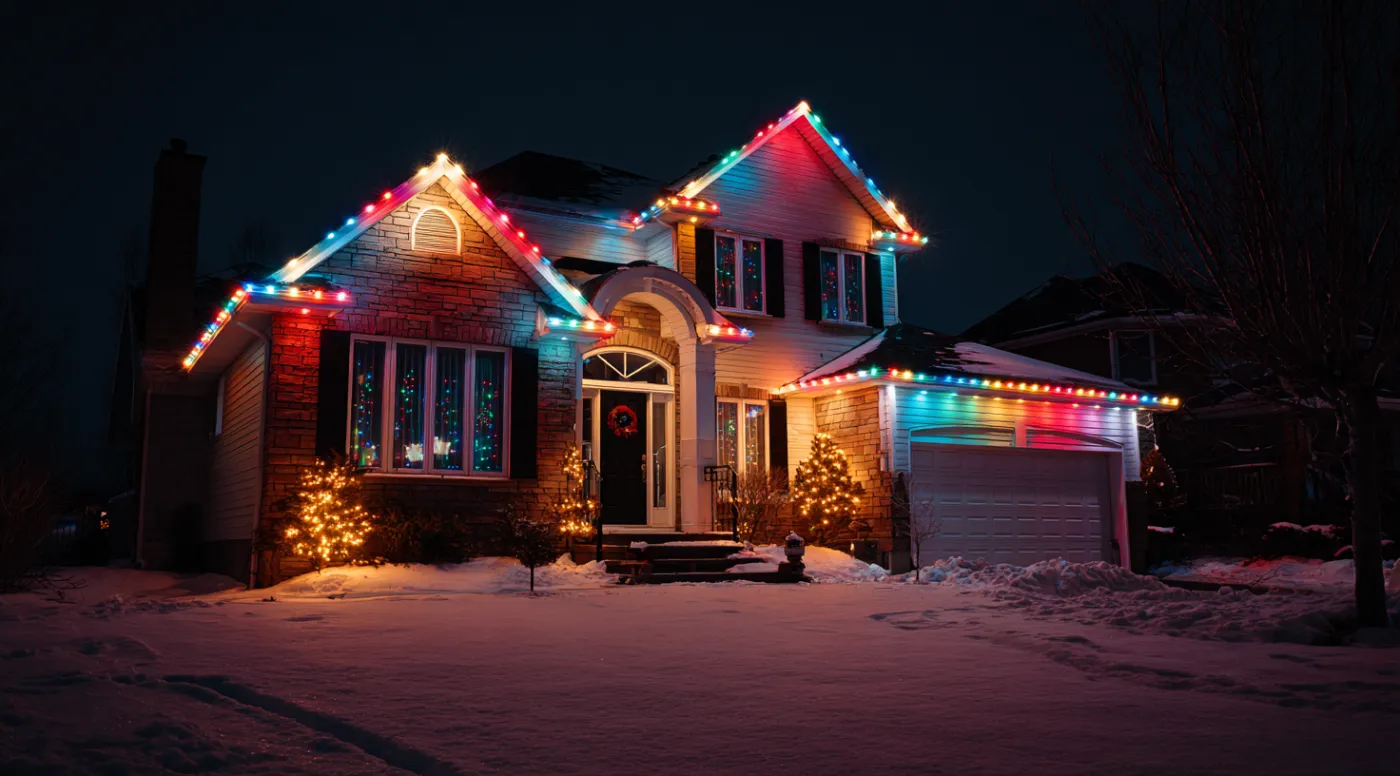
11. Multicolor Rooflines With One Calm Corner
Roughly 70% multicolor strands on the house, 20% warm white on the small trees, 10% red at the door. That pocket of warm white is what keeps a multicolor facade from looking chaotic — it gives the eye somewhere calm to land. Keep the tree lights one temperature, not three.
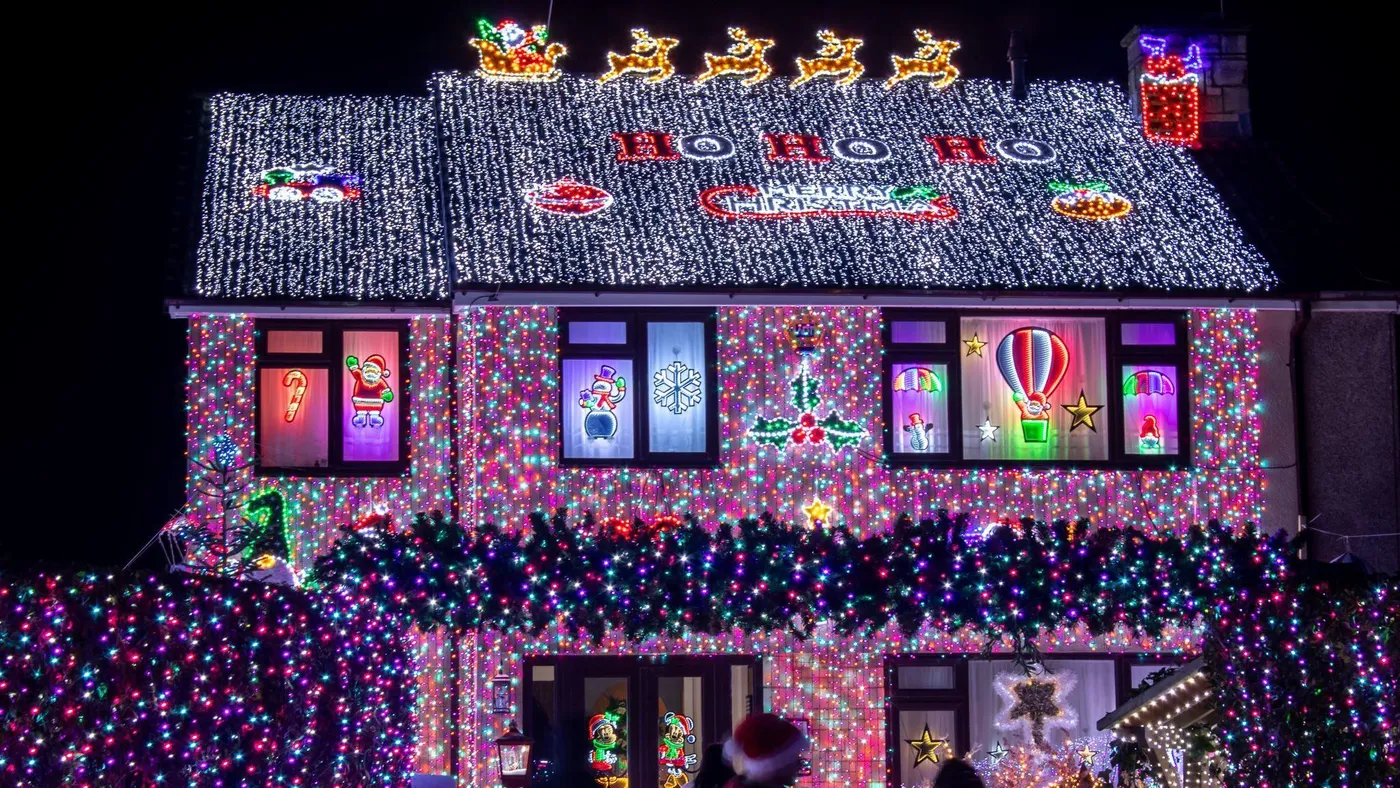
12. Full Coverage, Rooftop Santa, Realistic Cords
A full-coverage display takes a weekend to hang and a full day to troubleshoot, and every figure is another cord to hide. It’s also the setup most likely to trip a single outdoor circuit. Map your outlets before you buy anything, and put it all on timers so nothing’s still blazing at 2 a.m.
13. White House, Wild Yard, One Clear Path
The restraint is the trick. The house itself sticks to one color — white — while all the chaos lives in the yard, and the lit archway creates a literal path for your eye to travel. That separation is why a busy display still looks intentional instead of cluttered.
14. Gables and Dormers Outlined Top to Bottom
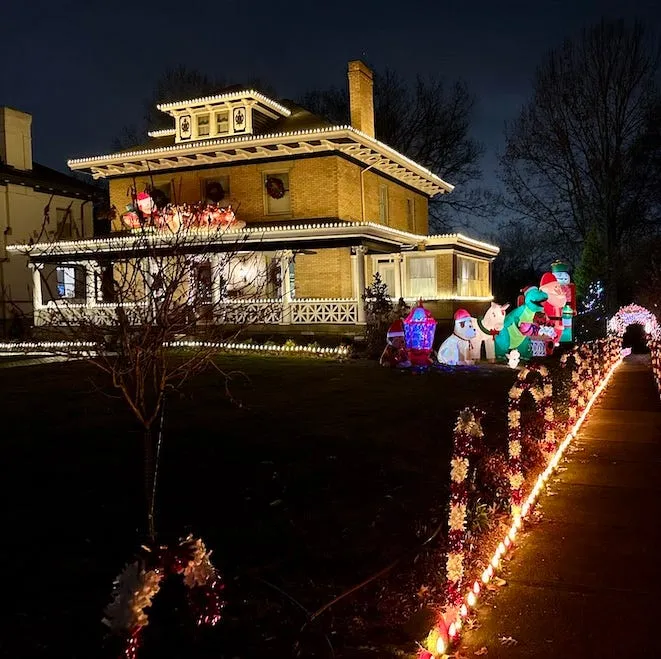
Outlining every gable and dormer only pays off on a fairly simple roofline. On facades under about 1,800 square feet with two or three roof planes, the silhouette stays readable. Bigger, busier roofs start to look like a wiring diagram — that’s when you switch to uplighting instead.
15. A Snowy Row of Board and Batten Warmth
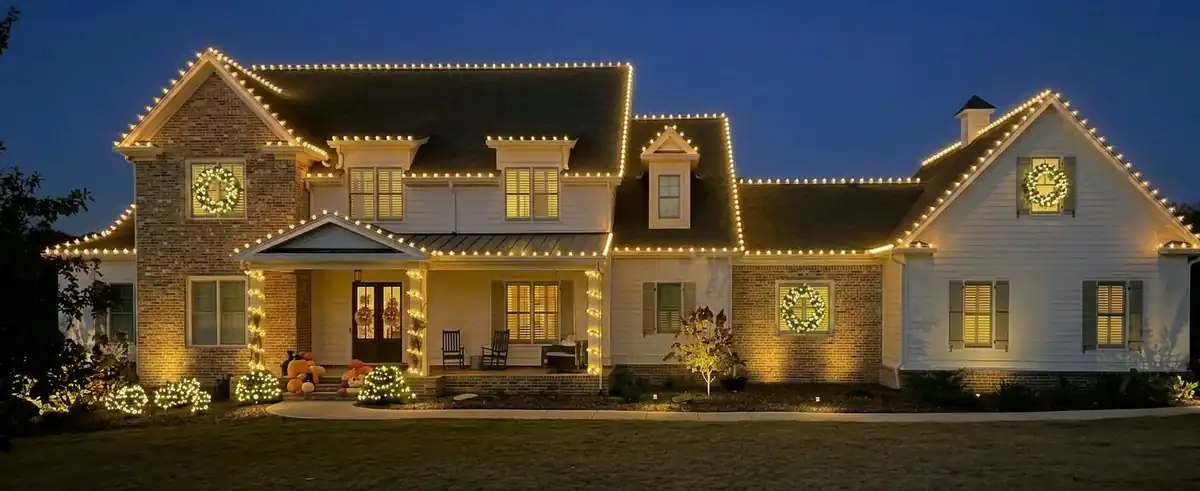
This is the look that made warm-white-only the default for the last few seasons. Board and batten siding, arch-top windows and fresh snowfall do a lot of the styling for you, which is why neighbors copy it. It’s also the trend least likely to date — white bulbs and snow never really went out.
16. Light-Up Gifts, Snowmen and Winter Wind
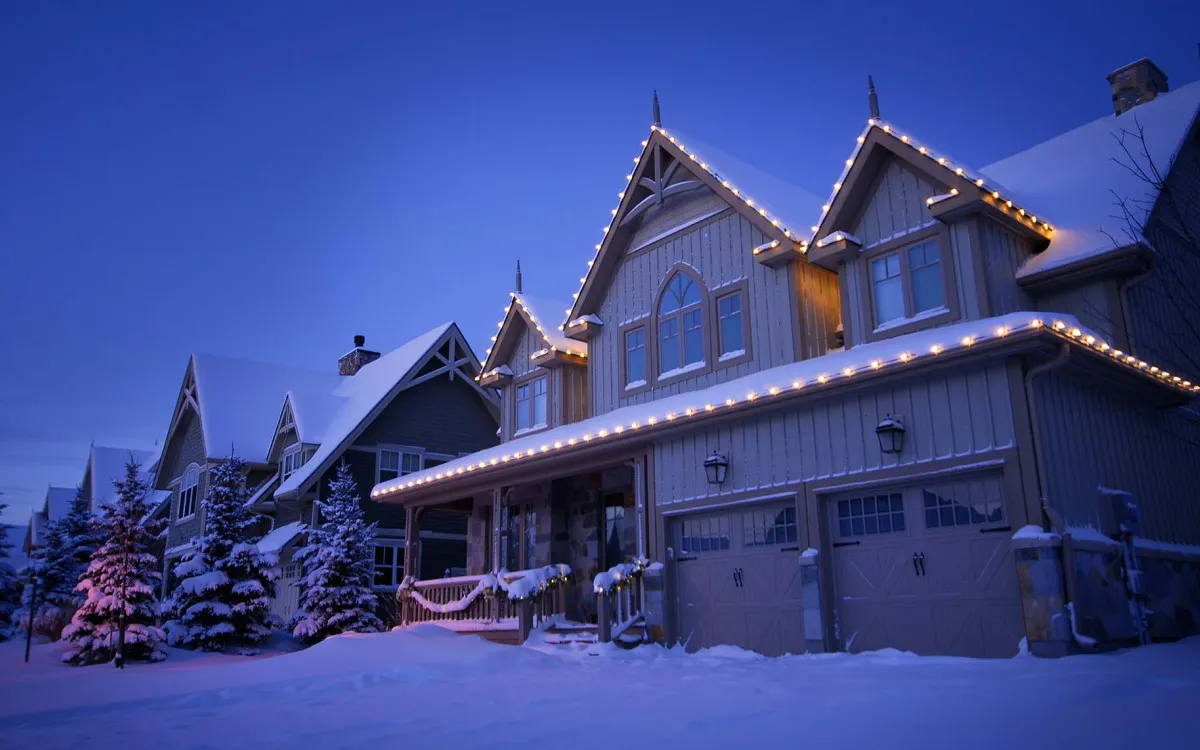
Light-up gift boxes and snowmen look wonderful until the first heavy snow, then wind knocks them flat and you’re re-staking every morning. Weigh the bases with sand or pavers, and keep figures a few feet back from the driveway so a plow doesn’t take them out in one pass.
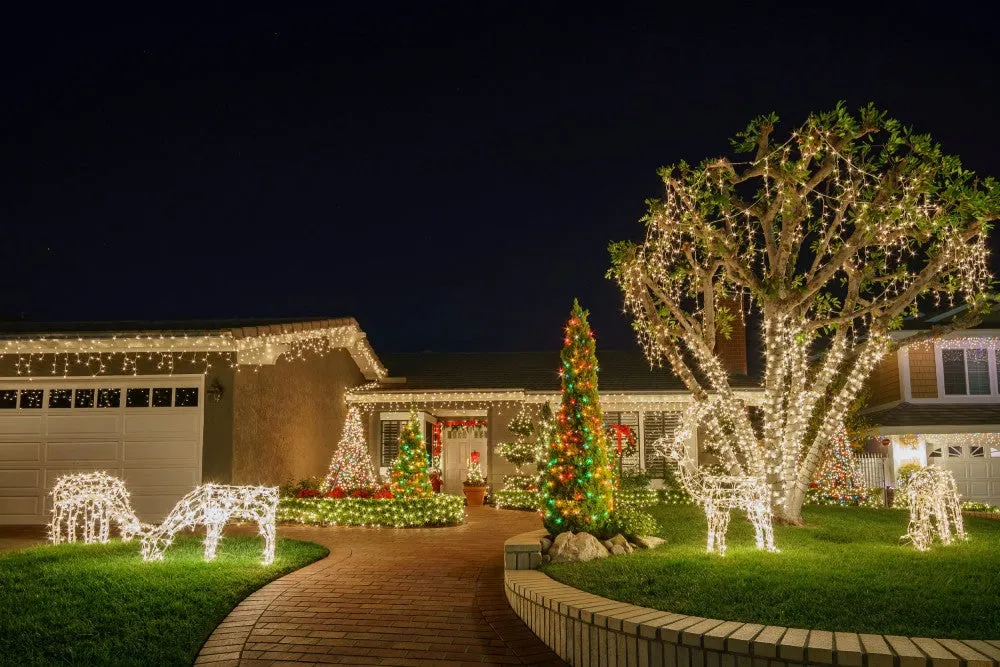
17. Wire Deer Grazing Under a Wrapped Tree
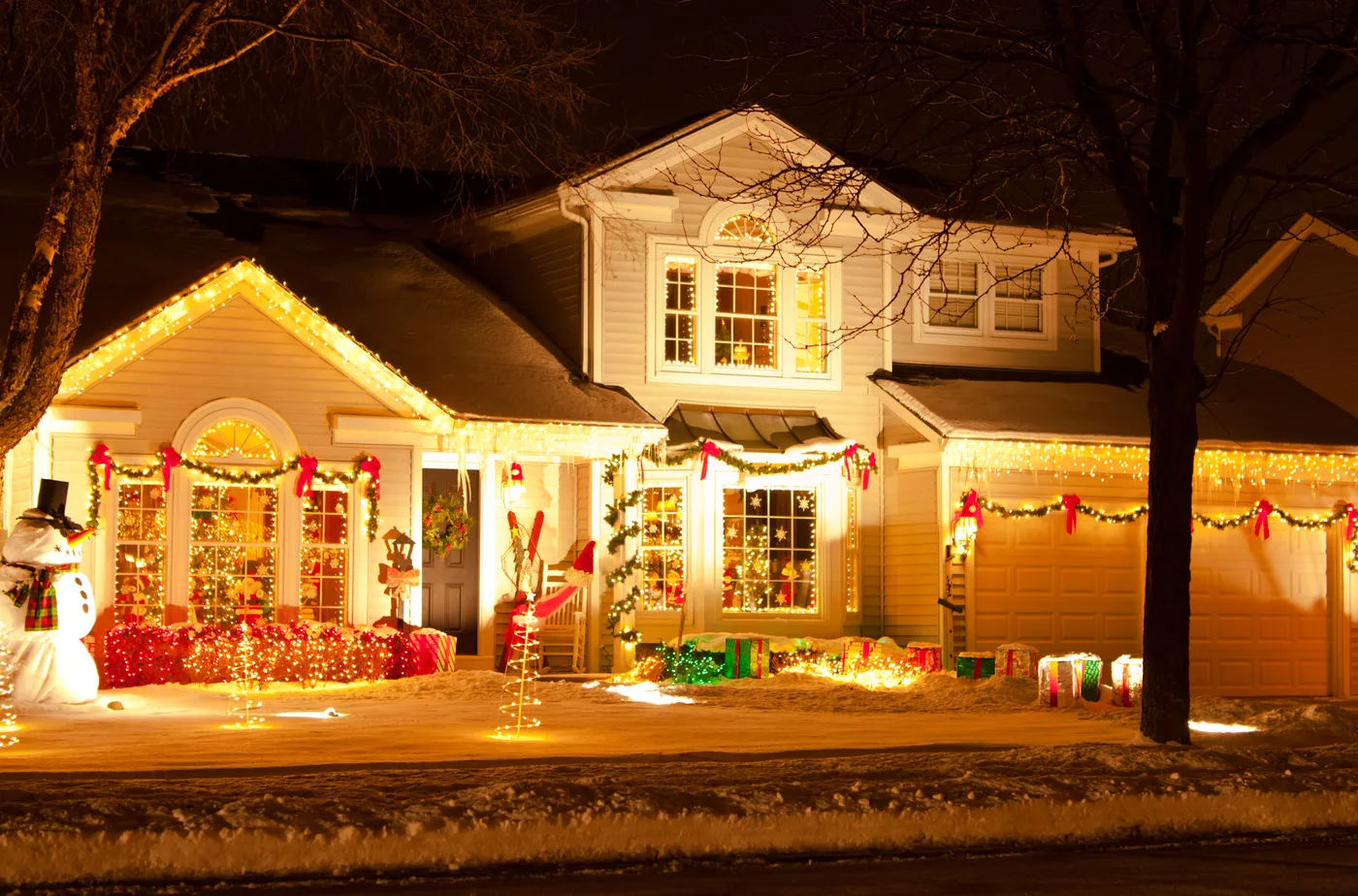
Wire-frame deer look best in odd numbers — three reads as a small herd, two looks like a pair of lawn ornaments. Angle them facing your wrapped tree rather than the street, and keep the multi-colored conical trees at least six feet away so the two light colors don’t blend into mush.
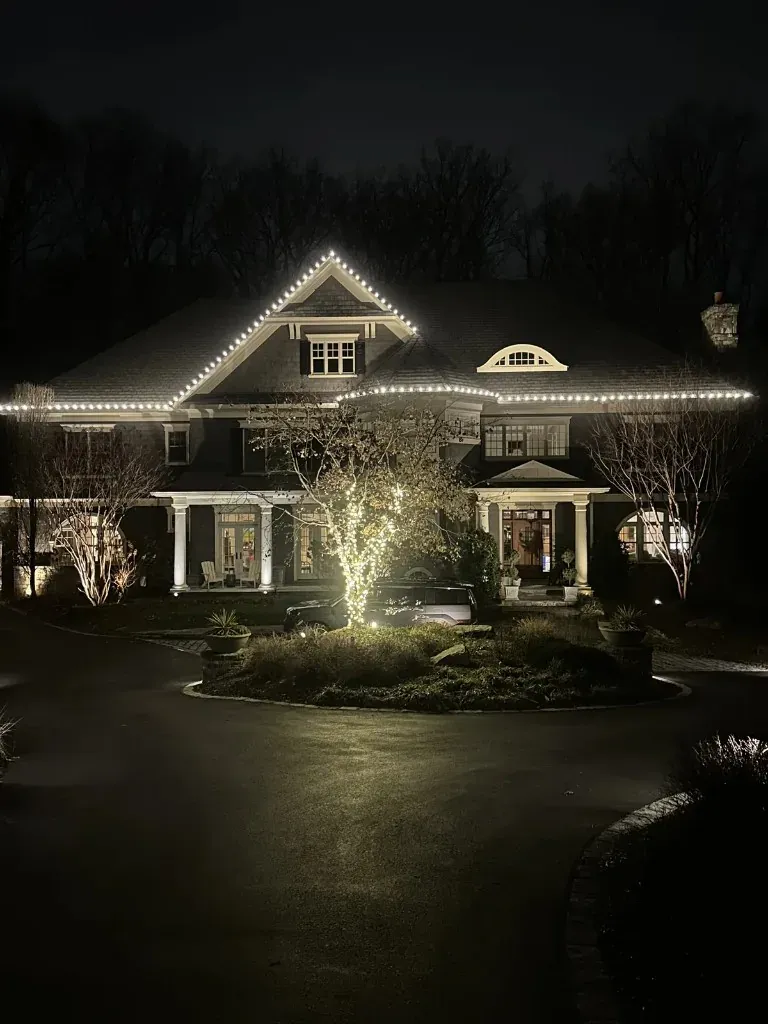
18. The Wrapped Tree in the Circular Drive
It’s the wrapped tree in the driveway. Without it the house is just an outline; with it you get a glowing vertical anchor that grounds the whole composition and lights the approach. If you only wrap one thing this year, wrap a tree you actually walk past every day.
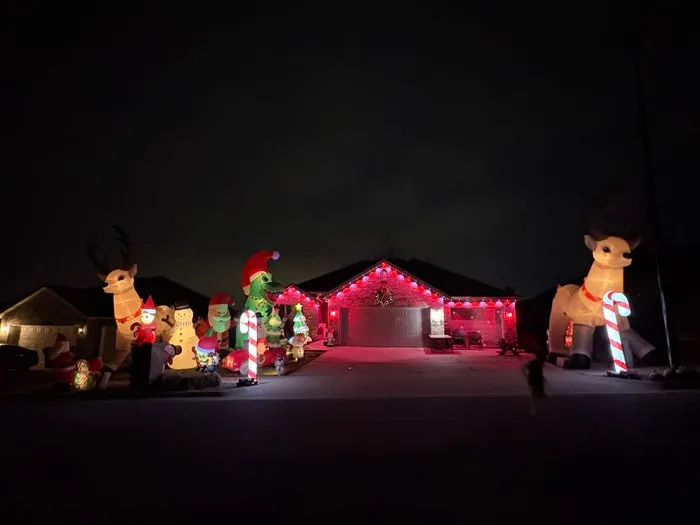
19. Red Roofline, Inflatables Everywhere Else
One color on the architecture — red, and only red — with every other color allowed out in the yard. Inflatables are already loud, so keeping the roofline to a single hue gives them something calm to sit against. Swap red for warm white and the whole yard instantly looks more grown-up.
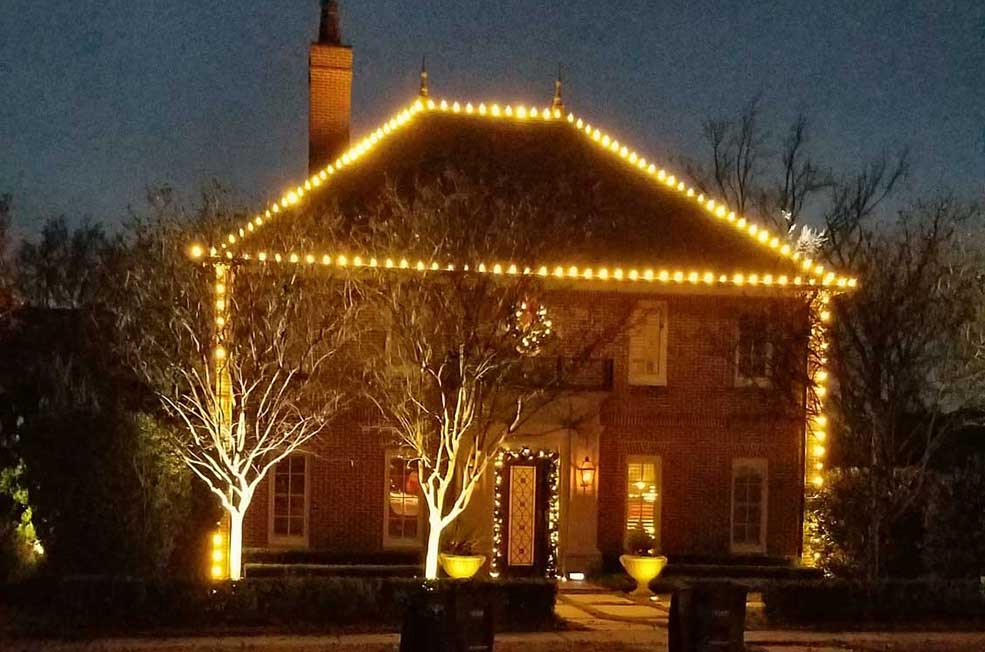
20. Chimney, Gables and a Pre-Hang Checklist
Before you climb anything, walk the facade at dusk and check:
- Which outlets share a circuit
- Whether the chimney line is reachable with a 12-foot ladder
- Where uplights will hit brick versus glass
- How many extension cords you actually own
Ten minutes of that saves an afternoon of re-hanging.
21. Nutcrackers and Candy Canes, Built in Stages
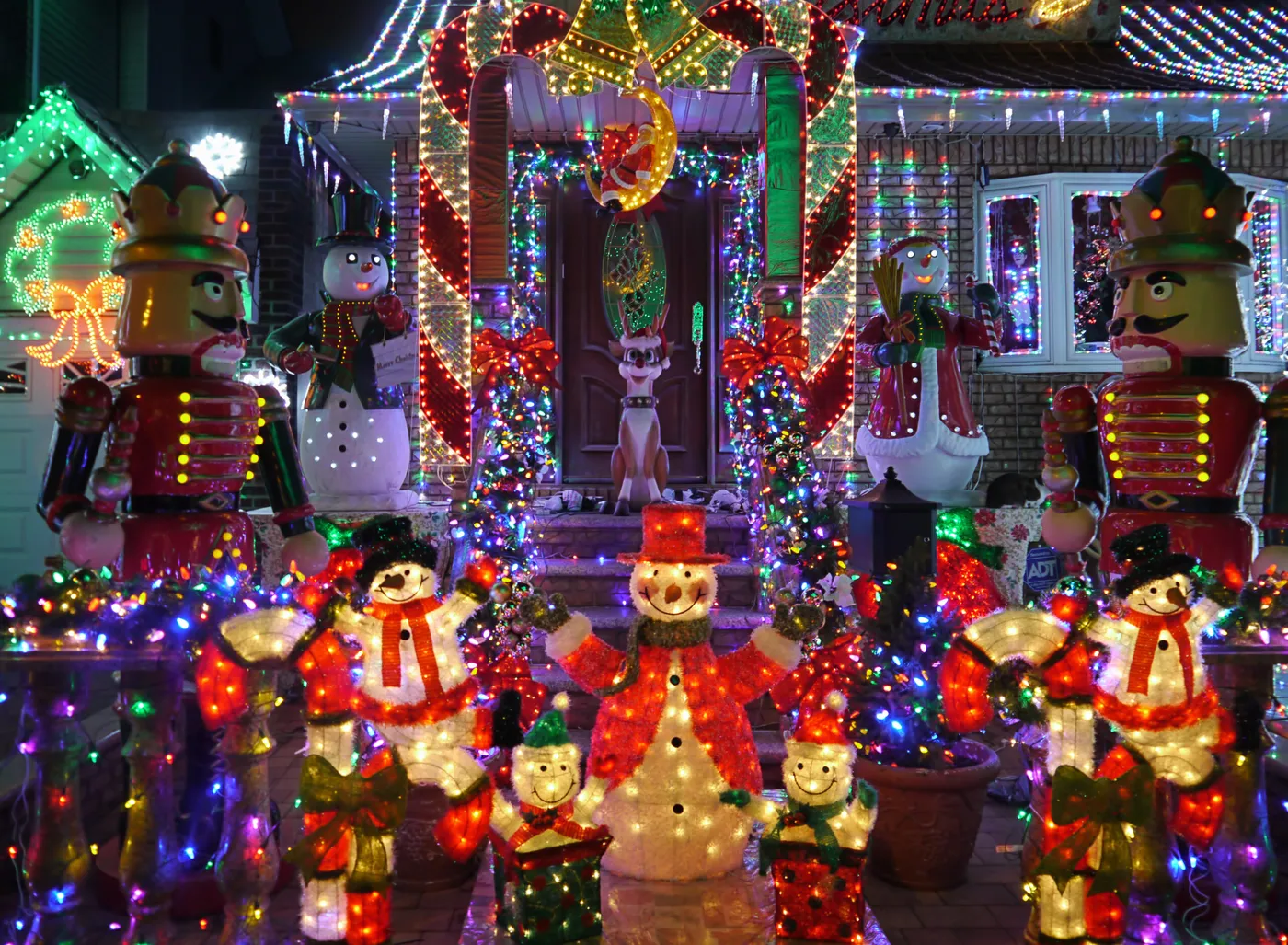
You can absolutely build this in stages. Buy the multicolor strands and lit archway first, then add one figure a year — nutcrackers and giant candy canes are the cheapest big-impact pieces, and thrift stores and Facebook Marketplace are full of them every January.
22. Warm White House, Multicolor Bushes
Warm white on the house, multicolor in the bushes, one glowing reindeer to break the line. The eye reads the house as the calm base and the yard as the party, which is why mixing temperatures works here instead of looking messy. Contrast lives at the boundary, not the middle.
23. The Little Lit Evergreen in the Red Pot
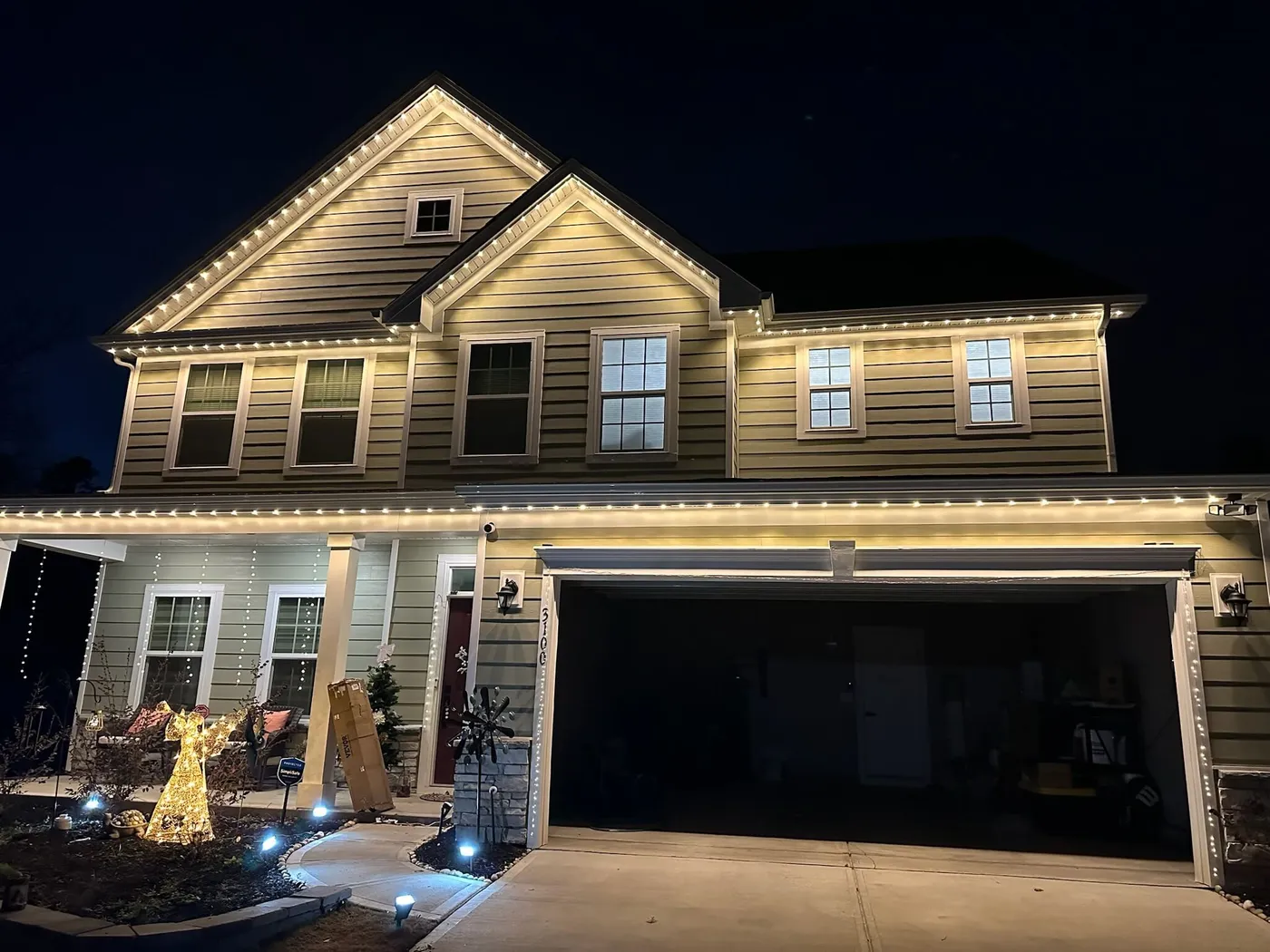
That lit evergreen in the red pot is the cheapest detail in the photo and the one people copy most. Buy a pre-lit potted tree, place it where the path turns, and keep it to a single warm white temperature. Leave eight to ten inches of clearance from the walkway so nobody trips on it.
24. Snow on the Roofline Means Clips, Not Staples
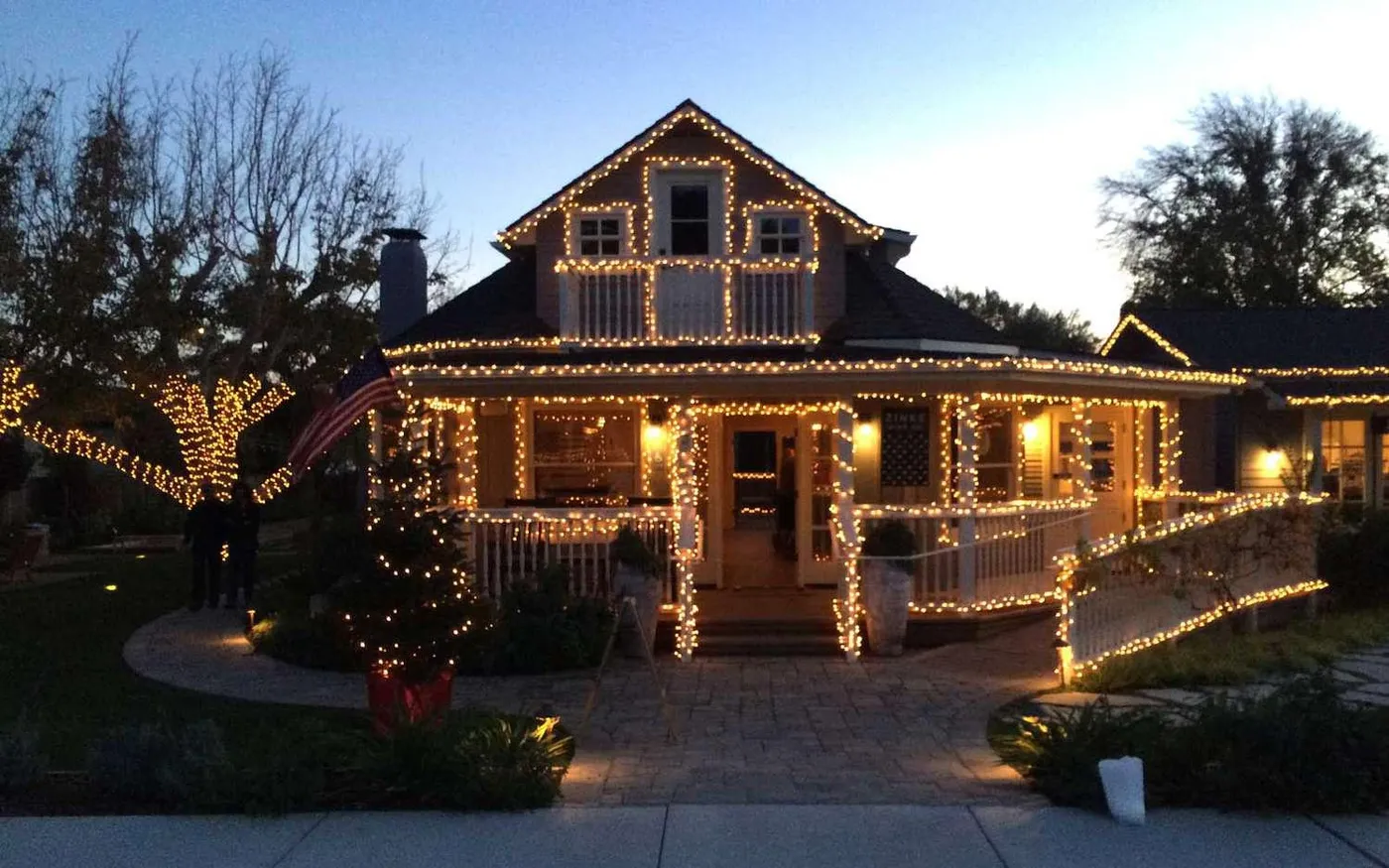
Snow on a lit roofline is gorgeous and it’s also the fastest way to lose a strand — ice works under clips and pulls them loose. Clear your gutters before the first freeze, and use clips rather than staples so nothing dents the shingles. Keep interior window bulbs warm white; cool white inside will fight the exterior glow.
25. A Train, Reindeer and Room to Breathe
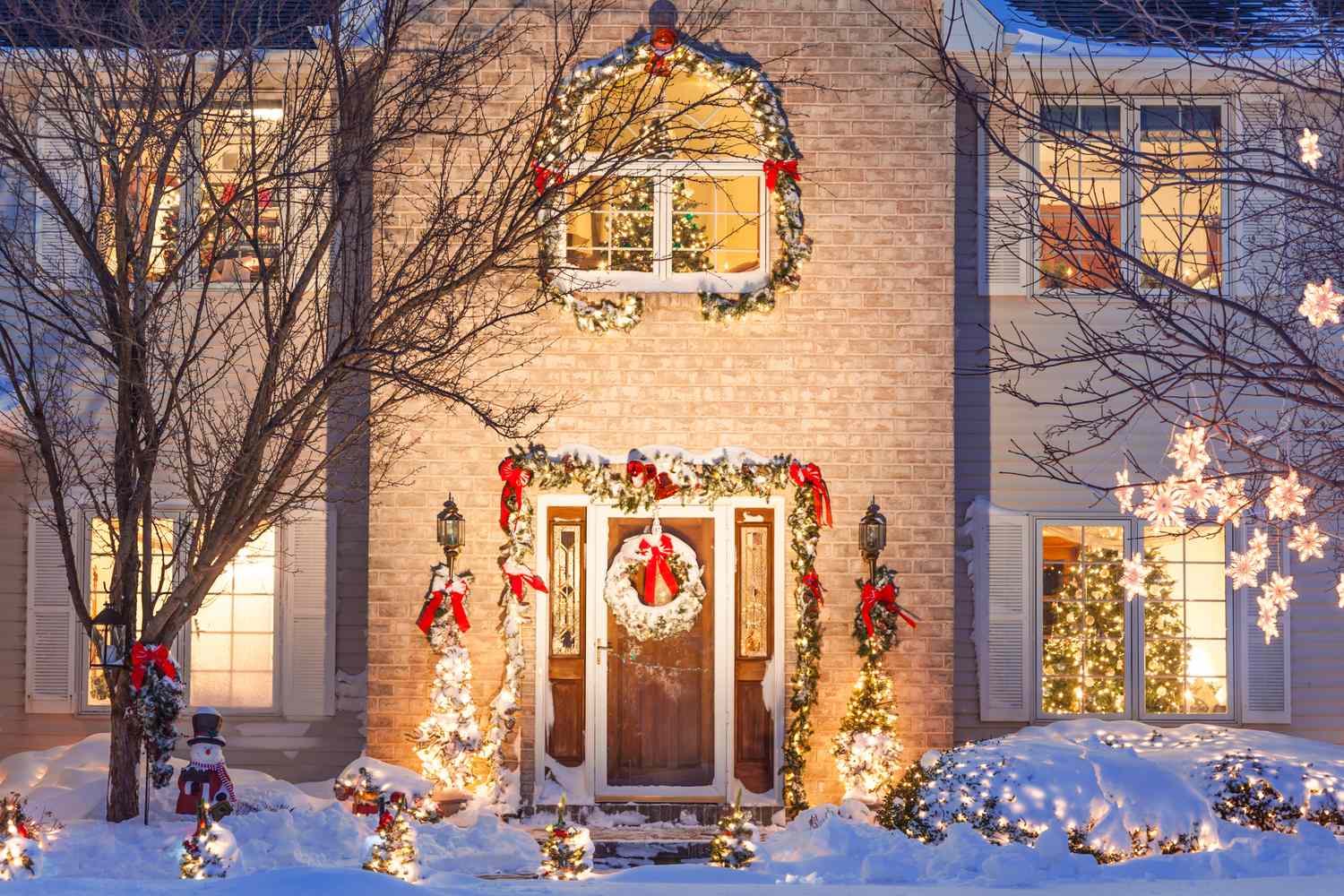
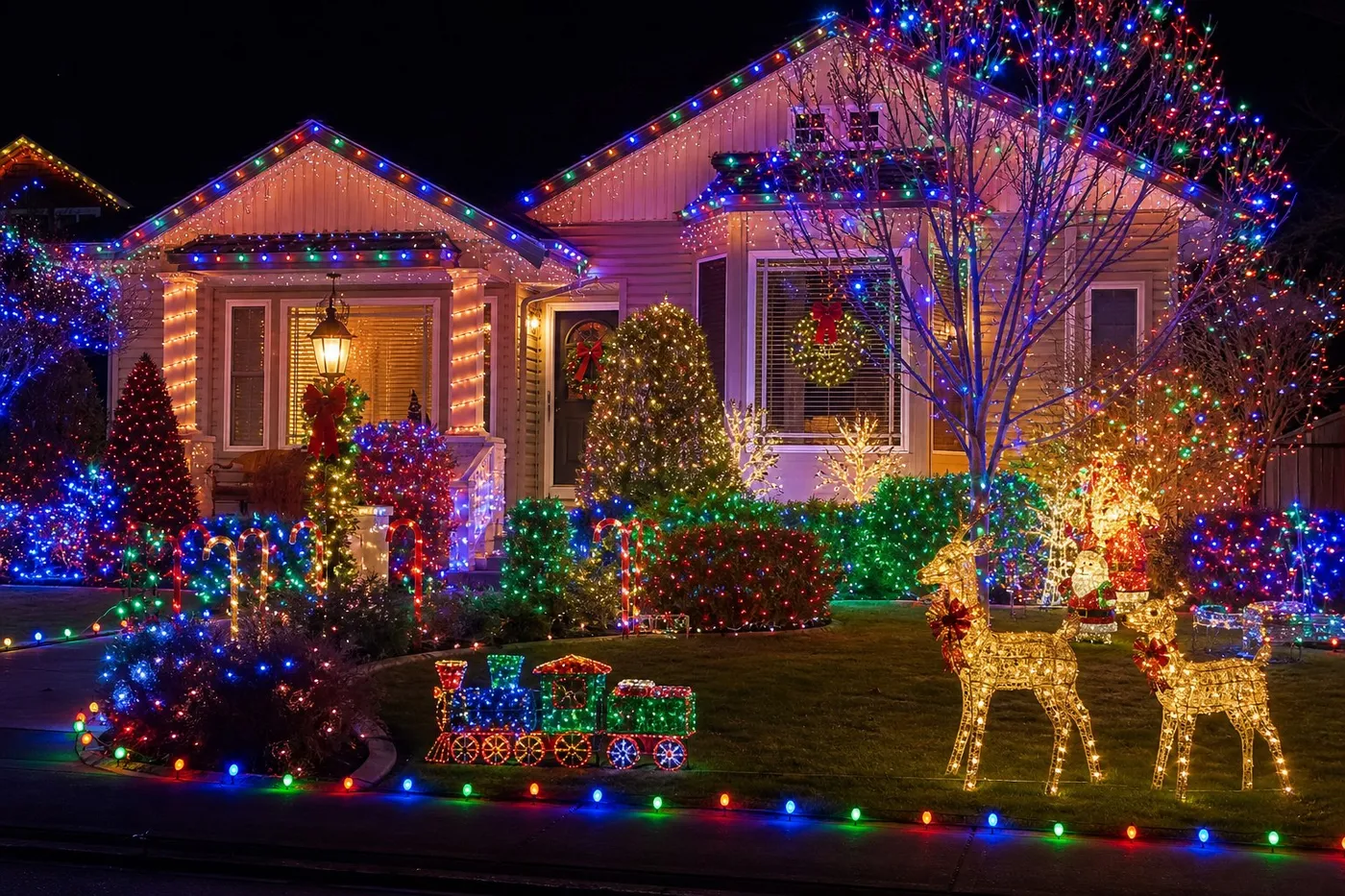
A yard with a train, reindeer and candy canes needs room to breathe. Plan on at least a quarter acre, or a front yard roughly 40 feet wide, so each figure gets its own zone. Smaller spaces do better with the single-figure approach in Idea #17.
26. Cool Blue Up High, Warm White Down Low
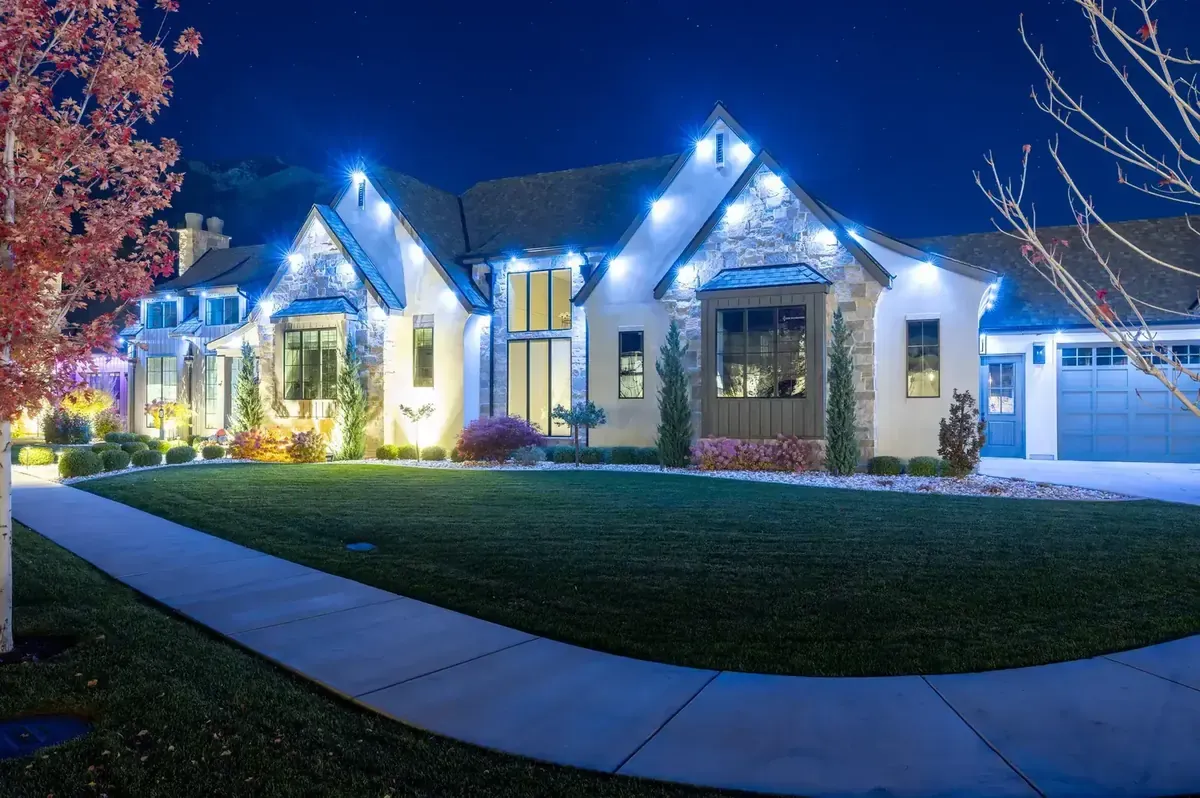
Cool blue and white on the rooflines, warm white uplighting at the foundation. That’s the whole recipe: cold light up high, warm light down low, nothing muddled in between. It’s the same split as Idea #36, just with blue standing in for red.
27. Wrap What You Already Own
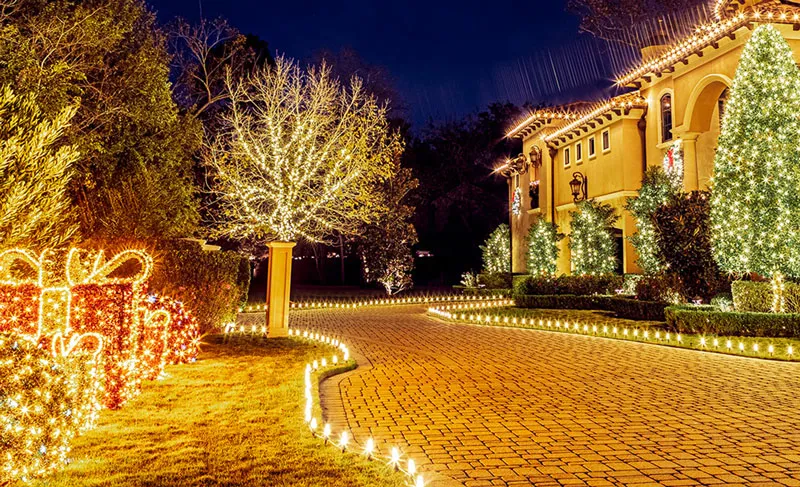
Wrap what’s already on the property. Existing trees, shrubs and a few large gift-box props cost nothing but lights and time, and the driveway perimeter can be done with plain strands and ground stakes. Same grand effect for a few hundred dollars instead of a few thousand.
28. One Temperature, Porch Railings Included
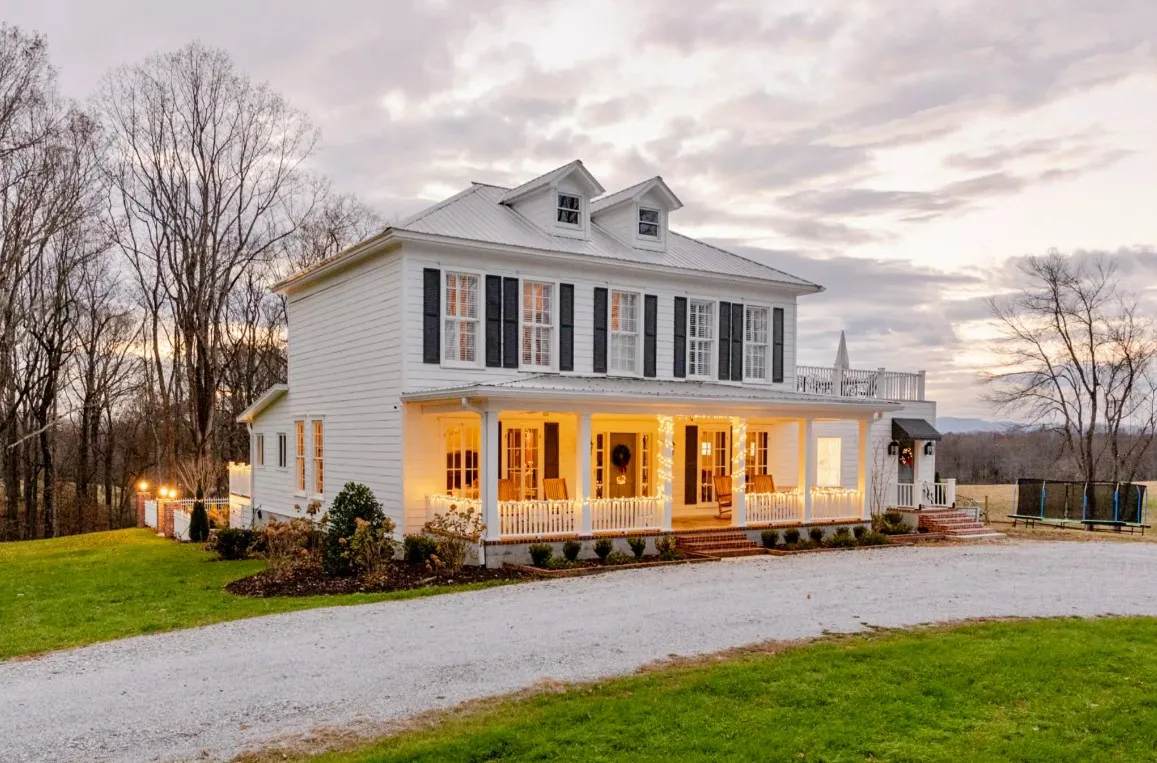
Everything is one temperature, so the only contrast in the scene is warm light against cold snow. That’s a deliberate choice: no color, no figures, no competing shapes. The porch railing gets the same treatment as the roofline, which keeps the whole house reading as a single glowing line.
29. Light Green Siding Shows Every Dark Clip
Light green siding flatters warm white, but it also shows every dark clip and cord shadow in daylight. If your porch gets direct morning sun, use clear clips and match the cord to the siding color — or you’ll spend all of January staring at a tidy grid of little black dots.
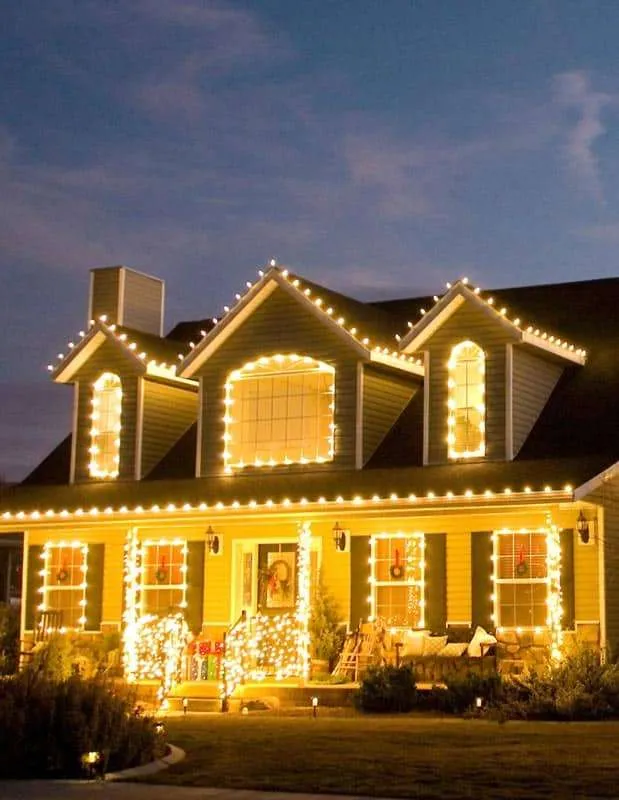
30. Red, White, Red, White Along the Eaves
The pattern is one red, one white, repeated evenly with no gaps and no color blocks. On textured stucco the light spills and doubles the effect on the wall. Switch to all warm white and it goes elegant; alternate red and green for something more classic. Spacing matters more than the palette.
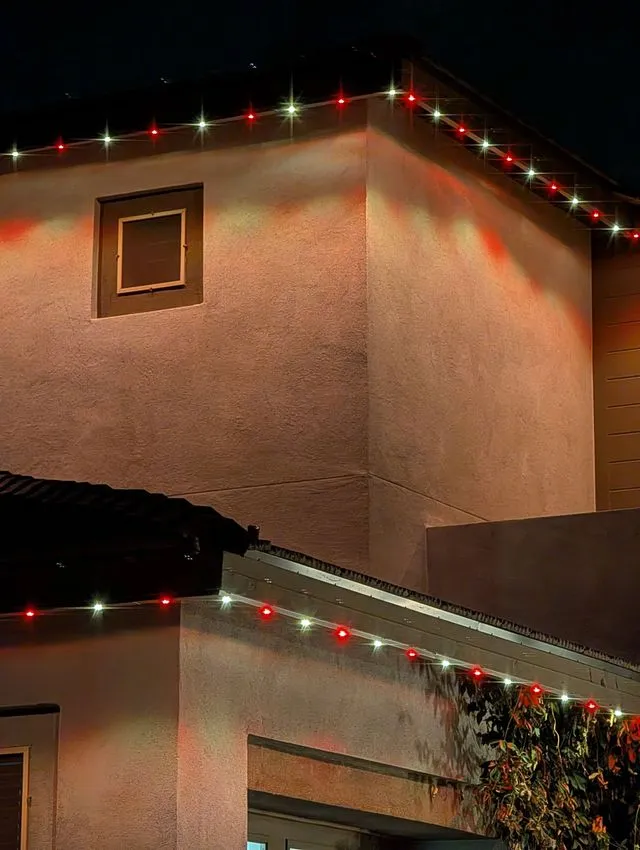
31. One Draped Tree Against Barn Red
The one draped tree. Barn red absorbs a lot of light, so the house alone would look flat — the tree gives you a second, softer source that fills the foreground and carries the eye across. Take it away and that wreath is suddenly competing with nothing at all.
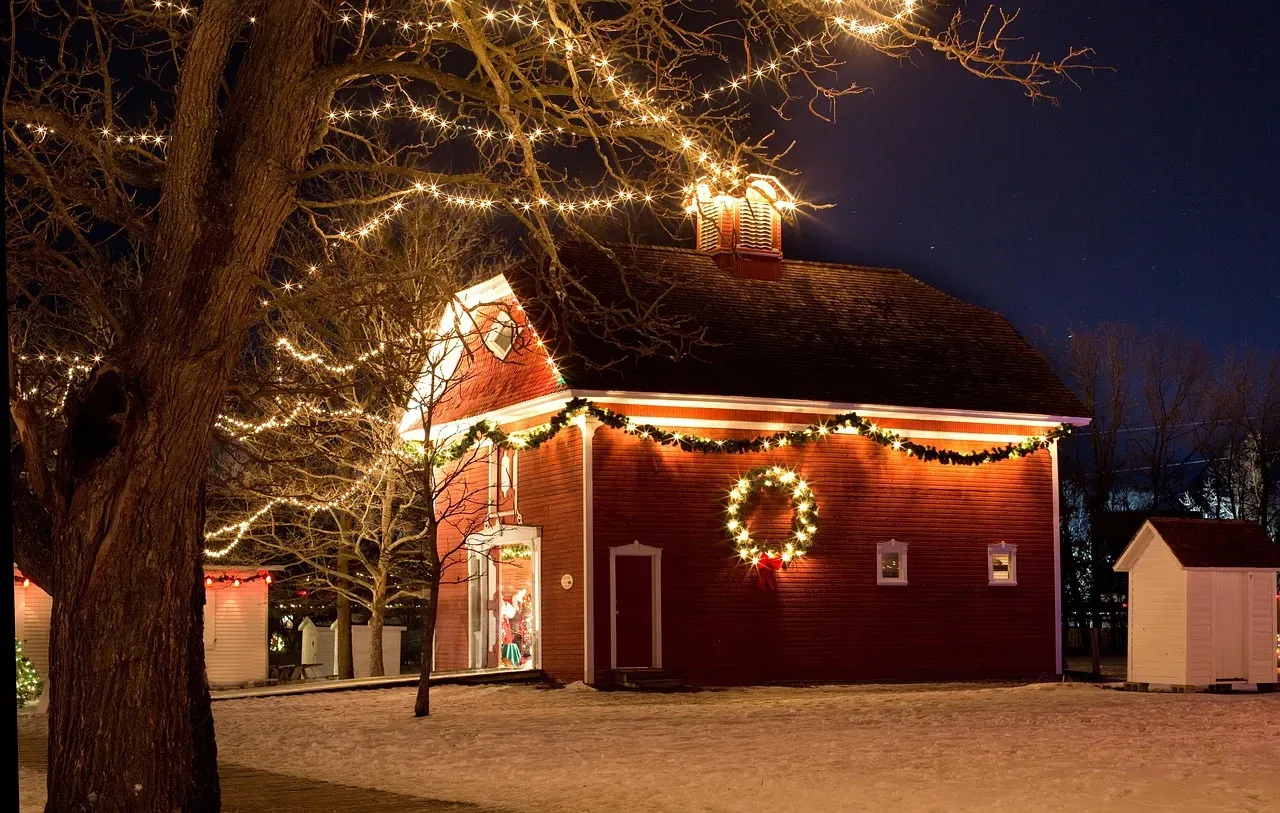
32. The Indoor Tree Showing Through the Glass
Letting the indoor tree show through the window is the detail everyone’s saving this year. Warm white outside plus a lit tree inside makes a house feel inhabited rather than decorated, and it costs nothing extra. Just keep both on the same warm temperature so they don’t fight.
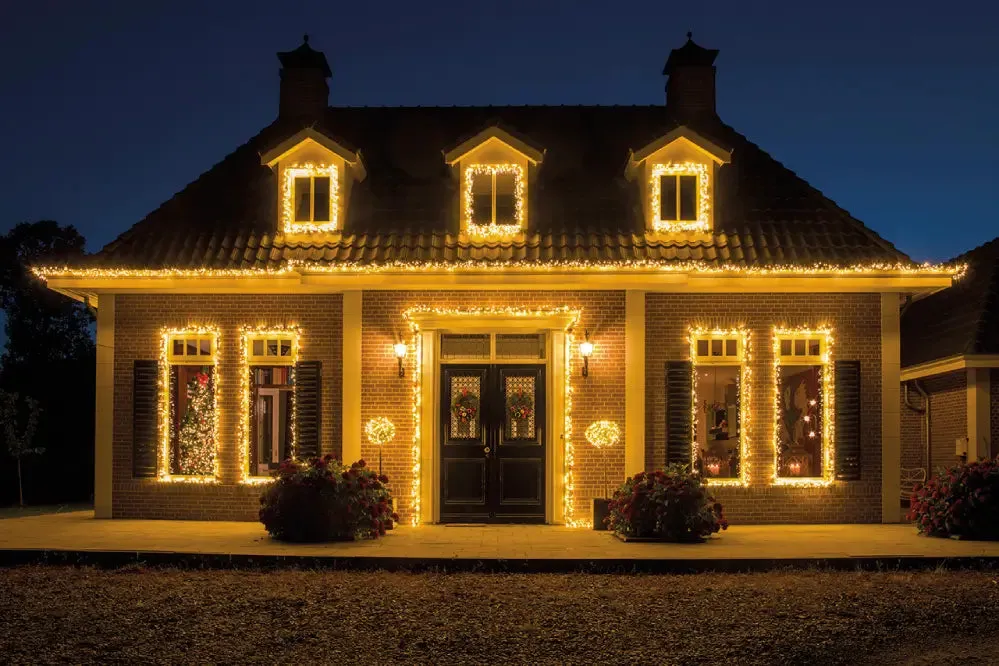
33. Conical Light Trees Flanking a Low Ranch
Those conical light trees flanking the windows. On a low ranch facade you don’t get much vertical interest, so a pair of them gives the house height and symmetry at once — and the red-lit tree on one side, green on the other, keeps the composition from looking too perfect.
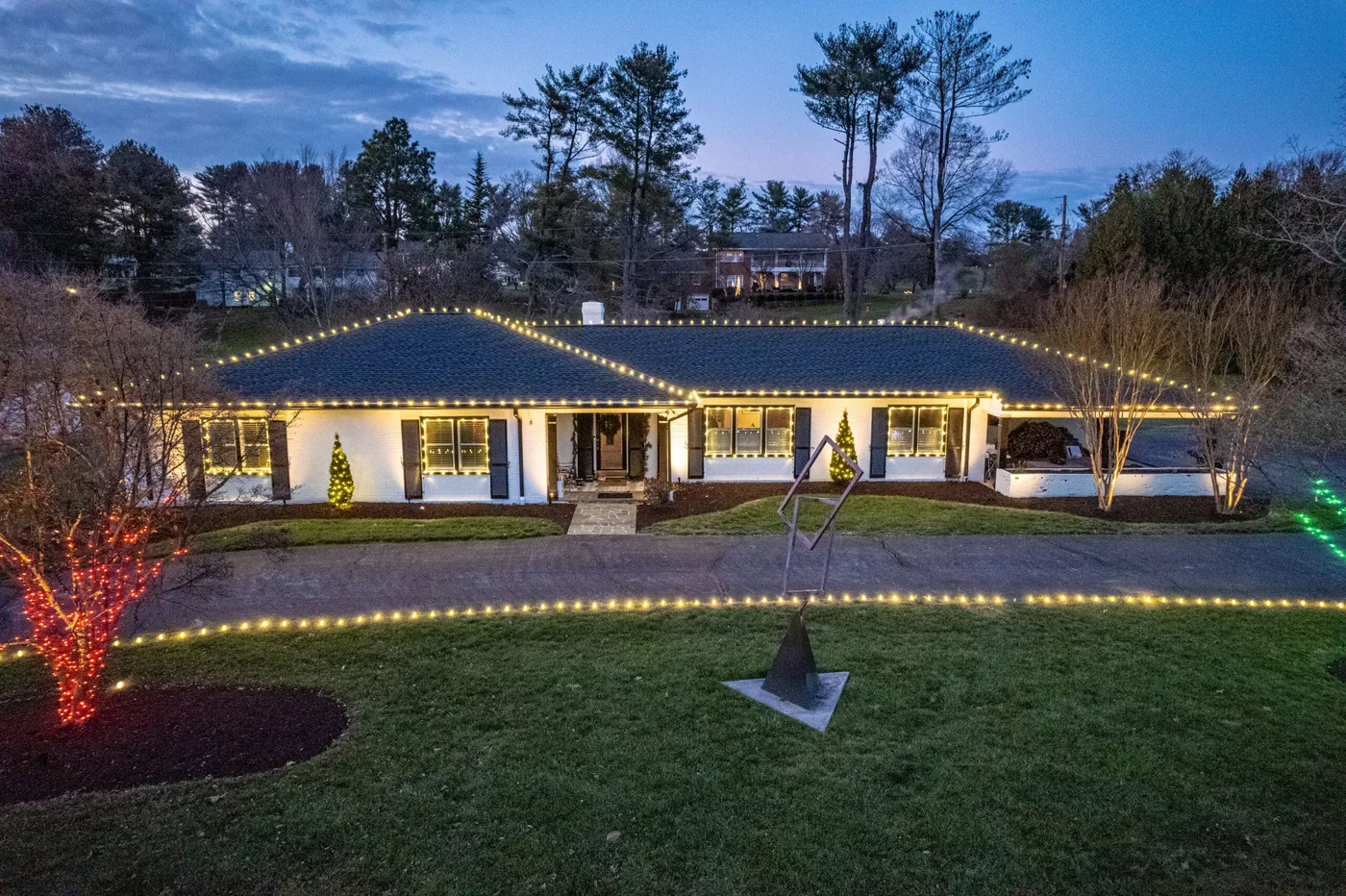
34. Icicle Drop Length on Red Wood Siding
Icicle lights need at least a ten-inch drop to look intentional; shorter and they read as a mistake. Hang them from the eave line rather than the fascia so the strands have something to fall past, keep the swags even, and remember that on red siding warm white is the only temperature that won’t look harsh.
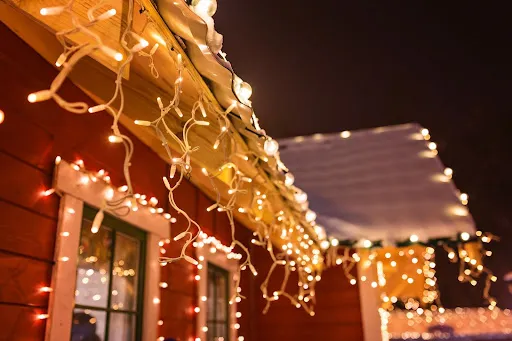
35. A White Gable Framing a Multicolor Yard
An inflatable train plus a sleigh plus wrapped trees needs a yard deep enough to stage them — figure 30 feet from house to curb, minimum. White siding helps too: it keeps a busy multicolor display from turning into visual soup. Smaller yards should pick two figures, not six.
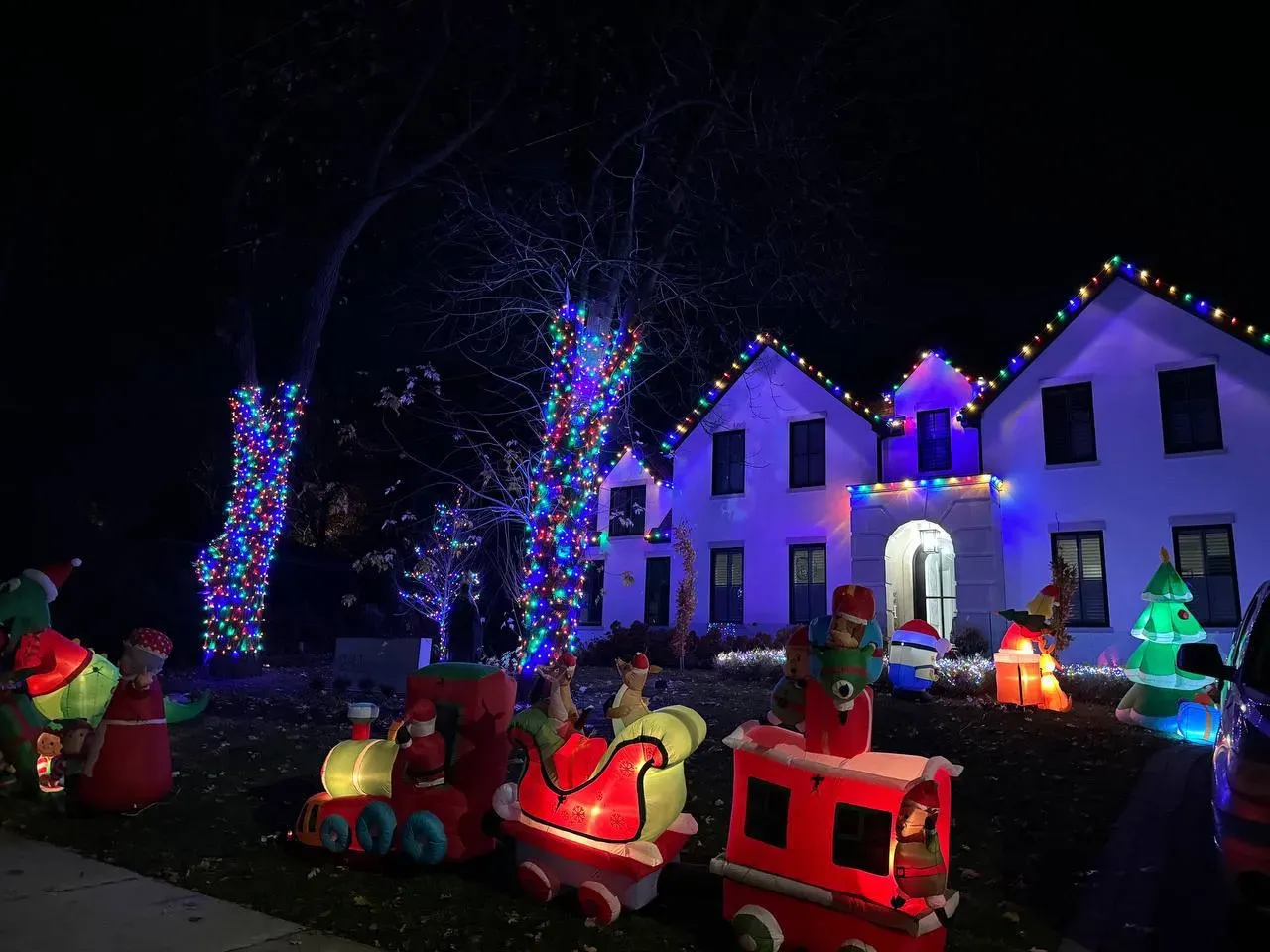
36. Trunks Wrapped, Driveway Bordered, Red Alternating
Alternating red and warm white gives you color without chaos, and wrapping the tree trunks — not the branches — keeps the vertical lines clean. Ground lights along the driveway edge do the rest. Swap the red for soft gold and it reads more formal; go all red and it turns charmingly old-fashioned.
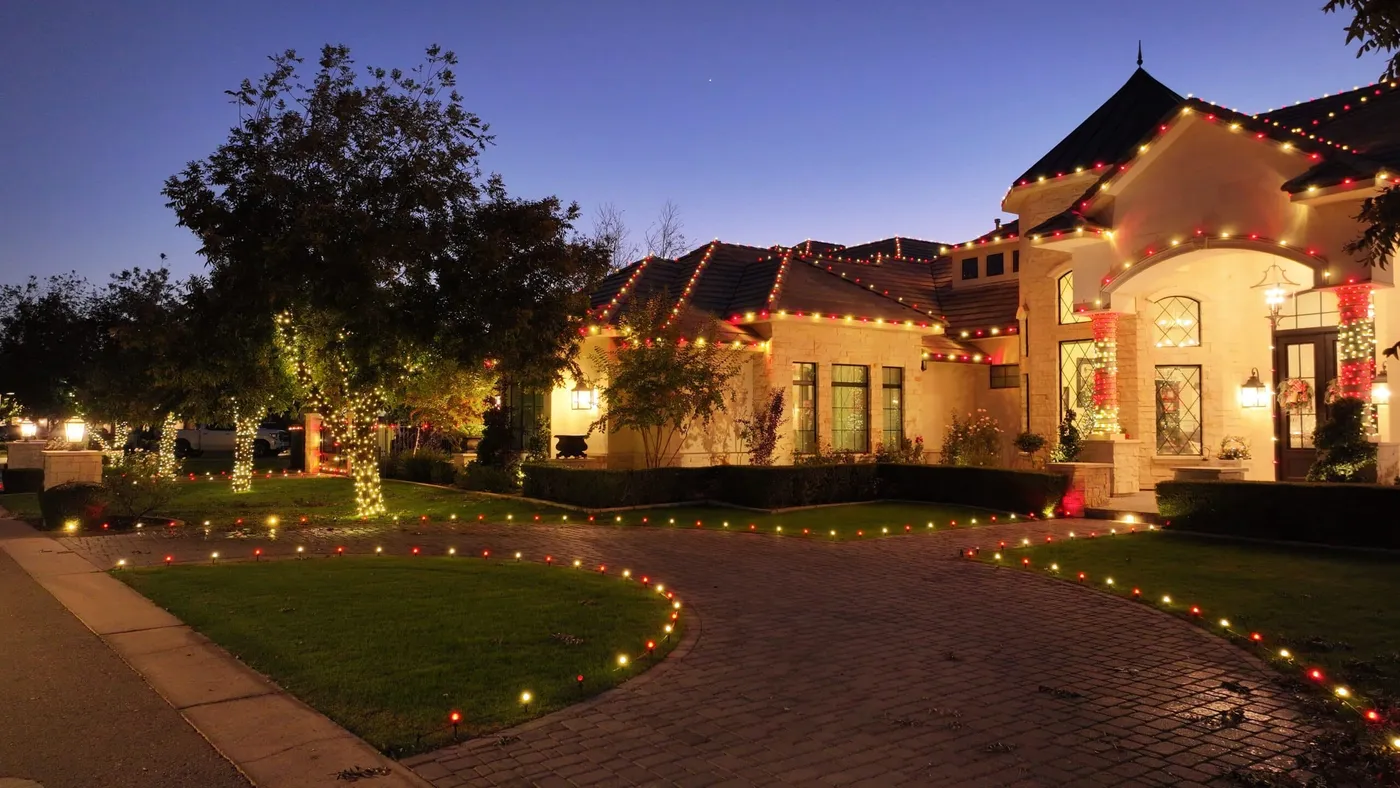
37. Borrow the Town Square Tree Trick
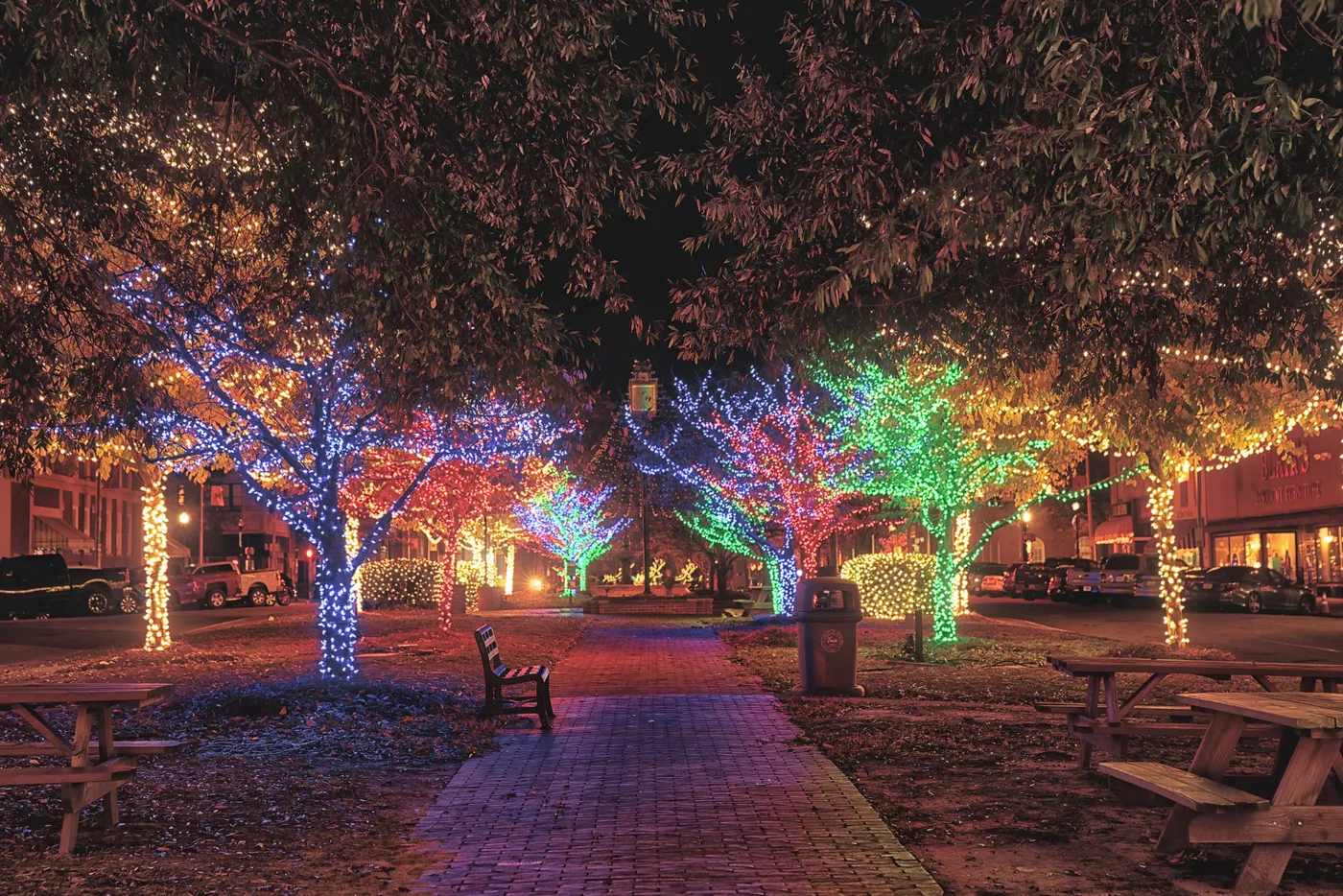
Steal the town square trick: wrap the trunks and lower branches of one or two trees in a single bold color each. A blue tree and a red tree cost about the same as one box of assorted strands, and against a brick path they look far more deliberate than a mixed-color jumble.
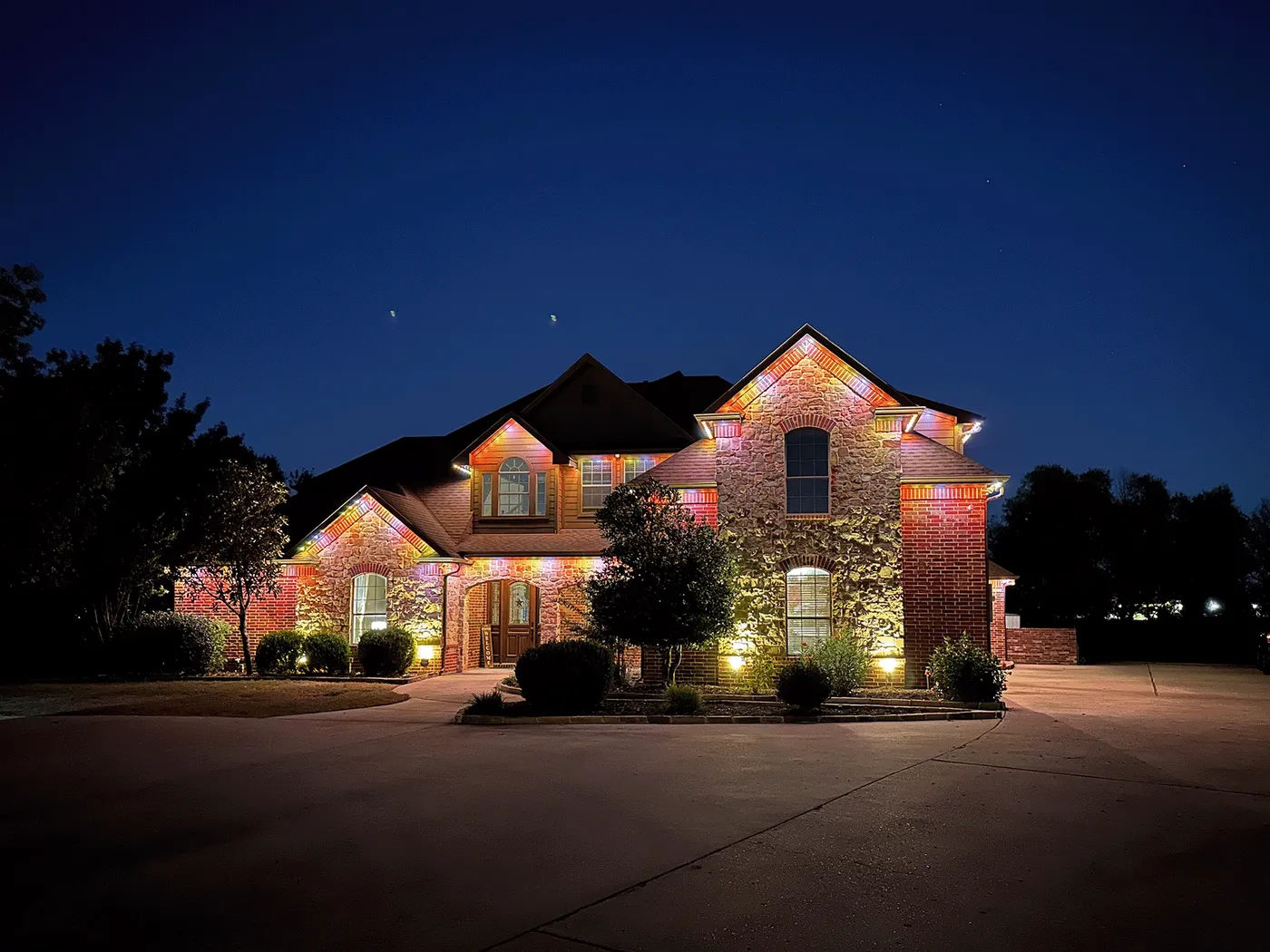
38. LED Strips That Repaint a Stone Facade
LED strip lighting is the newest tool in the box because you can change hue from an app — red for December, purple for no reason at all. It washes a brick and stone facade in a way individual bulbs can’t. Prices dropped far enough this year that it’s no longer a novelty buy.
39. Red, Blue and White, Never in Equal Parts
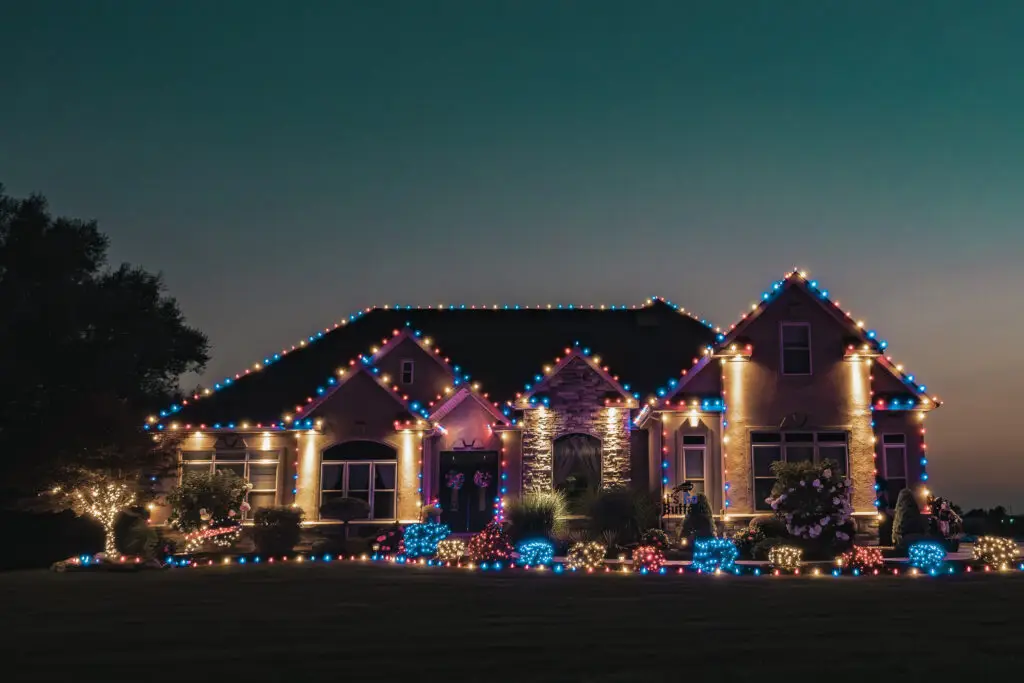
Red, blue and warm white — but never in equal amounts. White carries the roofline while red and blue accent the gables and bushes. Warm uplighting on the stone ties the cool bulbs back to the house so nothing floats. Balanced means one dominant color and two supporting ones.
From One Strand to the Whole Roofline
Start with one element — a roofline, a tree, a pair of lit evergreens by the door — and let it grow next year. Displays that build over time always look better than displays that arrive all at once. 📌 Pin your favorites now so you’re not squinting at a phone in the cold in December.